

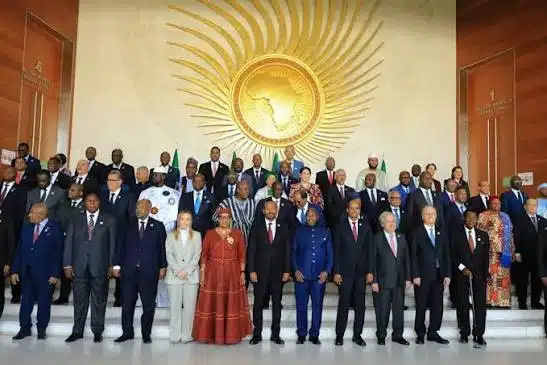

African leaders have issued an urgent call for the remaining 24 member states of the African Union to ratify the African Medicines Agency (AMA) Treaty, warning that gaps in continental regulation could leave the region vulnerable to substandard and falsified medical products.
The appeal came during a High-Level Presidential Breakfast convened by the AMA on the margins of the 39th Ordinary Session of the Assembly of Heads of State and Government of the African Union in Addis Ababa, Ethiopia.
Government leaders, partners and AU leadership stressed that universal ratification is critical to strengthening health security and supporting Africa’s pharmaceutical industry ambitions.
Currently, only 31 of the AU’s 55 member states have ratified the AMA Treaty. With the agency’s headquarters now fully operational in Kigali, Rwanda, and a director officially in place, leaders argued that universal ratification represents the next essential step toward a unified African regulatory system.
“We have moved from a Treaty on paper to a living institution,” said H.E. Dr. Delese Mimi Darko, Director General of the AMA, as she outlined the agency’s ambition to be universally ratified, achieve WHO Listed Authority status, and attain financial self-reliance by 2030.
Dr. Darko disclosed that the AMA is “already working hand-in-hand with member states that have ratified to strengthen regulatory systems, streamline joint assessments and increase reliance on shared expertise.”
In a significant show of commitment, Seychelles Vice President H.E. Mr. Sebastien Pillay announced a USD 200,000 financial commitment to the AMA, doubling the seed fund contribution of USD 100,000 required of state parties while challenging larger nations to match the dedication.
Tunisia’s Health Minister, Dr. Mustapha Ferjani, delivered a stirring address on the foundational importance of regulation, declaring: “Today, a single truth imposes itself: Africa’s health sovereignty depends on regulatory sovereignty.”
In his closing appeal to fellow member states, Dr. Ferjani added: “Let us all ratify, and equip AMA with the capacity to act with resources, skills, clear procedures, and effective governance. Our people deserve it, our health security demands it, and our sovereignty depends on it.”
The breakfast meeting, which brought together heads of state and government, AU leadership, and senior representatives of the AMA, Africa Centres for Disease Control and Prevention (Africa CDC), and the African Continental Free Trade Area (AfCFTA) Secretariat, sought to accelerate the agency’s full operationalisation, universal ratification, and sustainable financing.
Leaders harped on AMA’s role in strengthening continental regulation of medical products, bolstering health security against future pandemics, and supporting Africa’s industrialisation ambitions under the African Continental Free Trade Area framework.
H.E. Amb. Amma Twum-Amoah, Commissioner for Health, Humanitarian Affairs and Social Development of the African Union Commission, framed the AMA as central to the AU’s wider health and development agenda.
The Commission “firmly believes that universal ratification, full implementation and sustainable financing of the African Medicines Agency are achievable within this political cycle,” she affirmed.
She described the AMA as “a shared continental asset integral to delivering on the African Health Strategy 2030 and Agenda 2063, and the commitments our member states have made to protect the health and wellbeing of their people.”
The AMA Treaty was adopted by heads of state and government during their 32nd Ordinary Session of the Assembly on 11 February 2019 in Addis Ababa. The agency aspires to enhance the capacity of state parties and AU-recognised regional economic communities to regulate medical products, thereby improving access to quality, safe and efficacious medical products across the continent.
The AMA becomes the second specialised health agency of the African Union after the Africa Centres for Disease Control and Prevention (Africa CDC), building on the efforts of the African Medicines Regulatory Harmonisation (AMRH) initiative launched in 2009.