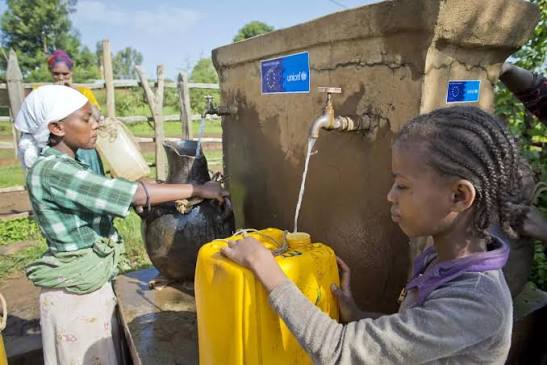

The United Nations Children’s Fund (UNICEF) has urged the Nigerian government to adopt a national policy requiring all public places, including filling stations, markets, motor parks, and recreational centres t o provide clean and accessible toilets as part of ongoing efforts to eradicate open defecation.
Despite years of advocacy and policy interventions, open defecation remains a widespread challenge in Nigeria, with millions still lacking access to basic sanitation facilities. The practice continues to undermine public health, increase healthcare costs, and contribute to disease outbreaks such as cholera, typhoid, and diarrhoea.
Speaking at the opening of a two-day media dialogue on “Accelerating Actions to Improve Urban Water, Sanitation and Hygiene (WASH) in Nigeria,” UNICEF’s Director of WASH, Mr. Monday Johnson, said the lack of sanitation facilities in public areas was one of the main drivers of open defecation nationwide.
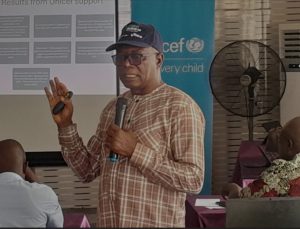
“One of the ways to reduce open defecation is to ensure that every filling station and market has clean and accessible toilets,” Johnson said. “Government must enact and enforce policies to make this happen. Such facilities can even generate income while promoting public hygiene. But right now, many of these spaces lack basic toilets, which is why people resort to open defecation.”
Johnson stressed that improved sanitation and hygiene are not only vital for health but also for economic well-being. “Good sanitation reduces poverty. When people fall ill due to poor hygiene, productivity drops. Healthier people are wealthier people,” he added.
He called for the creation of a full-chain urban sanitation system covering containment, emptying, transportation, treatment, and reuse. He also recommended setting up an Urban Sanitation Coordination Unit under the Ministry of Environment or Urban Planning to enhance accountability and ensure consistent budgeting for sanitation programmes.
Johnson further advised state governments to integrate sanitation into their development plans and sign performance contracts with local governments to monitor progress. He also pushed for state-wide training to build the capacity of sanitation officers, masons, desludging operators, and private waste managers.
The media dialogue, organised by the Oyo State Ministry of Information in collaboration with UNICEF, was held at Ilaji Resorts Centre, Ona-Ara Local Government Area, Oyo State.
UNICEF Communication Officer, Mrs. Blessing Ejiofor, reiterated that access to water, sanitation, and hygiene is a fundamental human right. “Safe water and clean toilets are not privileges; they are rights. Government, communities, and individuals must work together to ensure everyone has access,” she said.
Also speaking, the Director of Community Mobilisation and Hygiene Education at Oyo State Rural Water Supply and Sanitation Agency (OYORUWASSA), Mr. Adegoke Ayodele, highlighted the state’s progress in WASH programmes, describing them as “success stories worth sustaining and replicating.”
Representing the Paramount Ruler of Araromi Aperin, Oba Mudashiru Obisena, community leader Olori Rebecca Obisesan shared how the town reduced open defecation through local action. “Following awareness campaigns four years ago, our community built 22 toilets, and every household was mandated to have an in-built toilet,” she said.
According to UNICEF’s latest assessment, only 10 percent of Nigerians have access to complete basic water, sanitation, and hygiene services. Rural dwellers remain three times more deprived than those in urban areas.
With UNICEF and its partners pressing for stronger commitment, the agency insists that Nigeria’s path to ending open defecation lies in firm policy action, sustained investment, and community participation.