


Fresh concerns over Nigeria’s internal security mounted on Wednesday after coordinated attacks on rural communities in Kwara and Benue states left scores dead, prompting an emergency military deployment ordered by President Bola Tinubu.
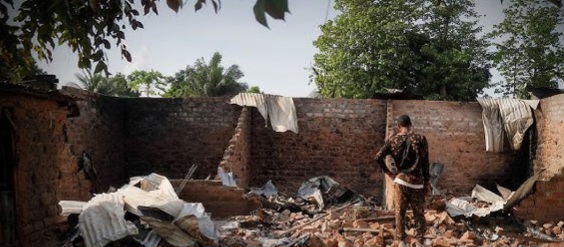
In Kwara State, residents of Woro and Nuku communities in Kaiama Local Government Area were thrown into mourning following a late-night assault by suspected Islamic militants. While local accounts initially put the death toll at over 100, Governor AbdulRahman AbdulRazaq later confirmed that at least 75 people were killed.
Addressing grieving residents at the palace of the Emir of Kaiama on Wednesday night, AbdulRazaq described the victims as “local Muslims who were brutally murdered for rejecting the ideology of violent extremists promoting an alien doctrine.”
The governor disclosed that the President had approved the immediate deployment of an Army battalion to the affected axis to restore order and pursue the attackers under a new counter-offensive operation named Operation Savannah Shield.
Security sources believe the assailants are members of Lakurawa, an armed faction linked to the Islamic State Sahel Province, raising fears about the spread of jihadist networks into Nigeria’s North-Central region.
The Kwara attack coincided with another deadly incident in Benue State, where bandits reportedly stormed Abande community in Mbaikyor Ward, Turan, Kwande Local Government Area, killing several residents and forcing others to flee.
The twin attacks have intensified public scrutiny of the Federal Government’s security strategy, particularly as violence continues to spill into communities previously considered relatively safe.
The lawmaker representing the affected Kwara constituency in the House of Representatives, Mohammed Bio, confirmed the attack but said casualty figures remained unclear due to inconsistent reports from the communities.
“There is no doubt that the attack happened, but the exact number of casualties is still being verified,” Bio said, noting that access challenges and fear among residents had slowed information flow.