

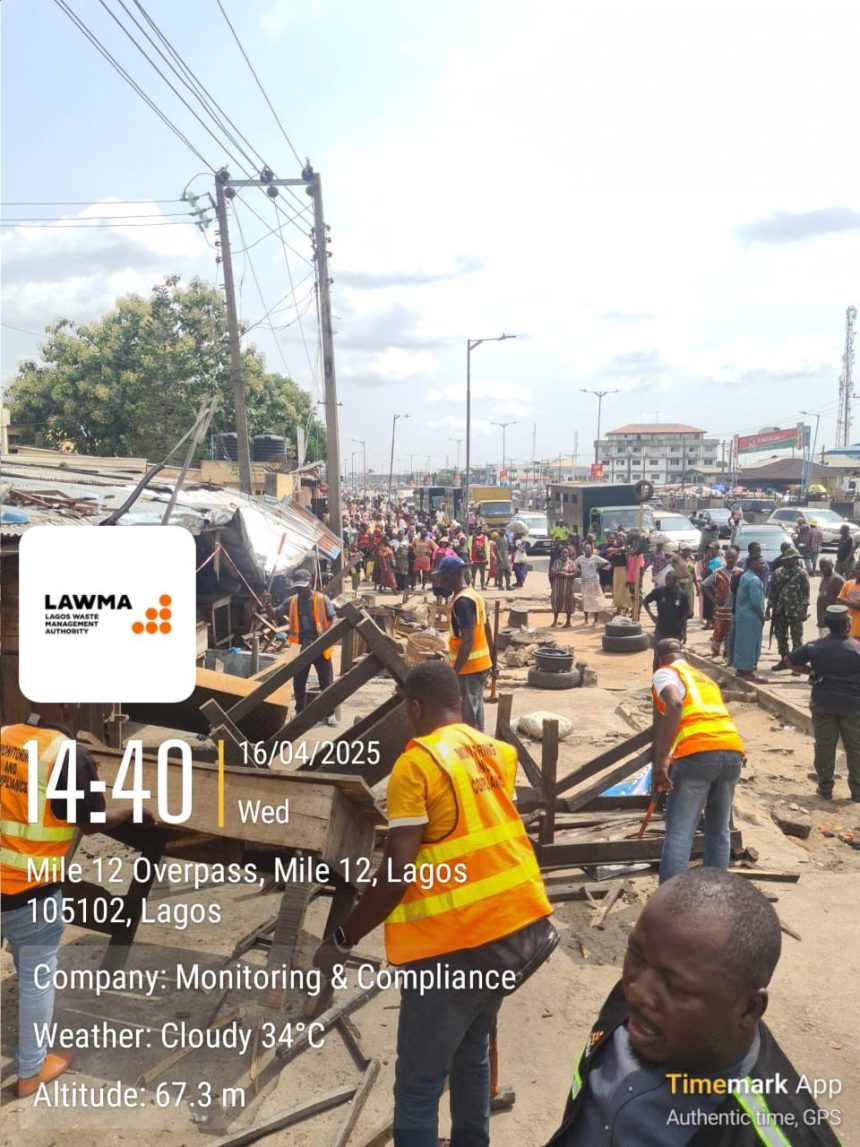

In September 2023, the Lagos State Commissioner for Environment and Water Resources, Tokunbo Wahab, announced a total ban on street trading and hawking across the state.
The government said the ban was necessary to improve public safety, restore order, prevent criminals from disguising as traders to rob motorists, and reduce traffic congestion as Lagos pursues a more modern city structure.
Several months after the announcement, however, street traders remain visible across Lagos, a city already grappling with heavy traffic, high unemployment, and the rising cost of living.
At Ikate Junction, a major traffic hotspot, Madam Praise sells snacks by the roadside.
She admits the location is unsafe, but says the alternative is even more difficult.
“I know this place is not good, but where do I go?” she said.
“A shop in Lagos can cost hundreds of thousands of naira every year.
I don’t have that kind of money. This is how I feed my family.”
Another trader who sells sausage rolls in traffic told Adamimogo FM that roadside trading is his only source of income, especially given the city’s work patterns.
“Most shops close before people come back from work,” he said.
“If I don’t sell in traffic, I won’t survive.”
For Iya Tinuke, a long-time street trader, enforcement alone will not end the practice. She believes street trading will continue unless affordable shop spaces are made available to low-income earners.
“You can’t just tell people to leave the road without giving them somewhere they can afford,” she said.
Commuters also see value in the presence of hawkers. One Lagos resident who spoke with our correspondent said street traders provide quick and affordable food and drinks, especially during traffic gridlock and late at night when most shops are closed.
“When you’re stuck in traffic or it’s late, they’re the ones you can rely on,” the commuter said.
While the Lagos State Government maintains that designated markets have been provided as part of its urban renewal drive, traders argue that many of the shops cost more than their yearly profit, making relocation unrealistic.
As enforcement continues, the debate remains unresolved: In a city where traffic creates demand and economic pressure keeps rising, can street trading truly end?
or does Lagos first need to fix the economics behind it?