

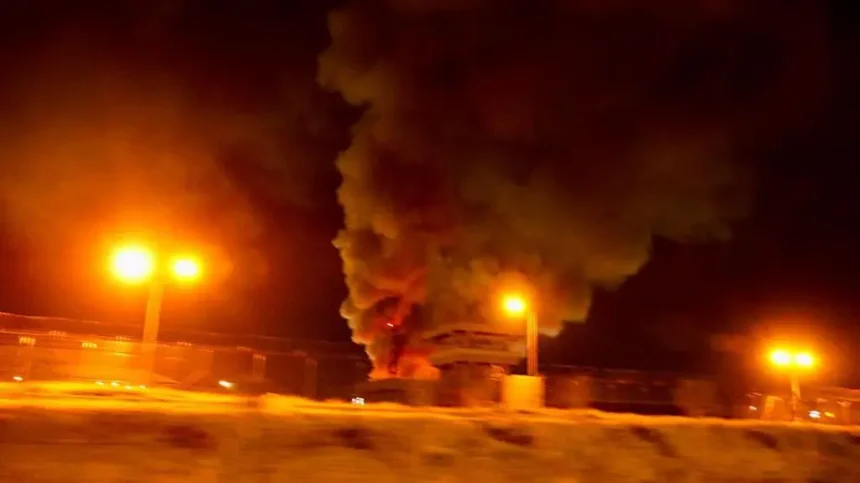

Global oil prices continued their upward surge on Thursday despite an unprecedented move by major economies to release crude from strategic reserves in a bid to calm jittery energy markets.
The move was coordinated by the International Energy Agency (IEA), whose member countries including the United States and the United KKingdom have agreed to release about 400 million barrels of oil from emergency stockpiles.
Meanwhile, energy analysts say the volume represents roughly four days of global oil consumption, a sign of how seriously governments are attempting to contain the shock waves from the intensifying conflict in the Middle East.
However, the intervention has so far failed to halt the market rally as geopolitical tensions continue to escalate across the region.
Iran has warned that crude prices could spike as high as $200 per barrel amid its expanding attacks on shipping routes in the strategically vital Strait of Hormuz, a narrow waterway through which a significant portion of the world’s oil supply passes.
Reports overnight indicated explosions on at least two foreign oil tankers navigating the strait, further heightening fears of a wider disruption to global energy supply.
Meanwhile, the Israel Defense Forces said it launched a “wide-scale wave of strikes” against positions linked to Hezbollah in the Lebanese capital, Beirut.
According to Israeli officials, the strikes targeted about 10 structures believed to house militant infrastructure, while the military also reported intercepting several missiles fired from Iran.
Elsewhere in the region, the Saudi Arabia said its air defence systems intercepted 18 drones believed to have been launched by Iranian-backed forces.
Authorities in Dubai also confirmed that a drone fell on a residential building, although no injuries were reported.
Speaking to reporters, the U.S. president said the country was “not finished yet” when asked about the ongoing war involving Iran and its regional adversaries.