

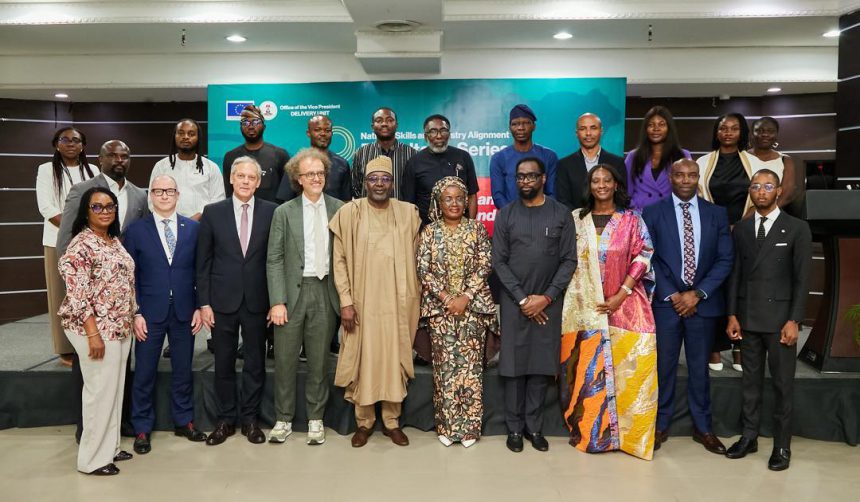


The Federal Government, in collaboration with the European Union and development partners, has stepped up efforts to address Nigeria’s widening skills gap, with a focus on aligning workforce training with the needs of the private sector.
This formed the thrust of discussions at the National Skills and Industry Alignment Roundtable held in Abuja on Tuesday, where senior government officials and stakeholders agreed that the country must recalibrate its approach to job creation.
Vice President, Kashim Shettima represented by his Deputy Chief of Staff, Senator Ibrahim Hadejia, said the initiative marked the second major engagement on aligning skills supply with labour market demand. He noted that while several government agencies are tasked with job creation, there remains a disconnect between the skills being developed and those required by employers.
“What we realised over time is that the jobs and the skills being demanded by the private sector, which should be the largest generator of employment, are not in alignment with the kind of skills being developed and the training being given,” he said.
He added that the Office of the Vice President is focused on ensuring that the needs of private sector employers become central to Nigeria’s workforce development framework, including reviewing existing policies where necessary.
The Minister of Housing and Urban Development, Arc. Ahmed Musa Dangiwa, said the construction sector was facing a shortage of skilled workers, affecting project delivery. He said the ministry was addressing the gap through the National Artisan Skill Acquisition Programme, designed to train and certify artisans while improving housing quality and creating sustainable jobs.
“We are training and certifying artisans and also creating a database of those trained. We are looking for partners to support both the training and certification processes,” he said, adding that only the most competent trainees would be certified.
Strategic Partnership Lead at the Office of the Vice President Delivery Unit, Afolabi Imoukhuede, said the roundtable was designed to bridge the gap between training efforts and industry needs, particularly in emerging sectors.
He said the platform would help attract greater investment from partners once there is clear value and proof of concept in ongoing interventions.
Making similar submissions, Senior Special Assistant at the Delivery Unit, Akubo Adegbe, said the platform would drive policy shifts and help identify priority skills capable of reshaping job creation strategies.
On the development side, Head of Cooperation at the European Union Delegation to Nigeria and ECOWAS, Massimo De Luca, expressed satisfaction with ongoing collaborations including the Jubilee Fellowship Programme and the 3 Million Technical Talent (3MTT) programme and called for increased private sector participation in skills development initiatives.
He said the EU remained committed to supporting impactful programmes in partnership with the Federal Government and other stakeholders.
Dr Markus Wagner of the German Agency for International Cooperation also stressed the need for stronger private sector involvement to ensure sustainability.
Participants at the session included representatives of the International Labour Organization, the Tony Elumelu Foundation, the Mastercard Foundation, MTN Foundation, the Nigeria Employers’ Consultative Association, the Dangote Foundation and the Nigeria Economic Summit Group, as well as the Director-General of the National Directorate of Employment, Silas Agara.

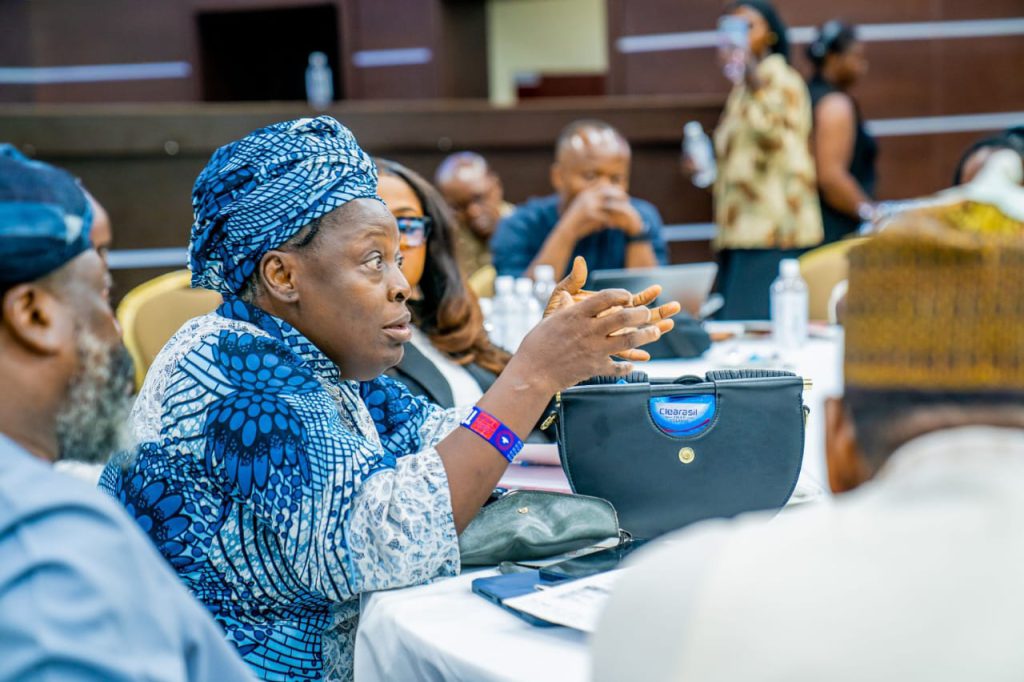
The roundtable is the first of three planned quarterly sessions for 2026. The next session, scheduled for May, will focus on the role of data in job creation coordination, while the third, expected later in the year will examine subnational job creation through Nigeria’s Regional Development Commissions.