


LAGOS SOUNDS RED ALERT ON LASSA FEVER, KICKS OFF STATEWIDE AWARENESS CAMPAIGN
… 660 Cases, 167 Deaths Nationwide Spark Urgency
… Healthcare Worker Infections Raise Alarm As Lagos Activates Preparedness Systems
Lagos State Government has sounded a strong public health alert on… pic.twitter.com/Mftnvdh3zd
— The Lagos State Govt (@followlasg) April 13, 2026
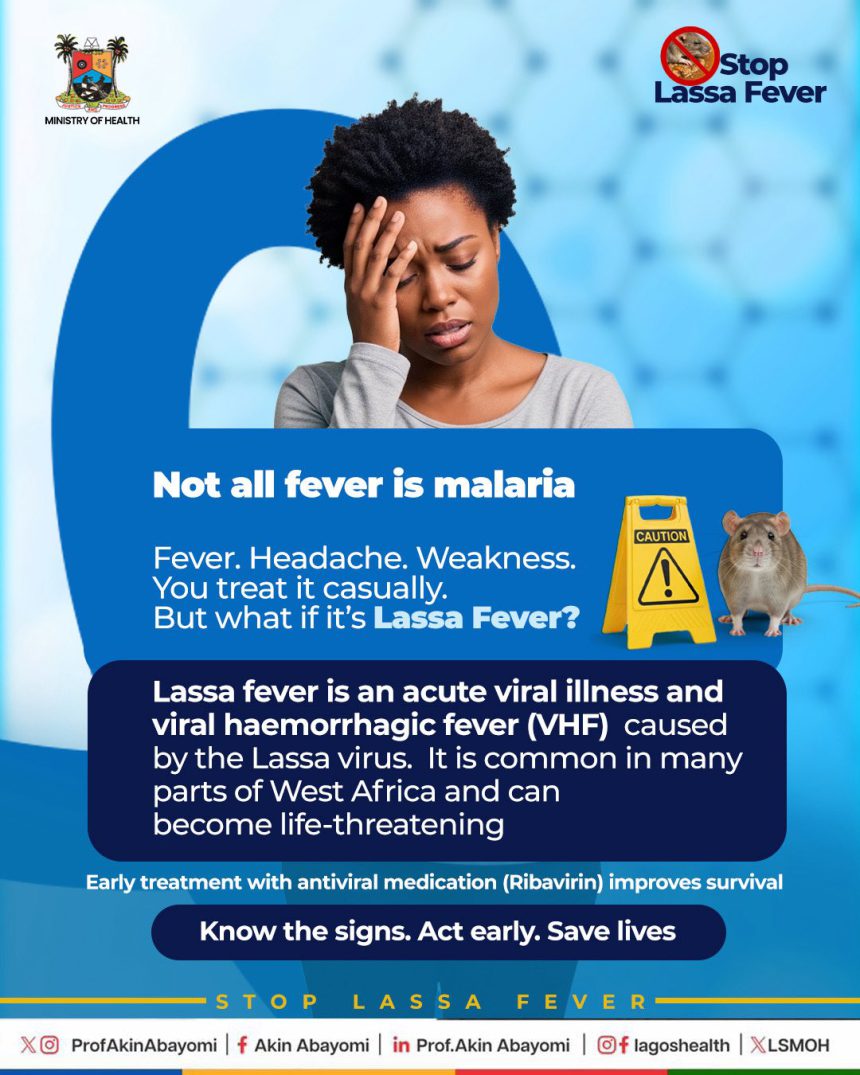
Lagos State Government has issued a strong public health alert on Lassa fever, announcing the launch of a statewide awareness and prevention campaign in response to rising cases across the country.
The Commissioner for Health, Prof. Akin Abayomi, said Nigeria is currently facing one of its most severe Lassa fever outbreaks in recent years, with more than 660 confirmed cases and 167 deaths recorded between January and mid-March 2026.
He disclosed that the disease has spread across 22 states and 93 local government areas, describing the situation as a serious national public health concern requiring urgent and coordinated action from all levels of government.
Abayomi also raised concern over infections among frontline health workers, noting that at least 38 healthcare personnel have contracted the disease this year, while three doctors have died as a result.
He explained that Lassa fever is a highly contagious viral disease transmitted primarily through contact with infected rodents or contaminated food items, and can also spread from person to person. He added that the illness is classified as a haemorrhagic fever that can cause severe symptoms, including internal bleeding.
Although Lagos is not considered an endemic state and typically records only a few imported cases annually, the commissioner warned that its dense population and high mobility significantly increase the risk of rapid transmission if not properly contained.
He further noted that evidence now suggests year-round transmission of the disease, driven by environmental changes, increased human contact with rodents, and shifting ecological patterns.
According to him, about 70 per cent of infected individuals may show mild or no symptoms, making silent transmission a major concern, particularly in crowded urban areas such as Lagos. He also stated that around one in five symptomatic cases can become severe and potentially fatal if not diagnosed and treated early.
The commissioner classified Lassa fever alongside other high-risk viral diseases such as Ebola and Marburg, describing them as “pathogens of high consequence” capable of overwhelming health systems if not properly managed.
He attributed the rising incidence of such diseases to climate change, deforestation, and environmental disruption, which increase human exposure to disease-carrying rodents and wildlife.
To strengthen preparedness, Abayomi said Lagos State has activated a 24-hour Emergency Operations Centre, improved surveillance systems, deployed digital health tools, and intensified training for healthcare workers on infection prevention and control.
He urged residents to remain calm but vigilant, adding that the state government is working closely with the Nigeria Centre for Disease Control (NCDC), the Federal Ministry of Health, and other partners to enhance response efforts and public awareness.