


For many young Nigerians, particularly those outside the formal education system, digital learning is becoming more than a technological trend, it is a pathway to opportunity, self-reliance and a brighter future.
At the Princess Ruth Ataiyero Skill Acquisition Centre in Ilesa, Osun State, dozens of young people gather daily to learn practical skills ranging from fashion design and catering to ICT, engineering and entrepreneurship. Increasingly, they are also embracing digital tools and artificial intelligence to improve their crafts and prepare for a rapidly evolving workplace.

Stakeholders, journalists and media practitioners courtesy of a two day media dialogue organized by Osun State ministry of education in partnership with United Nations Children’s Fund UNICEF, The World Bank and other development partners had visited the center to assess the situation firsthand.
The centre’s Director, Olanubi Fadahunsi, says the institution has become a refuge for many out-of-school youths seeking meaningful alternatives to unemployment and idleness.
According to her, about 70 per cent of the 48 trainees who graduated from the centre last year were out-of-school youths, while the remaining 30 per cent were students awaiting admission into tertiary institutions.
“Rather than sitting at home doing nothing, we engage them here and equip them with skills that can help them become productive members of society,” she said.
The centre currently has about 28 trainees enrolled in its ongoing session. Students receive training in entrepreneurship before proceeding to specialised departments such as catering and event planning, fashion designing, ICT, plumbing, hairdressing and makeup artistry.

Fadahunsi explained that digital learning has become an important component of the centre’s curriculum. While instructors provide hands-on training, students are encouraged to explore online learning resources and newly introduced digital platforms such as the Nigeria Learning Passport.
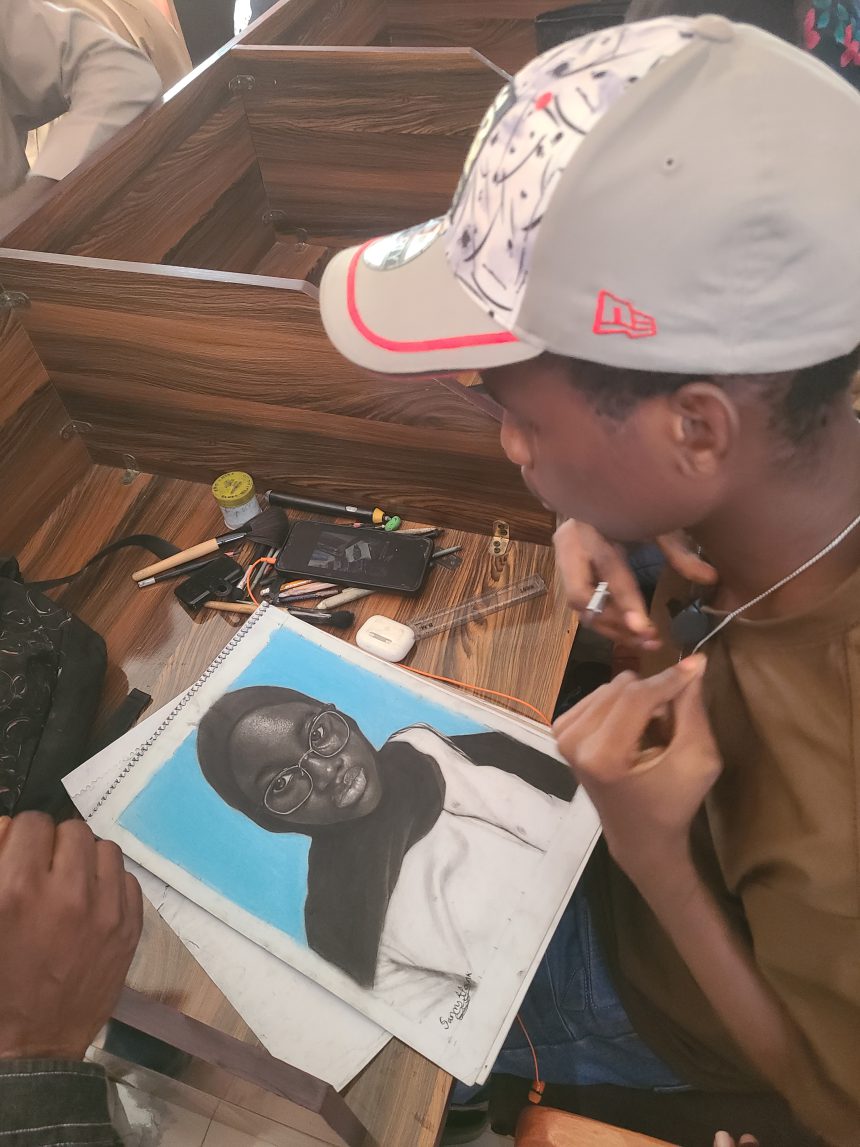
Among those benefitting from technology is charcoal artist, Omoyele Ayomide, who says artificial intelligence has significantly improved the quality of his work.
Using AI-powered tools, Ayomide refines reference images, sharpens blurred photographs and identifies suitable backgrounds for his artwork. He believes the technology has enhanced both his creativity and productivity.
“Before I started using AI, some of my artworks looked off because I wasn’t always using the right background or reference pictures. Now, AI helps me position my references properly, find better backgrounds and add more details to my work,” he explained.
Contrary to concerns that AI could make artists lazy, Ayomide insists the technology has challenged him to do more.
“It doesn’t make me lazy. In fact, it gives me more tasks. It pushes me to work harder and pay attention to details. Sometimes clients send blurry pictures, and AI helps me sharpen them and produce better results,” he said.
Another beneficiary, aspiring engineer Arimoro Salvation, credits digital learning tools with transforming his understanding of engineering repairs and technical troubleshooting.
Having used the Nigeria Learning Passport for about two years, Salvation says the platform has expanded his knowledge far beyond basic soldering techniques.
“Before now, I only knew how to join components together. But through digital learning and AI tools, I can now identify faults, understand how different components work and learn step-by-step repair processes. It has made engineering much easier for me,” he said.
According to him, access to learning resources through a smartphone has enabled him to solve technical problems independently and improve his skills without formal classroom instruction.
For Peter Muyiwa Akinpelu, an ICT tutor at the centre, the impact of digital learning is evident in the progress students are making across different trades.
“My students are doing really well with AI tools. Whether it is painting, drawing, engineering works or shoe making, they are applying what they learn digitally to improve their skills and earn a living,” he said.
As conversations continue nationwide on how technology can help address youth unemployment and Nigeria’s out-of-school children crisis, the experience at the Princess Ruth Ataiyero Skill Acquisition Centre offers a glimpse into what is possible when digital innovation meets practical skills training.
For many of the young people here, artificial intelligence is not replacing human talent,rather, helping them to discover it.