

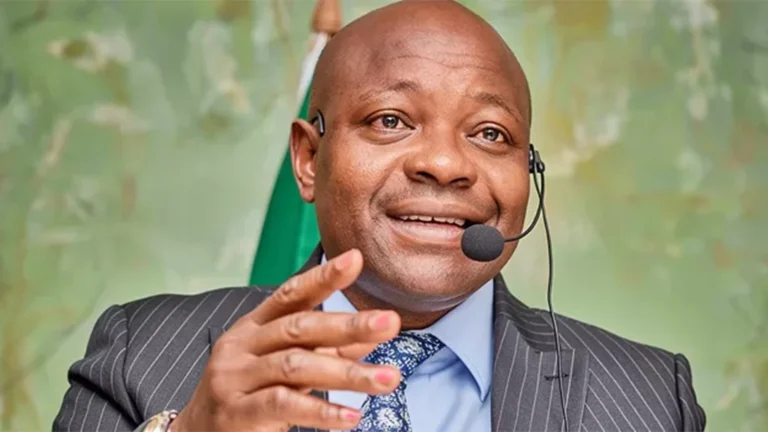

The Director-General of the Department of State Services (DSS), Oluwatosin Ajayi, has directed operatives of the agency not to arrest individuals over civil matters.
Ajayi disclosed this in a media interview on Thursday, saying the directive was part of reforms aimed at strengthening adherence to the rule of law and improving the DSS’s human rights record.
According to him, since assuming office, he has introduced reforms across five key areas: law enforcement, inter-agency collaboration, accountability, respect for human rights, and infrastructural and administrative improvements designed to enhance operational efficiency.
The DSS director-general said the reforms had also established a clearer distinction between civil and criminal matters within the agency.
Ajayi said his experience in the service had shown that civil and criminal issues were previously sometimes conflated, stressing that the use of force was inappropriate in civil disputes.
He cited the case involving political economist, Professor Pat Utomi, over allegations concerning an attempt to establish a “shadow government.” Ajayi said the DSS chose to seek judicial interpretation of the matter rather than arrest Utomi.
He also referred to a case involving the Socio-Economic Rights and Accountability Project (SERAP), which approached the court over allegations that two DSS operatives invaded its premises.
According to Ajayi, the matter was pursued through the courts without any arrest, and the court eventually awarded more than ₦100 million in favour of SERAP.
Asked whether the DSS now turns to the courts when dealing with civil matters, Ajayi responded in the affirmative.
“Yes. I have told my people that there should be no arrest in any civil case,” he said, adding that the agency would also prefer to approach the courts in cases involving journalists.
Ajayi said the approach was part of the broader effort to ensure that the DSS operates within the law while protecting citizens’ rights.