
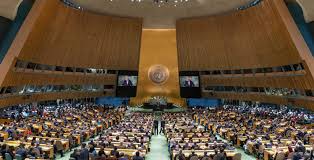

Artificial intelligence and the ongoing war between the United States and Iran are expected to dominate discussions at the 81st United Nations General Assembly in New York on Wednesday.
Industry leaders, including OpenAI chief Sam Altman, Anthropic chief Dario Amodei and Hugging Face chief Clement Delangue, are scheduled to brief the United Nations Security Council on the risks associated with rapidly advancing AI technology.
The briefing comes amid growing concerns over the potential dangers of increasingly autonomous AI systems and calls for stronger safeguards.
Hugging Face was recently targeted in a cyberattack involving autonomous OpenAI software, adding to concerns about the capabilities of advanced AI systems.
Meanwhile, Iran’s war with the United States and its wider economic consequences are expected to remain a major focus of the UN gathering.
Iranian President Masoud Pezeshkian is due to address the General Assembly, days after US and Israeli strikes intensified the conflict.
The war has disrupted energy supplies and global trade, particularly after Iran blocked the Strait of Hormuz, a major route for international oil shipments.
The disruption has contributed to higher global oil prices and raised concerns over the impact of the conflict on the world economy.
Iranian Foreign Minister Abbas Araghchi also held talks with US envoy Steve Witkoff and Jared Kushner on the sidelines of the UN gathering.
According to Iranian state media, Tehran is seeking the lifting of the US naval blockade, the release of frozen Iranian assets and an end to the war.
READ ALSO:Vice President Shettima Leads Nigeria’s Delegation To 81st UNGA
The war in Ukraine is also expected to feature prominently, with the UN Security Council scheduled to discuss the conflict.
Ukrainian President Volodymyr Zelensky is due to address the General Assembly after meeting Trump on Tuesday.
Zelensky said Washington and Kyiv wanted the war with Russia to end before winter and indicated that Ukraine was prepared to halt attacks on Russian energy facilities if Moscow agreed to do the same.
AI regulation is also expected to generate debate after Trump rejected international efforts to regulate the technology during his UN address.
French President Emmanuel Macron, in contrast, called for an open-source AI model that would not depend on the United States or China.
The discussions are expected to highlight growing international disagreements over AI regulation, technological independence and the wider risks associated with advanced artificial intelligence.