


I have been thinking lately about leadership. Not leadership as a title. Not leadership as an office, an election victory, or an appointment. I mean leadership as a process, the long journey through which someone learns enough about people, institutions, responsibility, and himself to become worthy of being followed.
One thought keeps returning to me: You can’t lead well if you have never followed well.
Perhaps that statement is too absolute. There will always be exceptional people who appear to find their way without an identifiable mentor. But the more I look at leadership, and particularly my own journey through football administration, the more convinced I become that there is enormous value in apprenticeship.
I did not wake up one morning understanding Association Football.
Someone taught me. In my own journey, Taiwo Odebunmi occupies an important place. He did not merely teach me things about Association Football; he helped to guide the way I thought about it. There is a difference. You can teach somebody the regulations of football. You can explain competitions, elections, administration, statutes, committees, and Congresses. But teaching somebody how to think about football is something else entirely.
It means helping him understand why institutions exist, why processes matter, why today’s decision may have consequences ten years later, and why football administration must ultimately be bigger than the administrator.
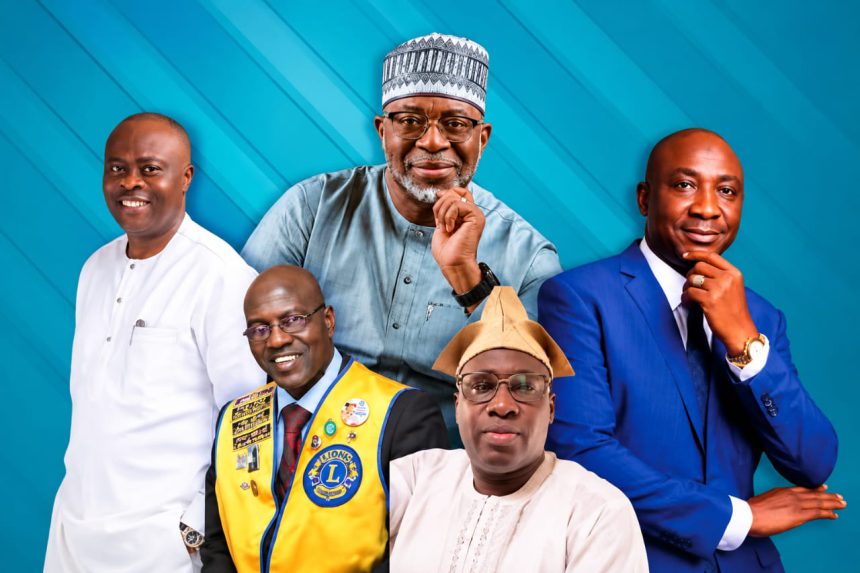
Then came people such as Barrister Seyi Akinwunmi, Alhaji Ibrahim Musa Gusau, Hon. Kunle Soname, the late Chief Taiwo Ogunjobi, Alhaji Tade Azeez, may their souls rest in peace, and my dear friend and brother, Sola Ogunnowo . In different ways and at different stages of my journey, they strengthened my belief in Association Football and made me something of a disciple of the concept.
That word, “disciple” is important. A disciple is not necessarily someone who agrees with his teacher on everything. In fact, good mentorship should never manufacture clones. A good mentor teaches you enough to eventually develop your own thoughts. There comes a point when the student must question the teacher. There comes a point when experience modifies some of the things you were taught. And there may even come a point when the mentee develops an idea beyond where the mentor stopped. That is not betrayal; that is growth.
Then my mind travelled beyond Nigeria as I began asking myself some questions. Who mentored the men currently occupying the highest offices in world football? Who taught the FIFA President? Who taught the CAF President? Gianni Infantino did not simply arrive at the FIFA presidency from nowhere. Long before becoming FIFA President, he had spent years within European football administration, eventually becoming UEFA General Secretary.
Likewise, Patrice Motsepe did not begin his leadership journey at CAF headquarters. His background traversed law, business, and football club ownership and administration before he became CAF President. Their stories remind us of something easily forgotten when we see somebody sitting in the biggest chair:
We usually see the finished product. We rarely see the classroom. And sometimes that classroom is not a university. It is another person’s office.
It is sitting quietly in meetings where you are not the most important person in the room. It is carrying out instructions. It is watching somebody negotiate a difficult situation. It is being corrected. It is making mistakes without having the authority to hide them. It is learning that having an opinion and having responsibility for the consequences of that opinion are two entirely different things. That is apprenticeship.
Then I thought about politics, and my thoughts wandered outside football. What about Donald Trump? Who taught him? Whatever anyone thinks about Trump’s politics or leadership style, his formative influences did not emerge from a vacuum. His father, Fred Trump, introduced him to the real-estate business, while lawyer Roy Cohn became an important influence during Trump’s rise in New York. Interestingly, the precise description of Cohn as Trump’s “mentor” has been disputed by Trump himself at different times. But influence does not always require somebody to formally declare, “This is my mentor.”
Sometimes you simply have to look at where somebody learned his methods. Then I thought about Barack Obama. Again, irrespective of anyone’s political opinion of his presidency, Obama’s development provides an interesting leadership case study. Before the White House, there was Chicago, and before Washington, there was the Illinois legislature. And in that legislature was Emil Jones Jr.
Jones became an important political mentor to the younger Obama. He helped him understand the machinery of the legislature, gave him significant responsibilities, and supported his development as Obama moved towards national politics. Think about that.
Before a man could preside over the United States of America, he first had to learn how political institutions actually worked at a much smaller level. There is something in that for football.
We have too many people who want to lead before they have learned to follow. This may be one of the problems of leadership today.
Everybody wants the microphone. Everybody wants to be Chairman. Everybody wants to become President. Everybody wants his photograph on the banner. Everybody wants to give instructions. Far fewer people are interested in apprenticeship. And social media has probably made the temptation worse.
A young administrator attends three football meetings and begins to see himself as an authority. Someone establishes an academy and immediately wants to determine how an entire Football Association should operate. Another person gets an appointment today, and by tomorrow believes institutional history started with his arrival.
But there are things Google cannot teach you. There are things ChatGPT cannot teach you. There are things textbooks cannot teach you. Because institutional knowledge also resides in people. You sometimes need to sit beside someone who has been there before. You need to watch. You need to listen. You need to ask questions. And sometimes, importantly, you need to be quiet.
Followership is not servitude, and perhaps this is where we misunderstand mentorship in our part of the world. Following somebody does not mean surrendering your intelligence to him. Mentorship is not worship. Loyalty is not slavery. Respect does not require intellectual submission. And a mentor should never be threatened because his mentee has developed an independent mind.
The objective of mentorship should be to produce someone who is capable of eventually standing without the mentor. A teacher who deliberately keeps his students ignorant so that they will perpetually depend on him has failed as a teacher. Likewise, a leader who surrounds himself only with people who cannot question him is not developing successors. He is developing dependents. There is a huge difference.
The best followers may eventually become the best leaders, and following teaches humility. You learn what it feels like when someone ignores your contribution. You learn how badly poor communication affects people beneath the leadership hierarchy. You learn how frustrating arbitrary decisions can be. You learn why people deserve explanations. You learn that the junior officer in the room may actually have the best idea. And if you remember those experiences when you eventually become Chairman, President, CEO, or Director, they can make you a different kind of leader. Because you remember what the other side of the table feels like. That is why I increasingly believe leadership development should not begin with teaching people how to command. It should begin by teaching them how to serve.
Let me return to football, I think that we need to deliberately restore mentorship to Nigerian football administration. Not godfatherism. Not political patronage. Not a system where a powerful administrator installs loyalists who must remain permanently indebted to him. I mean genuine mentorship.
Imagine experienced Local Football Council administrators deliberately preparing younger people. Imagine State Football Associations identifying promising administrators and exposing them to governance, finance, competitions, marketing, safeguarding, media, statutes, and international football administration. Imagine former administrators documenting what they learnt, including their mistakes, rather than leaving office with all that institutional knowledge inside their heads.
Imagine every successful football administrator being able to point to two or three younger people and say, “I am preparing them to understand this institution better than I did.”
That would be succession planning, and Nigerian football desperately needs it. Because institutions become stronger when knowledge is transferred from one generation to another.
I was fortunate enough to follow. When I therefore remember Taiwo Odebunmi, Barrister Seyi Akinwunmi, Alhaji Ibrahim Musa Gusau, Hon. Kunle Soname, the late Chief Taiwo Ogunjobi, and the late Alhaji Tade Azeez, I do not remember men whose every opinion I necessarily had to adopt. I remember parts of my education. Each encounter added something. Some lessons confirmed what I already believed. Some challenged me. Some I understood immediately. Others only became clearer years later.
That is the beauty of mentorship. Sometimes a mentor plants a seed whose meaning the mentee will not understand until twenty years afterwards. And perhaps that is why my mind keeps returning to that simple statement: You can’t lead well if you have never followed well.
Before demanding followers, learn to follow. Before becoming the teacher, experience being the student. Before occupying the biggest chair in the room, spend some time sitting in the smaller ones. Listen, observe, learn, question, make mistakes, and be corrected. Then develop your own philosophy. Because leadership should not begin on the day someone gives you a title. By then, your education in leadership should already have been going on for years.
When eventually your opportunity comes, the greatest tribute you can pay to those who taught you is not to become exactly like them. It is to take what they gave you, improve upon it, and prepare another person to go even further. That is how leaders reproduce leadership. That is how knowledge becomes institutional memory.
And that is how a follower eventually becomes someone worth following.