


Nigeria’s recurring failure to enforce constitutional provisions on presidential absence has once again raised concerns about accountability, continuity of government and the limits of executive power.
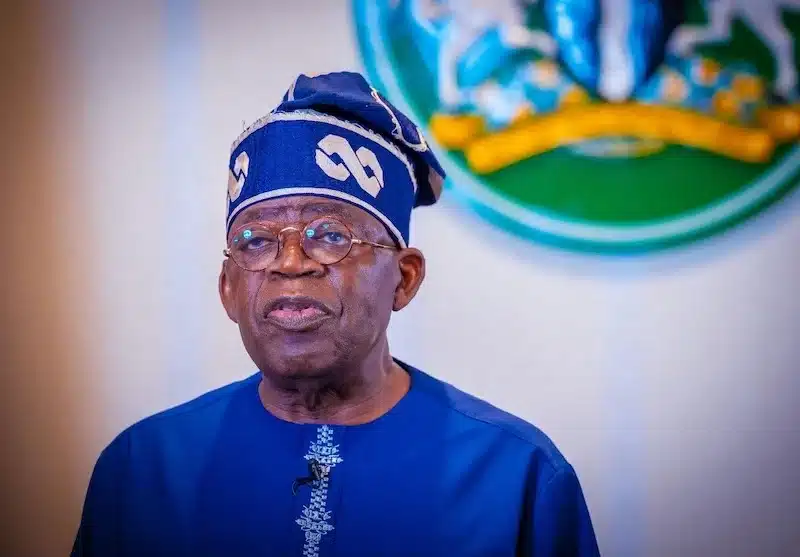
President Bola Tinubu’s extended stay in Europe after embarking on a three-week trip on August 30 has renewed questions about the constitutional arrangements governing presidential absence. The President was initially expected back on September 21 but extended his stay in France by another week.
The controversy centres largely on Section 145 of the 1999 Constitution, which requires the President, when proceeding on vacation or otherwise unable to discharge the functions of his office, to transmit a written declaration to the President of the Senate and the Speaker of the House of Representatives. The provision states that, until a declaration to the contrary is transmitted, the Vice-President is to perform the functions of President as Acting President.
The issue has historical significance in Nigeria. During the prolonged absence of former President Umaru Yar’Adua between 2009 and 2010, questions over the transfer of presidential authority contributed to a constitutional crisis that eventually led the National Assembly to invoke the Doctrine of Necessity, allowing then Vice-President Goodluck Jonathan to assume the functions of Acting President.
A similar controversy emerged in 2019 when former President Muhammadu Buhari travelled to London on what was described as a private visit without formally transferring power to Vice-President Yemi Osinbajo. His spokesman, Garba Shehu, had argued that Buhari could continue exercising his presidential responsibilities from wherever he was.
However, the constitutional provision exists to provide certainty over the exercise of executive authority whenever a President is unavailable. Section 145(2) also provides a mechanism for the National Assembly to act where the required declaration has not been transmitted and the President remains away beyond the stipulated period.
The issue is not whether every presidential trip constitutes an impeachable offence. Rather, it is whether constitutional provisions governing presidential absence are being respected and whether the National Assembly is prepared to scrutinise possible breaches when they occur.
Concerns have also been raised over the cost of prolonged presidential trips abroad, particularly when they involve security personnel, logistics, official aircraft and other public resources. While international travel is an unavoidable part of presidential duties, Nigerians are entitled to clear information about the purpose and duration of extended trips, particularly when public funds are involved.
The question becomes more significant when a President is described as being on a vacation or private visit. Public officials remain accountable for the use of state resources even when their engagements are not strictly official.
The United States offers an example of the importance of constitutional clarity. In November 2021, then-President Joe Biden temporarily transferred presidential powers to Vice-President Kamala Harris under Section 3 of the 25th Amendment while he underwent a medical procedure requiring anaesthesia. The transfer lasted about 85 minutes before Biden resumed his powers.
There have also been public speculations about whether some of Tinubu’s foreign trips have medical considerations. Such claims should not be treated as established facts without credible evidence. Nevertheless, the Presidency has a responsibility to provide Nigerians with factual information about prolonged presidential absences because the availability of the President has constitutional, security and governance implications.
The National Assembly, meanwhile, must recognise its constitutional responsibility to hold the executive accountable. Its duty is to the Constitution and the Nigerian people, rather than to any individual occupying the presidency.
Nigeria cannot continue to treat constitutional provisions as optional whenever their enforcement becomes politically inconvenient. The President, Vice-President and National Assembly must operate within the limits established by the Constitution, while citizens must continue to demand transparency and accountability.
A presidential vacation should never become a constitutional vacation.