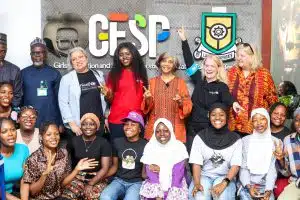



The United Nations Children’s Fund (UNICEF) says its Nigeria Learning Passport initiative has reached millions of schoolchildren across 26 states, expanding access to digital education and supporting improved learning outcomes.
UNICEF Nigeria Deputy Representative, Dr Rownak Khan, disclosed this on Tuesday during an assessment visit to selected schools and educational institutions in Lagos State.
The delegation visited Senior Government College, Iyana-Ipaja; St George’s U.N.A. Primary School, Ipaja; and Yaba College of Technology to assess the impact of digital learning tools and youth skills development programmes.
The Nigeria Learning Passport is an online, mobile and offline learning platform offering more than 15,000 curriculum-aligned educational resources. Its content covers pre-primary, primary and secondary education, with lessons available in English, Hausa, Igbo and Yoruba.
Khan also expressed satisfaction with the progress made by students, particularly young girls acquiring digital and technical skills. She commended the federal and state ministries of education, as well as Airtel Nigeria, for supporting the initiative.
She specifically acknowledged Airtel’s provision of zero-rated access, which allows students using its network to access the platform without incurring data charges.
According to her, the initiative’s impact depends on effective collaboration among government institutions, telecommunications providers and other stakeholders, alongside the technical support needed to keep students engaged.
Khan further explained that the Learning Passport was introduced in Nigeria during the COVID-19 pandemic to help address disruptions to education caused by school closures. The platform is now hosted by the Federal Ministry of Education as part of the country’s public education infrastructure.
With more than 1,600 schools reportedly benefiting from the initiative, UNICEF plans to expand its reach in partnership with the government to give more children access to digital learning opportunities.
Also speaking during the visit, Esi Asare Prah, Head of Programmes at the Airtel Africa Foundation, stressed the importance of digital literacy in an increasingly technology-driven world, particularly as artificial intelligence continues to reshape education and employment.
Prah said the foundation prioritises digital inclusion in education to improve learning outcomes and equip young people with skills for the future.
She praised the participation of students, especially girls, who have historically faced barriers to accessing technology and digital skills training. She noted that free access to the platform enables them to learn and apply new knowledge without the additional burden of data costs.
Prah added that the Airtel Africa Foundation focuses on strengthening digital infrastructure, extending access to underserved rural communities, empowering marginalised groups and promoting long-term educational equity across Africa.
She said young people across Nigeria with access to the Airtel network could use the Nigeria Learning Passport free of charge.
Speaking on behalf of the students, Tosin Adeola, head girl at Government Senior College, said the platform had helped improve students’ academic performance and study habits.
Adeola explained that the resources allow students to revisit lessons and study difficult subjects at home, complementing the practical instruction and classroom teaching they receive in school.
She expressed appreciation to UNICEF and Airtel for supporting the programme and pledged that students would continue to maximise the learning opportunities it provides.