

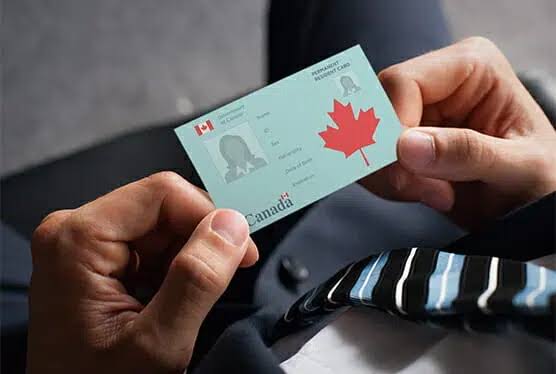

North American nation, Canada has announced a temporary measure that will allow up to 100,000 workers already living in the country, along with their eligible family members, to become permanent residents. This is part of a broader effort to clear applications for thousands of other migrants and families awaiting decisions.
Immigration, Refugees and Citizenship Canada announced the measure on Tuesday. It also covers up to 45,000 spouses, common-law partners and dependent children of Canadian citizens or permanent residents who are already in Canada.
Another 12,600 people who have already been found eligible for permanent residence on humanitarian and compassionate grounds are expected to benefit as well.
The Canadian government said the measure would create additional admission spaces in 2027 to speed up processing for people already living in the country.
It said the workers’ group would be handled in partnership with provincial and territorial governments to meet regional labour needs, while the humanitarian group would help fulfil existing commitments, keep families together and reduce backlogs.
A backgrounder published by the department shows that the workers’ category covers people who have already applied under selected federal immigration programmes, including the Atlantic Immigration Program, Start-up Visa Program, Self-Employed Persons Program, Agri-Food Pilot and home care worker programmes. Provinces and territories will also be able to nominate workers who meet their regional labour needs through larger Provincial Nominee Programme allocations.
The government said the measure would help people who have already settled in Canadian communities but are still waiting for permanent residence decisions.
Immigration Minister Lena Metlege Diab said Canada is building on progress to make its immigration system sustainable while honouring commitments to those in need. She said the time-limited measure, announced alongside the levels plan, would allow the government to deliver faster on promises to people from Hong Kong and Ukraine and give them certainty as they continue building their lives and contributing to the country.
The announcement also provides for processing outstanding applications from Hong Kong residents and Ukrainians under previously established permanent residence pathways.
Canada aims to process all remaining applications under the Hong Kong permanent residence pathways, which closed to new applicants on August 31, 2026. These are expected to result in up to 32,000 admissions.
It also plans to process all remaining applications under the Ukraine Family Reunification Pathway, which closed to new applications on October 22, 2024. These are expected to lead to up to 18,800 admissions.
Together, the two groups account for a potential 50,800 permanent resident admissions.
Jean Yip, Member of Parliament for Scarborough—Agincourt, said that after five years of advocacy alongside the Hong Kong community, she is proud that a path forward has been achieved for individuals and families who choose to call Canada home. She thanked them for their patience and resilience and said they will enrich communities through their contributions.
Michael Ma, Member of Parliament for Markham—Unionville, said the measure would give greater certainty to applicants who have been waiting for decisions. He said he has heard from Hong Kong pathway applicants and their families about how difficult it is to plan for the future while waiting, and thanked the community for its persistent and respectful advocacy. He described finalising all remaining applications by the end of 2027 as an important step toward honouring Canada’s commitment.
Yvan Baker, Member of Parliament for Etobicoke Centre, said the measure would also support Canadian businesses and the economy. He said honouring existing commitments is the right thing to do and will strengthen the economy by ensuring businesses have access to the workforce they need and by giving people the certainty to pursue training and professional qualifications.
The National President of the Ukrainian Canadian Congress, Alexandra Chyczij, welcomed the decision. She said the community welcomes the new measures that will address the backlog of Ukraine Family Reunification Pathway applications by the end of 2027, and thanked the minister for hearing the Ukrainian community’s perspectives.
Dr Henry Pang, a physician and community representative, said the measure would also help address healthcare workforce needs. He said clearing the backlog for the Hong Kong pathways would honour Canada’s commitment and unlock valuable healthcare manpower already in the country.
The government said the measure would not create new immigration programmes or reopen pathways that had closed to new applications. Applicants do not need to take any additional steps or contact the department to have their applications considered under the additional spaces. It added that those covered by the measure are already living, working and contributing to Canada, so they do not represent net new arrivals.
The measure forms part of Canada’s 2027–2029 Immigration Levels Plan, which the government said is designed to return immigration to sustainable levels while improving processing times and providing greater certainty for applicants.