

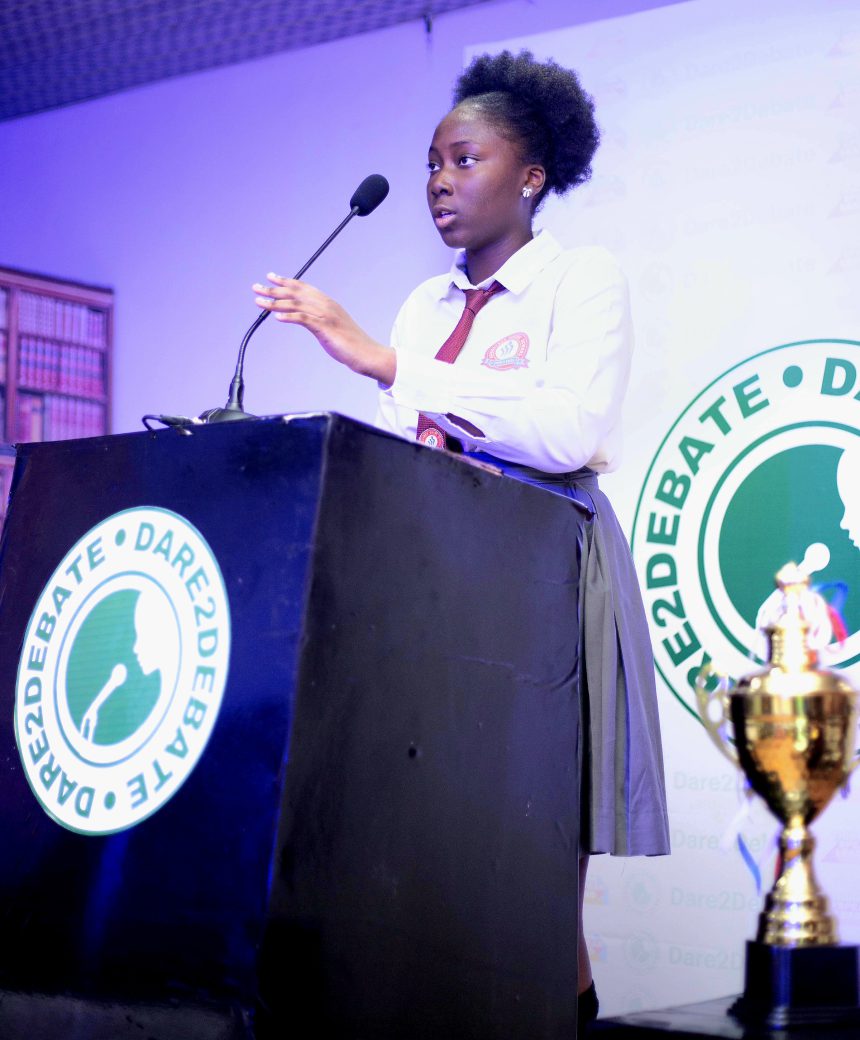

In the hushed, wood-paneled hall of Falana Chambers in Ikeja, the future of Nigeria spoke and it sounded like 17-year-old Chukwuma Eze, his voice firm and diction precise as he dismantled his opponent’s argument on the roots of criminality.
The occasion was the final round of the inaugural Dare2Debate competition, but the stakes felt far higher than the N300,000 prize at stake. This wasn’t just a school contest; it was a proving ground, and C.M.S Grammar School was ready to claim its crown.
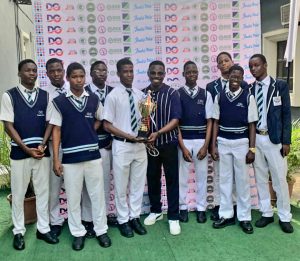
“The weight isn’t in the trophy,” Chukwuma would say later, the winner’s medal cool against his chest. “It’s in knowing your logic held up under fire.”
That fire was real. For weeks, Chukwuma and his teammates had trained, dissecting complex socio-economic topics, mastering rhetoric, and learning to pivot under pressure. Their final opponent, Bishop Howells Memorial Grammar School, was formidable. The debate stretched across themes of poverty, unemployment, and national identity,the very fabric of modern Nigerian angst.
As the young orators parried and thrusted, a distinguished guest listened intently from the front row: the iconic human rights lawyer Femi Falana, SAN. When he took the podium, he did not merely congratulate the victors. He issued a challenge that would dominate the room long after the scores were tallied.
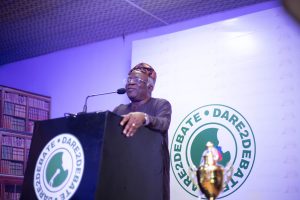
In a move that shifted the spotlight from the debaters to the world they inhabit, Falana called for Nigeria to restrict social media access for anyone under 16. “It certainly has to be regulated in the interest of our children,” he declared, citing global precedents from Australia and framing Nigeria’s policy trajectory as often tethered to Western influences. For the students in the room, digital natives who likely built their research on the very platforms in question, the provocation was immediate and profound. It was as if a bridge had been thrown between their polished arguments and the messy, real-world policies that would shape their lives.
Falana’s discourse wove through the topics the students had just debated. He pushed back against the notion of a criminal national character, arguing forcefully that “poverty and unemployment have been allowed by the government to be the lot of our people.”
He also lamented a “distorted educational system” that devalues skilled labor, leaving trades to artisans from Togo and Ghana. His words were not an abstract lecture; they were a direct response to the themes the teenagers had just animated with their own voices.
The competition, the brainchild of HACmedia’s Davies Ikpoyi, was designed for this very collision of ideas. “We wanted to create a battle with words, knowledge, and weight,” Ikpoyi explained, standing beside the jubilant C.M.S Grammar team.

The judges, including media pro Oludolapo Adewole, Leadership expert, Dotun Ojon and Banking executive, AdebowaleBanzi had a near-impossible task, with the final margin a razor-thin two points.
In the end, C.M.S Grammar emerged with 77 points, Bishop Howells a close second with 75, and Arester Divine School placed third.
As camera flashes illuminated the winners, the moment captured more than a victory photo. It framed a powerful juxtaposition: on one side, the seasoned advocate prescribing protections for the young; on the other, the young themselves, having just demonstrated the intellectual rigor and clarity of thought that makes them far more than passive subjects of policy.
The studio designed event enjoyed collaborations from Fidelity Bank, etranzact, indomie, SGE, DO, Village boy, Wela, to mention a few.