

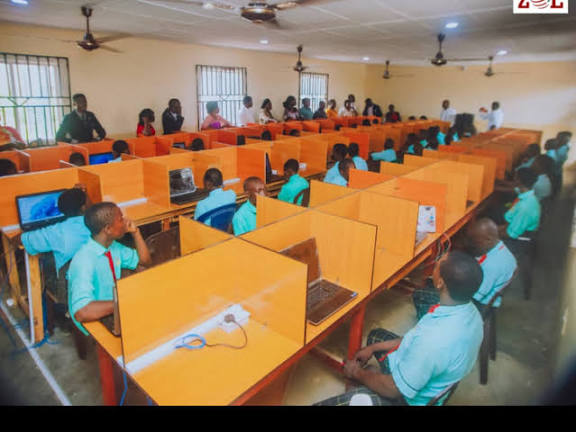

Education stakeholders in Oyo State are urging the state government to subsidize digital devices for students ahead of the planned full transition to computer-based examinations by the West African Examinations Council (WAEC) in 2026.
The call comes on the heels of rising concerns that many students, especially in rural areas, may be left behind due to limited access to computers, reliable electricity, and internet connectivity.
Recall that Head of WAEC’s Nigeria National Office, Dr. Amos Dangut had reaffirmed the council’s commitment to the Computer-Based Test (CBT) system for the 2026 West African Senior School Certificate Examination (WASSCE). He assured that no candidate would need to travel more than two kilometres to an exam centre.
WAEC’s stance follows a November 13 resolution by the House of Representatives urging the Federal Ministry of Education and the examination body to suspend the CBT policy. Lawmakers expressed fears that poor digital infrastructure could lead to mass failure and frustration among students.
The House further directed the Ministry of Education to collaborate with state governments to include in their 2026–2029 budgets provisions for recruiting computer teachers, constructing computer halls, and supplying necessary digital tools in schools.
Adamimogo FM Nigeria Correspondent, Adesola Isaiah-Samuel Spoke to an ICT specialist and lecturer at Kwara State University, Tosin Ibitoye, who stressed the need for “coordinated, realistic measures that match Nigeria’s current digital realities.”
“Government should partner with private tech companies and telecom firms to make devices affordable through zero-interest loans and subsidy schemes,” Ibitoye said.
Echoing this view, Professor Ifeolu Adewumi noted that Nigerian youths are eager to develop digital skills but require sustained support from both government and stakeholders to reach their full potential.
“Without deliberate investments in devices, infrastructure, and training, this transition could deepen existing inequalities,” Adewumi warned.
Lawmakers had earlier recommended that full implementation of the CBT policy should not begin before 2030 to allow schools, particularly in rural communities, adequate time to prepare.
As the clock ticks toward the digital exam deadline, stakeholders are calling for urgent, collaborative efforts to ensure no student is excluded from the future of education.
Experts agree that a unified approach involving government, private sector players, and local communities is essential. Proposed solutions include:
– State-subsidized tablets or laptops for students
– Public-private partnerships to set up community digital hubs
– Intensive digital literacy training for teachers and students
– Solar-powered computer centres in off-grid areas
Without these interventions, observers fear the shift to computer-based exams may widen the educational gap between urban and rural learners in Oyo State and beyond.

Recall that private stakeholders including the United Nations Children’s Fund, UNICEF and Microsoft has been actively supporting federal and state governments in developing and implementing a digital learning tool like the “Nigeria Learning Passport”, an online and offline digital learning platform that provides free access to curriculum-aligned educational content, even in low-connectivity areas.