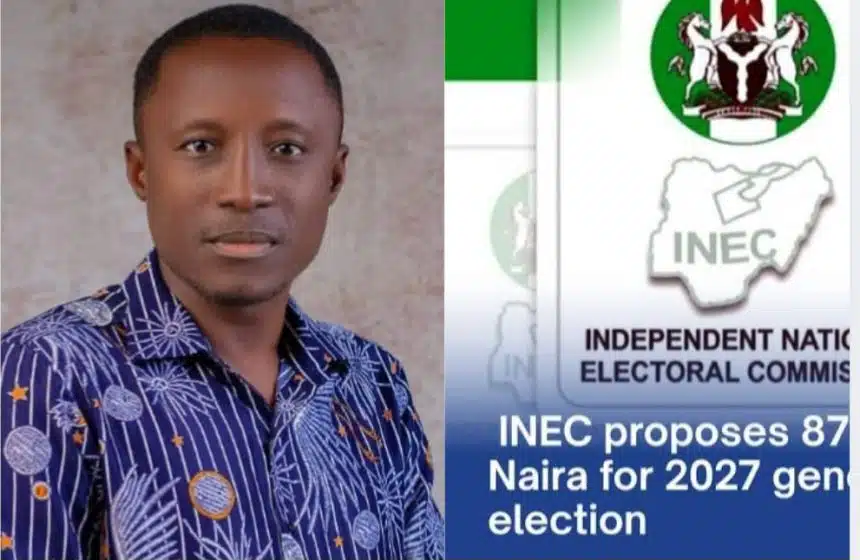

Concerns over the timing and cost of Nigeria’s 2027 general elections as taken centre stage even recently as governance experts warned against hasty changes to the electoral timetable and called for strict scrutiny of the proposed N874 billion budget by the Independent National Electoral Commission (INEC).
Speaking on Inside Scoop, a current affairs programme on Adamimogo 105.1FM, Dr. Zekeri Momoh, a Senior Lecturer in the Department of International Relations at Iconic Open University, cautioned lawmakers against shifting the 2027 presidential election date over its proximity to Ramadan without due constitutional consideration.
The National Assembly of Nigeria is reportedly weighing a proposal to move the polls from March to February 13 to avoid a clash with the Islamic fasting period. However, Momoh warned that altering the date could trigger legal complications, pointing to provisions in the Electoral Act that require the election timetable to be published at least 360 days in advance.
He advised the legislature to convene a public hearing to allow stakeholders, including religious leaders, civil society groups and legal experts to weigh in before any decision is taken. According to him, striking a balance between religious sensitivity and constitutional compliance is crucial in a politically delicate environment.
Beyond the date controversy, the discussion focused heavily on INEC’s proposed N874 billion budget for the 2027 elections. When combined with a N171 billion allocation in the 2026 fiscal framework, election-related expenditure could exceed N1 trillion, more than triple the N313 billion reportedly spent on the 2023 polls.
Momoh described several budget line items as excessive and deserving of “serious investigation and scrutiny.” He cited allocations including N500 million for staff retreats, N7 billion for storage and logistics at the Central Bank of Nigeria, N1.2 billion for vehicle maintenance, N613 million for medical check-ups of political officeholders, and N41 billion earmarked for miscellaneous expenses.
While acknowledging that inflation and the need for infrastructure upgrades may partly explain the sharp increase, he insisted that the National Assembly’s committees overseeing INEC must undertake a detailed, line-by-line review of the proposal.
A substantial portion of the budget—over N209 billion, is reportedly designated for technological enhancements aimed at preventing a repeat of the glitches that marred the 2023 elections, particularly around electronic transmission of results. Momoh argued that such an investment should eliminate any justification for technical failures in 2027.
“If such enormous funds are approved for technological upgrades, then Nigerians must not hear excuses about the inability to transmit results electronically,” he said, stressing that accountability must remain central to electoral reform.
The twin issues of scheduling and funding have placed INEC under renewed public scrutiny, with growing demands for transparency, fiscal discipline and credible preparations ahead of the 2027 general elections.