

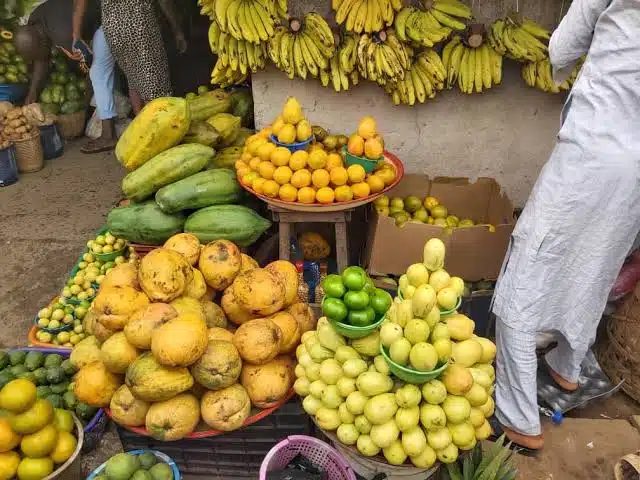

Fruits have long been celebrated as one of nature’s most important gifts to humanity, providing essential nutrients that support healthy living. Rich in vitamins such as A, C and E, as well as minerals like potassium and magnesium, fruits help strengthen the immune system, improve digestion and reduce the risk of several chronic diseases.
Yet, a troubling trend is casting a shadow over this natural source of nourishment in Nigeria, the increasing use of hazardous chemicals to artificially ripen fruits before they reach the market.
Across many markets, fruits such as bananas, mangoes and guavas are reportedly being forced to ripen with substances like calcium carbide and formalin, chemicals that health experts warn could pose serious risks to human health.
In a report by Adamimogo FM, correspondent Dimmachukwu Ndubuisi highlighted growing concerns among health professionals and regulators over the practice, which has become more common as traders rush to meet rising consumer demand.
Fruits have always played a central role in human diets. From ancient times to the present day, they have remained a staple food known for promoting wellness and preventing disease. Nutritionists note that regular fruit consumption helps lower the risk of heart disease, stroke, cancer and diabetes, while also supporting healthy skin and weight management.
However, experts warn that when fruits are artificially ripened with chemicals, their health benefits can quickly turn into potential health hazards.
The National Agency for Food and Drug Administration and Control (NAFDAC) has repeatedly cautioned against the use of chemicals such as calcium carbide in fruit ripening, describing the practice as illegal and dangerous.
According to the agency, substances used in artificial ripening can leave toxic residues on fruits, exposing consumers to serious health complications.
Medical doctor, Dr. Olaniyi Olaoye, who spoke on the issue, explained that fruits treated with such chemicals have been linked to cases of food poisoning and other long-term health conditions.
“Consuming chemically ripened fruits can expose people to harmful substances that may lead to digestive problems, poisoning and even chronic diseases like cancer over time,” he warned.
Despite these warnings, artificially ripened fruits continue to flood markets, largely driven by pressure on traders to meet consumer demand quickly.
Health experts say consumers must therefore become more vigilant and learn how to identify fruits that may have been ripened unnaturally.
Dr. Olaoye explained that chemically ripened fruits often show irregular colour patterns, appearing bright on the outside while remaining unripe inside. He added that such fruits may also have an unusual taste or texture compared to naturally ripened ones.
Another health expert, Akpan Matthew, also stressed the importance of consumer awareness, noting that the fight against the practice requires both government enforcement and public vigilance.
He expressed doubts about the effectiveness of existing regulatory measures, suggesting that stronger monitoring systems are needed to curb the growing problem.
Public health professionals Josephine Ademurewa and Favour Martins echoed similar concerns, calling for greater awareness campaigns targeted at farmers, traders and consumers.
According to them, many traders may not fully understand the health implications of the chemicals they use, making education a crucial part of the solution.
They also urged authorities to intensify inspections in markets and farms where the chemicals are reportedly being used.
Recently, the Nigerian Senate moved to address the issue by proposing stricter measures to curb artificial fruit ripening. However, Ademurewa noted that legislation alone would not solve the problem unless enforcement agencies remain vigilant.
“The government must ensure that regulatory bodies carry out regular inspections and enforce the law strictly,” she said.
In the meantime, NAFDAC advises consumers to take basic precautions when buying and consuming fruits.
The agency recommends washing fruits thoroughly under running water to remove possible chemical residues. Consumers are also encouraged to purchase fruits that are still slightly unripe and allow them to ripen naturally at home.
For many Nigerians, fruits represent health, nourishment and nature’s generosity. But as chemical ripening continues to threaten food safety, experts warn that stronger regulation, consumer awareness and ethical practices among traders will be critical in protecting public health.
After all, fruits are meant to nourish the body, not endanger it.