

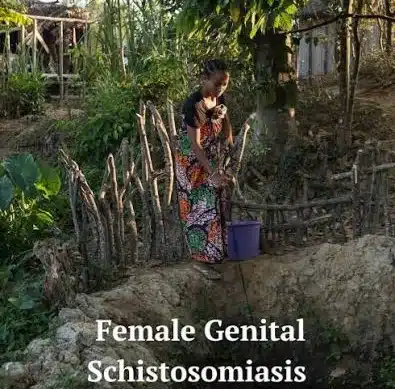

For centuries, medicine has treated pain differently depending on whose body it lives in. When a man falls ill and cannot work, the problem is seen as economic. It affects productivity. Therefore, solutions are pursued. When a woman experiences pain during sex, bleeds without explanation, or struggles to conceive, her suffering is moved to the private sphere. It becomes sensitive, cultural, too delicate to address, until it becomes nothing at all.
This is not a series of unfortunate oversights. It is a pattern built into how medical research is funded, how health systems are designed, and how policy priorities are set. Long before Female Genital Schistosomiasis was formally classified as a neglected tropical disease, it had already been rendered invisible by this structural indifference. A disease affecting women’s reproductive organs simply did not register as urgent.
A Century of Selective Attention
Schistosomiasis was first described by doctors in the 1800s, and signs of the disease in women’s genitals were recorded as early as 1899. But for most of the twentieth century, the way the medical world looked at this disease was shaped by how it affected men.
In rural fishing communities where the disease is common, men who spent their days in the water showed clear symptoms. They came to clinics with blood in their urine and bladder damage. Their illness was seen as a problem because it affected their ability to work. Infection was measured by counting parasite eggs in their urine. The harm caused by the disease was discussed in economic terms, using metrics like DALYs to calculate years lost to productive work. What it did to women’s genitals remained a side note, mentioned in case reports but never made a priority.
Official recognition came slowly. In 1997, a World Health Organization task force on gender finally named FGS as an area needing urgent research. Between 2006 and 2009, studies from sub-Saharan Africa showed that women with genital schistosomiasis are three to four times more likely to acquire HIV. In 2013, the World Health Assembly called for regular treatment for women and school children. In 2015, WHO published a guide to help health workers recognize the disease.
But despite all of this, the disease is still not properly integrated into sexual and reproductive health programmes. The question is not whether we have enough evidence. The question is why the evidence has not been enough to inspire action.
The Scale of Exposure
Let us talk numbers. Right now, an estimated 56 million women and girls in sub-Saharan Africa are at risk of FGS. To understand what 56 million means, think of it this way: that is more than the entire population of South Africa. It is roughly equal to the population of Kenya. So the number of women and girls at risk of this one disease is equal to the population of an entire country. This is not a small problem affecting a few villages. This is a problem affecting millions of women across a whole continent.
In Nigeria, recent studies confirm a significant burden. Research published in December 2025 examining women in Ondo and Kebbi States found that four out of every ten women examined had visible genital damage from the disease. But perhaps most troubling is what is happening to adolescent girls. A 2024 study conducted in Anambra State, examined 470 adolescents aged 10 to 19 years. The researchers found that approximately one out of every seven adolescents was infected with urogenital schistosomiasis. Among girls specifically, the rate was even higher: one out of every six. And critically, nearly one out of every thirteen had heavy infections requiring urgent treatment.
These are not rare cases that doctors might see once in a career. One out of every six girls. One out of every four women. Four out of every ten. These are common conditions affecting hundreds of thousands of Nigerian women and girls.
Yet most health workers in these same areas have never heard of FGS. Studies show that large numbers of medical students and paramedical in training have no idea it exists. Even when a health worker does know about the disease, the simple medicine that can treat it—a drug called praziquantel—is often not available at local clinics, despite being free.
The disease lives in women’s bodies. It causes them pain, bleeding, suffering. But it does not live in our health systems. It does not exist in what doctors are taught. It does not exist on the list of medicines that clinics keep in stock. It does not exist in the data that governments use to make decisions.
Poverty as the Transmission Engine
This invisibility is not an accident. It is directly connected to who this disease affects. You cannot separate FGS from poverty. Like many neglected tropical diseases, FGS is a disease of poverty. It thrives where infrastructure is absent, where clean water is a luxury, where daily survival requires contact with contaminated rivers.
The parasite lives in freshwater. To get infected, you must come into contact with rivers or ponds. And who comes into contact with those waters? People who have no choice. People whose villages do not have piped water. People whose only place to bathe, wash clothes, or fetch drinking water is the same river where the parasite lives.
In some villages, women wash vegetables in the stream before carrying them to market. If they do not wash the vegetables, they cannot sell them. If they cannot sell them, their family does not eat. Water contact is not a choice. It is survival.
Let me tell you about Onyinyechi, a 17-year-old girl who was scheduled for a special examination to check for genital damage. She said no. It was not because she was shy. It was not because her culture forbade it. It was not because she was afraid. She said no because she had to sit by the river and sell vegetables or her family would lose money that would have provided the day’s meal. To her, a disease that was just bad luck and had no effects on her economic productivity was nnot worth losing the day’s wages. Who could fault her logic?
But this is why education and awareness are important. When a woman learns that the bleeding she experiences might not be caused by spirits or bad luck but by a parasite that can be treated with a simple, safe, free medicine, that knowledge changes things. Now suffering has a name. Now she has a reason to find her way to a clinic.
But education only works if the health system is ready to receive her. Imagine Onyinyechi learns about this disease. She scrapes together money for transport. She leaves her chores with a younger sibling. She travels to a clinic. And there she meets a nurse who has never heard of FGS. There is no medicine anyway, and she cannot afford the cost of a gynecological examination. She goes home. She will not come back. Her awareness, her effort, her sacrifice becomes a burden instead of a blessing.
What Universal Health Coverage in Nigeria Actually Means
This brings us to a fundamental contradiction. Nigeria is actively pursuing Universal Health Coverage through the National Health Insurance Authority Act of 2022 and the Health Sector Renewal Investment Initiative. UHC is explicitly designed to address health equity—to ensure that the poorest and most vulnerable populations are not left behind. Its core promise is that your ability to get healthcare should not depend on your ability to pay.
The goal is ambitious: provide access to quality, affordable healthcare for all citizens by 2035, moving beyond donor funding toward sustainable, state-supported health systems.
The architecture being built has several key components. The NHIA Act replaced the previous scheme to mandate health insurance, aiming to cover all Nigerians including those in the informal sector. The Basic Health Care Provision Fund draws from at least one percent of the Consolidated Revenue Fund to finance a minimum package of services. Crucially, 45 percent of this fund is managed by the National Primary Healthcare Development Agency to revitalize primary health centers, ensuring rural access. The Health Sector Renewal Investment Initiative, launched in late 2023, coordinates federal, state, and donor efforts through a sector-wide approach to address fragmentation.
The challenges are substantial. More than seven out of every ten Nigerians pay for healthcare out of their own pockets at the point of service. Only about one out of every six Nigerians currently has health insurance coverage. The Vulnerable Group Fund created under the NHIA Act to subsidize the poorest must be fully activated and transparently managed.
But here is the question this architecture must answer: Where does a disease like Female Genital Schistosomiasis fit?
Where FGS Must Fit: Integration Through Existing Structures
If Universal Health Coverage is to mean something real in the places where this disease is common, it must bridge the divides that keep women sick. The current approach to schistosomiasis control focuses on mass drug administration to school children. But what about girls who are not in school? What about the adolescent girls in secondary schools? What about adult women who bear the heaviest burden of genital damage? They need treatment too.
The Basic Health Care Provision Fund already provides a pathway. One-fifth of the NPHCDA gateway funding is allocated for essential drugs at primary health centers. If praziquantel is not consistently available at these centers, the system is failing its own mandate. But availability alone is not enough. Integration must happen at multiple levels, and the structures already exist to make it possible.
Consider what the study on adolescent girls revealed. Researchers performed colposcopy examinations on adolescent girls, using a single procedure to test for multiple conditions: FGS lesions, co-infections with Trichomonas vaginalis, and cervical epithelium that stained white with acetic acid—a sign of cellular changes that can precede cancer. One examination could reveal a parasitic infection, a sexually transmitted infection, and potential precancerous changes all at once. This is what integration looks like at the clinical level. When women and girls come for cervical cancer screening at primary health centers, they should be examined for FGS. One visit can address multiple problems if the system is designed that way.
The same logic applies across the health system. HIV prevention counselors should discuss how this infection makes women three to four times more vulnerable to HIV, because treating a parasitic infection is HIV prevention. Antenatal clinics and family planning services should offer praziquantel as the WHO includes pregnant women in treatment guidelines. A woman seeing a nurse for antenatal care is the same woman who washed clothes in the river last week.
To this effect medical schools must include FGS and infact NTDs in the teaching curriculum. You cannot diagnose what you were never taught. If medical/paramedical students graduate without ever hearing of FGS—despite practicing in endemic regions—the system has already failed them and the women they serve. The NHIA Act’s emphasis on primary care means frontline health workers must be equipped to recognize the diseases destroying the bodies of the women who walk through their doors. That education begins in the classroom, not the clinic.
The Fragmentation Problem
The barriers to this vision are not scientific. They are structural. Money flows in silos. There is a budget for neglected tropical diseases. A separate budget for HIV. Another for maternal health. Another for cancer. These budgets do not talk to each other. A program manager who wants to screen for FGS in an HIV clinic may find the activity simply does not count toward the targets they are measured against.
The NHIA Act and the sector-wide approach of the Health Sector Renewal Investment Initiative explicitly aim to break down these silos. This is the mechanism through which integration can happen, if FGS is brought into the conversation.
There is also discomfort. Conditions that affect women’s genitals make people uncomfortable. They get labeled as sensitive. That sensitivity becomes an excuse for doing nothing. The data is also inadequate. Because we do not track genital schistosomiasis separately in health management information systems, we do not have good numbers on how many women suffer. And then we use the lack of numbers as a reason not to act. What is not counted is not funded. What is not funded does not exist.
What Must Be Done
The solutions are straightforward. They require no new science, no new drugs, no new vaccines. They simply require that we use the structures already in place to reach the women and girls who have been invisible for too long.
The Basic Health Care Provision Fund must ensure praziquantel is included in essential drugs supplied to primary health centers in schistosomiasis-endemic areas.
The NHIA’s minimum package of health services must explicitly include diagnosis and treatment of FGS.
Training curricula for community health workers, nurses, and doctors must include FGS, with the National Primary Healthcare Development Agency developing simple job aids for frontline workers.
Mass drug administration programs must extend to secondary school adolescents. A 16-year-old girl with daily exposure to infected water is not protected by a program that stops treating children at age 14.
The Vulnerable Group Fund must reach the poorest women and girls who cannot afford insurance premiums.
These are not technical problems requiring complex solutions. They are problems of priority. The architecture exists. The money exists. The medicine exists. What has been missing is the will to see the women and girls who have been invisible for over a century.
Universal Health Coverage is a beautiful promise. It promises that everyone should be able to get the health care they need without suffering financial hardship. But a promise is only as good as its delivery. If Universal Health Coverage is truly universal, it must reach the teenage girl in Anaocha who cannot miss market day. It must reach the woman whose pelvic pain has been dismissed for years. It must reach the 10-year-old whose infection today will shape her fertility and HIV risk a decade from now.
Female Genital Schistosomiasis is more than just another neglected disease. It is a test. It tests whether our talk about gender equity is real or just words. It tests whether our commitment to leave no one behind includes the women and girls whose bodies carry the weight of poverty, parasites, and silence.
To achieve Universal Health Coverage, we must first see the women who have been invisible all along. Integration is not radical. It is not experimental. It is simply long overdue.
Op-Ed was written by Nwadiuto Okwuniru Azugo