
The Federal Government has officially scrapped its 2022 National Language Policy, which made the mother tongue or local community language the medium of instruction from early childhood to Primary Six.
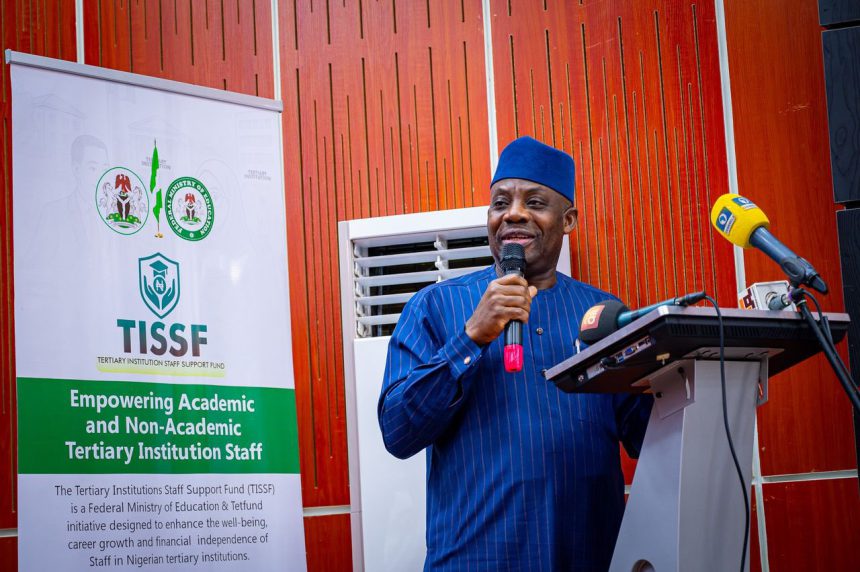
Announcing the reversal on Wednesday in Abuja, the Minister of Education, Dr. Tunji Alausa, said English will henceforth serve as the language of instruction in all Nigerian schools — from the primary to tertiary level.
Dr. Alausa made the announcement at the opening of the Language in Education International Conference 2025, organised by the British Council, where he attributed the country’s poor performance in public examinations to the use of indigenous languages for teaching.
According to him, evidence-based research conducted by the ministry revealed that the previous policy had significantly undermined learning outcomes.
“The National Policy on Language has been cancelled. English is now the language of instruction in our schools, from primary to tertiary levels,” he declared. “As you know, one of the most important and powerful things in education is language. That’s how the role of language instruction is going to be developed in all subjects.”
The minister said data collected by his ministry showed that many pupils were advancing through classes without acquiring essential literacy and numeracy skills due to inconsistencies in the implementation of the mother-tongue policy.
He also highlighted the practical challenges of enforcing the 2022 policy, noting that Nigeria’s vast linguistic diversity — with over 500 languages spoken nationwide — made it nearly impossible to standardize instructional materials and train teachers across regions.
Dr. Alausa emphasised that the new directive seeks to restore coherence, improve comprehension, and enhance overall educational performance by ensuring that students are taught in a language they can use beyond their immediate communities.