
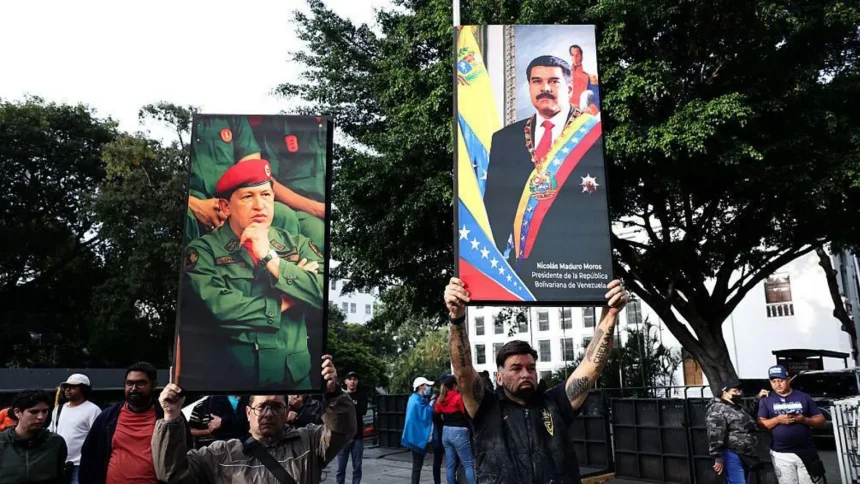

The United States’ military capture of Venezuelan President Nicolás Maduro has triggered a starkly divided international response, pitting key allies against a chorus of global condemnation.
The operation, which U.S. President Donald Trump announced on Saturday, resulted in Maduro and his wife being taken into custody and transported to face drug and weapons charges in New York.
Yet, in a brief statement, new UK Prime Minister Keir Starmer offered a measured endorsement of the regime change, stating his government would “shed no tears” for Maduro’s departure.
However, this support was swiftly overwhelmed by vehement protests from nations worldwide. Venezuela’s key allies, Russia and China, led the charge. Beijing declared it was “deeply shocked and strongly condemns” the “use of force against a sovereign country,” while Moscow denounced the incursion as “an act of armed aggression.”
Condemnation resonated powerfully across Latin America, historically wary of U.S. intervention. Brazilian President Luiz Inácio Lula da Silva called the action an unacceptable violation of international law, warning it was “the first step toward a world of violence, chaos, and instability.” Regional bodies are expected to convene emergency sessions.
Iran, itself a target of Trump’s threats, labeled the strikes a “flagrant violation of national sovereignty,” highlighting broader geopolitical tensions.
Despite the fallout, President Trump outlined an interim plan, stating the U.S. would “run” Venezuela to oversee a “safe, proper and judicious transition” of power.