

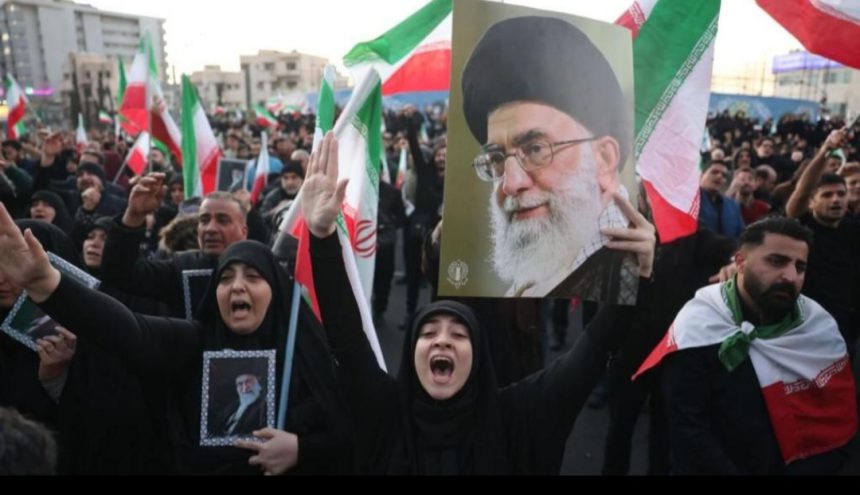

Iran was thrown into turmoil on Saturday morning after its Supreme Leader, Ayatollah Ali Khamenei, was reportedly killed inside his office during a coordinated strike attributed to the United States and Israel.
The attack, described by regional sources as swift and highly targeted, marks one of the most dramatic escalations in the long-running hostility between Tehran, Washington, and Tel Aviv.
Israeli officials confirmed that operations were underway “in the heart of Tehran,” saying the strikes were aimed at critical military and strategic sites. Loud explosions were heard across parts of the capital, with smoke rising above government districts as emergency services rushed to affected areas. The attack represents an extraordinary breach of Iran’s most secure political space and signals a sharp intensification of open confrontation.
In response, Iran resumed aerial strikes beyond its borders, targeting locations across the Gulf. Explosions were reported in Dubai, Doha, Bahrain, and Kuwait, sending shockwaves through a region already on edge. Air defense systems were activated in several cities, and authorities moved quickly to secure sensitive infrastructure. While details about casualties and damage remain unclear, the strikes have heightened fears of a broader regional conflict.
U.S. President Donald Trump reacted forcefully, describing Khamenei as “one of the most evil people in history” and urging Iranians to “take back their country.”
He warned that any retaliation against American interests would be met with overwhelming force, declaring that the United States was prepared to respond with power “never seen before.”
Iranian leaders, meanwhile, vowed fierce retaliation. Officials promised what they called “the most devastating offensive operation” against U.S. bases and Israeli targets, framing the killing of their Supreme Leader as an act of war.