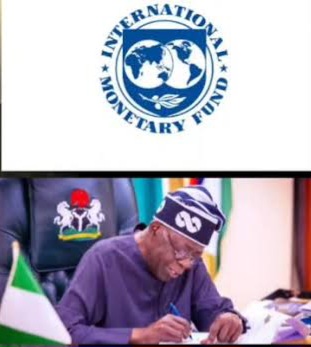

Senator representing Ondo South, Jimoh Ibrahim, has said Nigeria’s absence from the list of the world’s most indebted countries reflects what he described as disciplined fiscal coordination under President Bola Tinubu.
Ibrahim, who is also an ambassador-designate, made the assertion amid renewed public debate over Nigeria’s debt profile and borrowing pattern. He disclosed this in a statement shared on Wednesday, noting that recent global debt data places several advanced economies far ahead of Nigeria in terms of total debt burden.
His comments follow the release of fresh Q4 2025 figures by the Institute of International Finance through its Global Debt Monitor report, with further analysis by Visual Capitalist. The data show that a number of developed economies are carrying total debt levels exceeding 300 per cent of their gross domestic product (GDP).
According to the report, Hong Kong tops the global ranking with a debt-to-GDP ratio of 380 per cent, followed by Japan at 372 per cent and Singapore at 347 per cent. France and Canada complete the top five with 326 per cent and 315 per cent respectively.
The ratios reflect combined government, corporate and household debt, offering a broader measure of national indebtedness beyond sovereign borrowing alone.
While several African countries — including Senegal (156 per cent), South Africa (149 per cent) and Tunisia (143 per cent) are witnessing rising debt levels, particularly driven by sovereign borrowing, Nigeria does not feature among the most indebted nations globally in terms of total debt-to-GDP ratio.
Ibrahim argued that this comparative position demonstrates prudent fiscal management and improved coordination between monetary and fiscal authorities.