

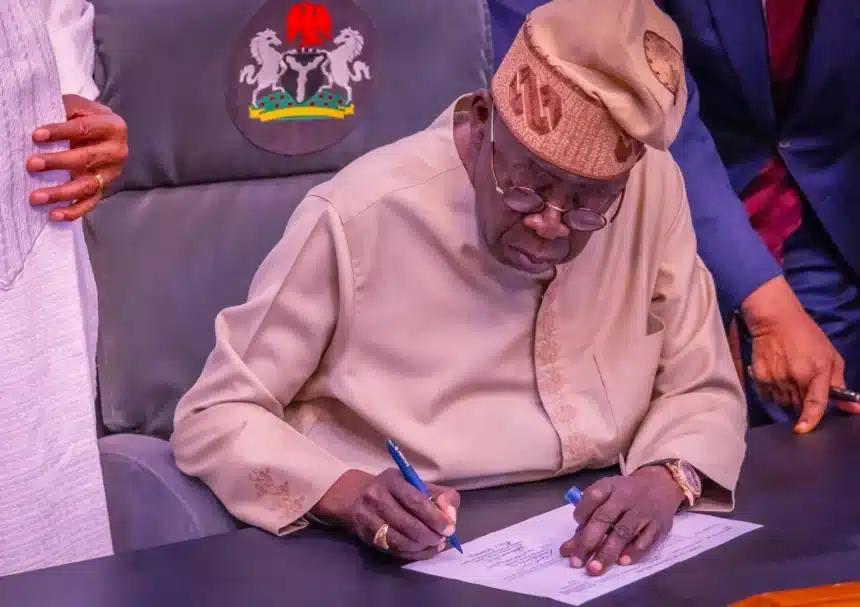

President Bola Tinubu’s approval of the Electoral Act 2026 (Amendment), has stirred up animosity among opposition parties and civic groups who have warned that the new law could weaken Nigeria’s democratic framework ahead of the 2027 general elections.
The President signed the amended legislation on Wednesday evening at the Presidential Villa in Abuja, shortly after it was cleared by both chambers of the National Assembly. The swift progression of the bill from passage to presidential assent has drawn sharp reactions from critics.
While signing the measure, Tinubu referenced concerns surrounding the nation’s broadband coverage and technical capacity, particularly in relation to the real-time electronic transmission of election results. Nonetheless, he proceeded to give his approval.
The Peoples Democratic Party (PDP) faulted the development, accusing the ruling All Progressives Congress (APC) of pushing through the amendment out of apprehension about the next electoral contest. In a statement issued by its National Publicity Secretary, Ini Ememobong, the party described the President’s action as detrimental to democratic norms.
According to the PDP, the rapid assent to the bill, despite objections from various stakeholders suggests a calculated political move rather than a reform driven by national interest. The party argued that the amendment risks undermining transparency and fairness in future elections.
Civil society organisations have echoed similar concerns, cautioning that any perceived weakening of electoral safeguards could erode public confidence in the democratic process as the country prepares for the next round of nationwide polls.