

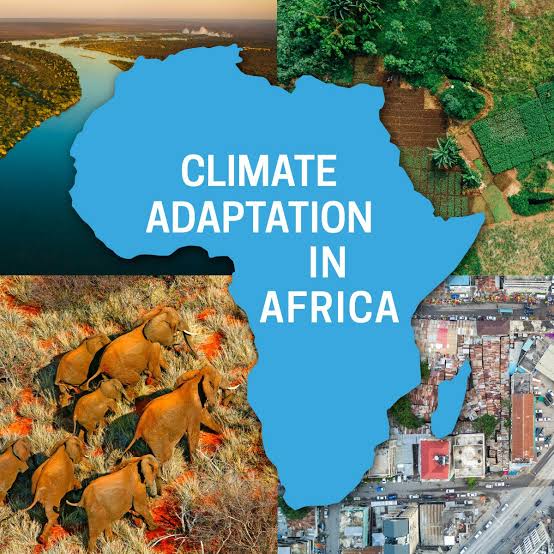

A new continental assessment has found that community-driven climate adaptation initiatives across Africa are producing tangible resilience gains, but warns that their long-term impact will depend on urgent reforms to financing systems, governance structures and investment strategies.
The report, unveiled during the African Union Summit, evaluates adaptation efforts across member states and highlights locally led models that are helping communities respond to intensifying climate shocks. It argues that while innovation and grassroots leadership are driving results, structural funding barriers continue to limit expansion and sustainability.
According to the findings, Africa receives less than 10 per cent of global adaptation finance. Of that share, under 20 per cent reaches local actors directly, despite evidence showing that community-led interventions often deliver stronger and more lasting outcomes than externally designed programmes.
Researchers reviewed 280 adaptation projects implemented between 2014 and 2024 and identified significant gaps in inclusion and participation. While 68 per cent of projects incorporated gender considerations, youth participation was recorded in just 41 per cent. Indigenous knowledge systems featured in only 23 per cent of initiatives, underscoring persistent equity shortfalls in adaptation planning.
The study also revealed regional disparities. East and West Africa have recorded stronger progress, largely due to more developed decentralisation policies and governance frameworks that empower local institutions. In contrast, Central and North Africa were found to be lagging, reflecting weaker institutional coordination and limited funding access.
Despite an overall expansion in adaptation activities, many projects remain small-scale, fragmented and heavily donor-driven. The report cautions that without better coordination and domestic investment, these initiatives risk failing to achieve meaningful, continent-wide transformation.
Importantly, the analysis concludes that effective adaptation depends more on strong governance, local leadership and decentralised decision-making than on technological solutions alone. It stresses that strengthening institutions and improving direct access to finance will be critical to scaling resilience-building efforts.
The timing of the report is significant, as African governments intensify discussions on climate resilience and financing reform under continental development frameworks. With Africa contributing less than four per cent of global greenhouse gas emissions yet facing disproportionate climate risks and adaptation costs, the authors argue that redirecting funds toward locally led systems is both a practical and moral imperative.
The report calls for increased African ownership of climate strategies, expanded domestic resource mobilisation and stronger alignment between national policies and regional frameworks to ensure climate finance reaches vulnerable communities most affected by climate change.
Media Contact:
Ivy Namdiero
Email: inamdiero@globalhealthstrategies.com
Phone: +254 725 017 527