

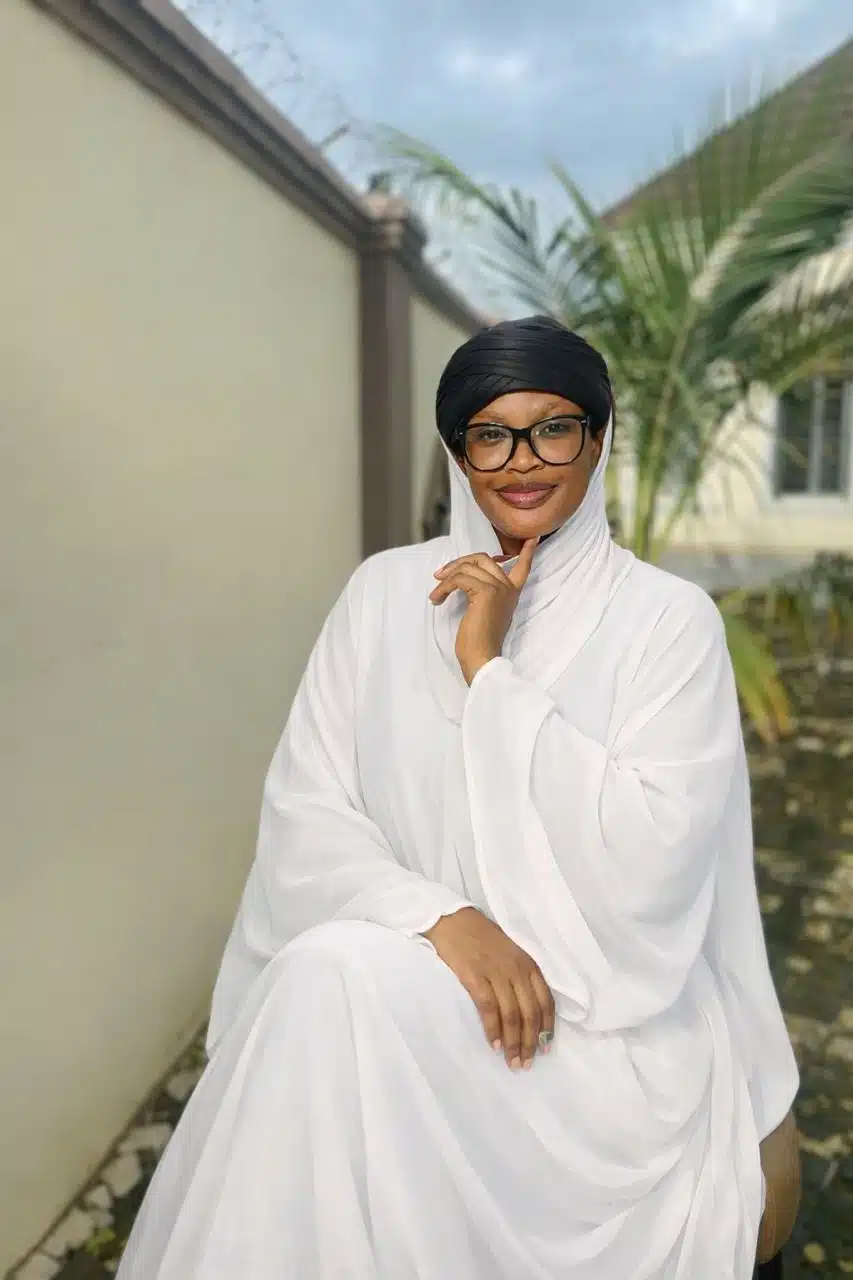

Child rights and women’s rights advocate, as well as educator, Nafisat Shuaib, has said that the greatest challenge confronting Nigerian women today is not a lack of ability but the struggle to navigate systems that were historically designed without them in mind.
Shuaib made this known while speaking on Adamimogo 105.1FM’s current affairs programme Inside Scoop, where she examined the realities facing Nigerian women in the socio-economic and political landscape.
According to her, Nigerian women have continued to record significant achievements across sectors such as business, education, healthcare and civil society, demonstrating both competence and readiness to contribute to national development.
However, she noted that structural and cultural barriers still limit their full participation, particularly in leadership and political spaces.
“The struggle is not that women lack capacity or ambition,” she said. “The real challenge is navigating systems that still need to evolve to accommodate women’s full participation.”
Shuaib explained that many Nigerian women juggle several responsibilities simultaneously, including professional duties, family obligations and community expectations. These responsibilities, she said, often reduce the time and resources women can devote to leadership opportunities or political aspirations.
In her words, the typical Nigerian woman is expected to balance work, manage the home, raise children and meet societal expectations, leaving little room to pursue public leadership roles.
Beyond domestic pressures, she pointed to unequal access to political funding, mentorship and influential networks as another major obstacle limiting women’s advancement.
“Women often have to work twice as hard just to receive the same level of recognition or opportunity,” she said.
Despite these challenges, Shuaib insisted that women are increasingly asserting their voices and demanding greater inclusion in public discourse.
She credited the rise of social media as a powerful tool that has helped many women gain confidence to speak up on issues affecting society.
“Once women come online and see others speaking confidently, they begin to realise that they too can contribute to national conversations,” she explained.
While Nigerian laws guarantee women the right to participate in politics and public life, Shuaib argued that the social environment often makes exercising those rights difficult.
She observed that assertive men in politics are often perceived as confident leaders, while women who speak with similar conviction are sometimes labelled aggressive or emotional.
The advocate also highlighted the growing problem of social backlash, particularly online criticism that often targets women’s personalities rather than engaging with their ideas.
“Women who speak strongly about political or social issues sometimes face attacks that go beyond debate and become personal,” she said.
Shuaib further identified cultural expectations as a powerful force shaping how women express themselves in society.
She recalled growing up in an environment where women were discouraged from speaking boldly in the presence of men or even maintaining eye contact during conversations.
Such cultural conditioning, she noted, continues to influence how some women view their place in public life.
However, she stressed that attitudes are gradually changing as more women break barriers and demonstrate leadership capacity.
“Women are no longer willing to remain silent. We have ideas, knowledge and solutions to contribute,” she said.
Shuaib emphasised that women must actively seek spaces where national conversations are taking place, whether through civic organisations, professional associations, academic platforms or the media.
She also urged women to ensure that their contributions are informed and solution-oriented, arguing that constructive engagement can strengthen their credibility in public debates.
On the persistent underrepresentation of women in Nigerian politics, Shuaib pointed to financial barriers as one of the most significant challenges.
She explained that political contests in Nigeria are often driven by enormous financial demands, leaving many capable women unable to compete with well-funded male candidates.
“Politics in Nigeria is highly monetised. Even if a woman has the knowledge and leadership ability, without financial backing it becomes extremely difficult to compete,” she said.
She also acknowledged that some societal attitudes still question women’s leadership capacity, with certain individuals openly declaring that they would never vote for a female candidate.
Such perceptions, she said, can discourage women from pursuing political ambitions.
Shuaib further admitted that support among women themselves is sometimes inconsistent, noting that while many women champion female candidates, others remain hesitant to openly support women in leadership roles.
Despite these challenges, she expressed optimism that greater awareness, advocacy and participation will gradually shift the narrative.
According to her, encouraging women to speak up and participate actively in civic life will ultimately strengthen Nigeria’s democracy and governance.
“Society will be better when women speak up more often,” she said. “When you silence women, you silence ideas that could help move the nation forward.”
Shuaib concluded by urging Nigerian women to overcome fear and societal pressure, insisting that their voices are essential to shaping the country’s future.