

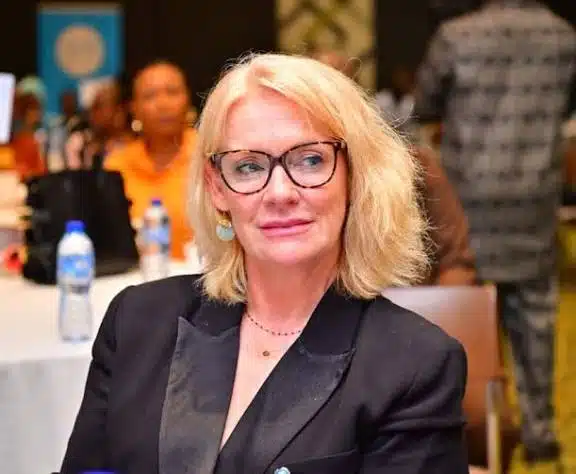

As the world marked World Children’s Day, UNICEF ha reminded leaders that every child wakes up with rights not privileges and urged Lagos State lawmakers to turn those rights into concrete action.
Speaking at a Policy Dialogue with Legislators and an arts exhibition by children, Celine Lafoucriere, Chief of UNICEF Lagos Field Office, said the day serves as a global moment for children to speak about their lives, hopes, and rights. But she warned that globally, support for child rights is weakening at a dangerous time. According to her, ongoing funding cuts could leave 4.5 million more children at risk of death by 2030 and push six million more out of school by 2026, even as over 200 million children currently need urgent assistance.
Lafoucriere stressed that while the global picture is bleak, Lagos does not have to follow that trend. She praised the state for achievements such as leading Nigeria in birth registration, noting that when Lagos commits to children, it delivers. She added that the children present at the event came from different schools and backgrounds, but all share fundamental rights: to education, health, protection, clean water, and to be heard. These, she said, “are not favors we grant when budgets allow. These are rights.”
She highlighted the realities many Lagos children face — from going to school hungry to studying in classrooms without water, toilets, books, or digital tools. Others, she said, experience violence or feel invisible in decisions that directly affect their lives. The theme “My Day. My Rights” reflects these daily struggles, not just a slogan.
Lafoucriere urged lawmakers not to simply listen and move on, insisting that the situations described by children “are not acceptable — not in our Lagos.” She emphasized that investing in children pays off for society, producing healthier, smarter adults and reducing poverty and insecurity.
She challenged the legislators to make concrete, time-bound commitments after hearing from the children: fixing broken schools, expanding digital learning to remote communities, improving healthcare access, strengthening health insurance, and creating formal avenues for children’s voices in policymaking.
UNICEF, she said, remains ready to support Lagos State in ensuring that every child enjoys their full rights. She concluded with a call for visible, practical steps: “Let us leave here with actions children can see and feel in their daily lives. Let us show them what leadership looks like. Itesiwaju Eko!”