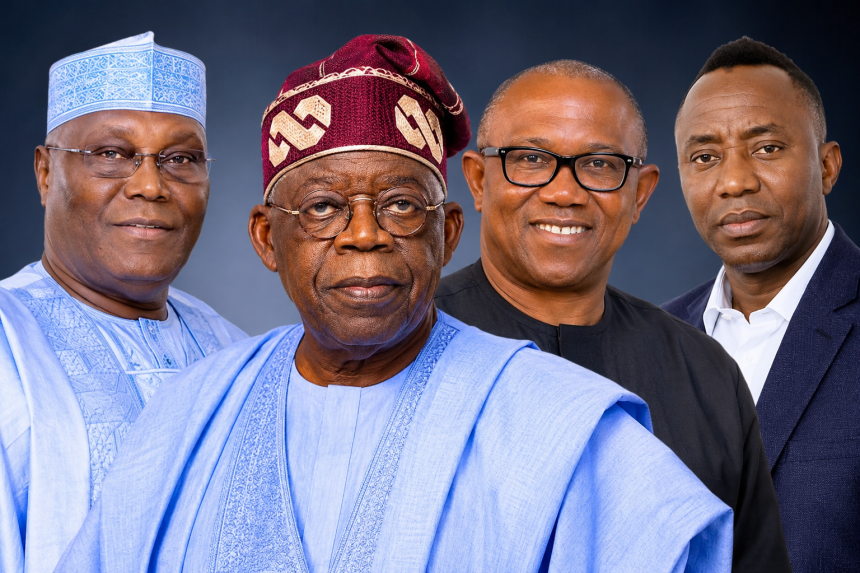

The removal of Nigeria’s petrol subsidy, its economic consequences and competing proposals for the country’s recovery dominated a heated political debate on Thursday as supporters of four major political camps presented contrasting visions for Nigeria ahead of the 2027 general elections.
The debate, organised by The New Broom: The Real Conversation Podcast, was hosted by its Convener, Deolu Oyebode, alongside co-hosts Dr. Olaniyi Ayodele and O’seun Esan. It featured representatives of the African Action Congress (AAC), All Progressives Congress (APC), African Democratic Congress (ADC) and Nigeria Democratic Congress (NDC) in a live TikTok discussion titled “2027: Who Wins Nigeria?”
The participants examined the Tinubu administration’s economic reforms, particularly petrol subsidy removal, the distribution of increased revenue to state governments, the rising cost of living and alternative policy proposals being advanced by opposition political figures.
Representing the AAC and the Sowore-Magashi ticket, Kunle Wizeman Ajayi criticised the current approach to managing Nigeria’s petroleum resources, arguing that the country should prioritise public ownership, domestic refining capacity and investment in social services.
He maintained that an administration led by Omoyele Sowore would discontinue production subsidies and instead pursue the rehabilitation of Nigeria’s state-owned refineries, with a target of completing the process within its first three months in office.
Ajayi also proposed increased crude oil production and the redirection of resources towards universal access to education, including free university education, healthcare and other social programmes.
He further advocated a national minimum wage of ₦500,000, arguing that Nigerians had not experienced meaningful benefits from the existing subsidy policy.
On the other side of the debate, Asiwaju Oladimeji, representing the APC and the Tinubu-Shettima ticket, defended the removal of petrol subsidy, describing it as a necessary economic intervention despite its immediate consequences for households.
He argued that the reform had increased financial allocations available to state governments, giving subnational administrations greater capacity to finance development projects.
Drawing an analogy with medical surgery, Oladimeji described subsidy removal as a necessary but painful intervention, suggesting that the immediate discomfort should be understood within the context of longer-term economic recovery.
He maintained that the healing process had begun, pointing to what he described as declining food prices and improvements in the cost of living over the preceding two years. He also urged Nigerians to remain patient with the reform process.
Representing the ADC and the Atiku Abubakar-Amaechi political camp, Tope Adesipo argued that the country’s economic difficulties had been compounded by the manner in which the Tinubu administration implemented subsidy removal.
He maintained that Atiku Abubakar’s proposed approach of phased subsidy removal offered a more gradual alternative, allowing the government to manage the transition while protecting vulnerable households from sudden economic shocks.
Adesipo argued that the reform should have been accompanied by adequate planning, social protection measures and a clearly communicated implementation framework. He also called for transparent investment of subsidy savings in infrastructure, employment generation and social welfare programmes.
Speaking for the NDC and the Peter Obi political camp, Kunle Agbede, Esq., attributed Nigeria’s worsening economic difficulties to the policies and governance choices of successive APC administrations since 2015.
He questioned the volume of borrowing undertaken by the Tinubu administration despite its claims of economic progress, raising concerns about the relationship between government borrowing, economic growth and the welfare of ordinary Nigerians.
Agbede also addressed the perception of Peter Obi as a frugal politician, arguing that the candidate’s approach to public finance would prioritise the wider population rather than concentrate public resources in the hands of a privileged political and economic class.
The exchange highlighted significant differences among the four political camps on the appropriate management of Nigeria’s petroleum sector, the pace of economic reforms, public expenditure and the use of government revenues to address poverty and the rising cost of living.
Beyond the subsidy debate, the discussion provided an opportunity for supporters of the different political tendencies to articulate their preferred economic direction and challenge competing policy positions ahead of the 2027 presidential election.
The Real Conversation Podcast is part of The New Broom’s civic engagement initiative, designed to provide a platform for open political conversations, ideological engagement and public scrutiny of policy proposals.
The programme airs live on TikTok every Thursday at 8:00 p.m., bringing together voices from different political parties and ideological persuasions to discuss issues shaping Nigeria’s political and economic future.