

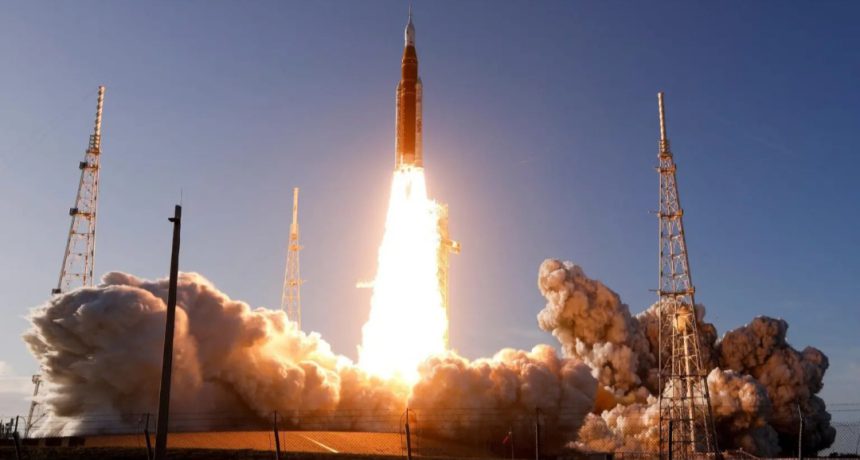

A new chapter in human space exploration is underway as NASA successfully launched its Artemis II mission, sending astronauts into orbit in a powerful display of engineering and ambition.
The spacecraft is now circling Earth, where it will remain for approximately 24 hours as the crew conducts critical system checks. If all systems perform as expected, mission controllers are expected to give the go-ahead for the next phase: a journey toward the Moon.
Wednesday night’s launch was anything but routine. From pre-flight technical concerns to the tense final countdown, the mission faced early hurdles before ultimately receiving clearance for liftoff. Once airborne, however, the launch delivered a breathtaking spectacle.
Observers described the moment as visceral and overwhelming, with the sheer القوة of the rocket’s thrust felt deep in the body as it pierced the sky.
Onboard, the crew shared their awe in real time. “Great view,” said astronaut Reid Wiseman as the spacecraft climbed through the atmosphere. “It is amazing to be at this altitude,” he added later, capturing the sense of wonder that accompanies humanity’s return to deep space exploration.
NASA officials have confirmed that the crew is “safe, secure, and in great spirits” as they begin the mission’s early phase.
Unlike the historic Apollo 11, Artemis II is not designed to land on the lunar surface. Instead, the astronauts will travel around the Moon during their 10-day mission, testing systems and gathering data crucial for future landings.
The mission could ensure that the crew travel farther from Earth than any human crew in history, pushing the boundaries of exploration beyond previous limits.