

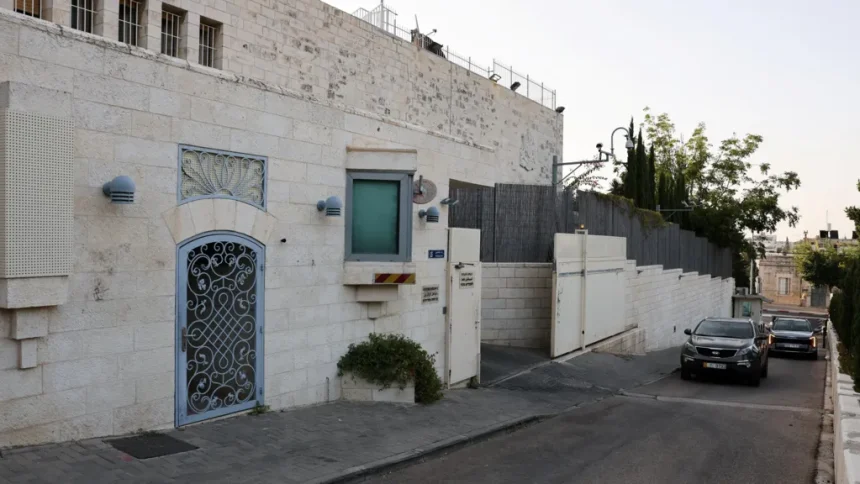

Britain and Israel have reached a compromise over the future of the British consulate in occupied East Jerusalem, with most UK diplomats set to leave the country while the building remains open under a new designation.
Israeli Foreign Minister Gideon Saar said on Thursday that the consulate was ending its operations after Israel implemented measures announced in September in response to UK sanctions against Israeli settlements in the occupied West Bank.
Saar said 20 British diplomats, including the consul general, would leave Israel, while a task force of seven diplomats would remain in the building with what he described as a “very limited scope of activity.”
“The British Consulate in Jerusalem is closing its operations today. Accordingly, the sign of the British Consulate in Jerusalem has been removed,” Saar said in a social media post.
However, the UK government rejected the description that the consulate was closing. Foreign Secretary Ed Miliband said some staff had been temporarily withdrawn for security reasons, while insisting that the building would continue operating as a UK diplomatic mission.
Miliband said the facility would be known as the UK Mission, Jerusalem, from Thursday and would continue working with the Palestinian people.
“The UK government reiterates its long-standing view that East Jerusalem is occupied territory,” Miliband said, maintaining Britain’s position that Israel has no legal authority to close the mission.
He added that discussions with Israel had failed to secure sufficient assurances concerning the safety and protection of British staff and the premises, prompting the temporary withdrawal of several diplomats and their families.
The British Foreign Office said the seven diplomats remaining in Jerusalem would remain operational and independent, continuing to provide essential services and engage with the Palestinian Authority.
Israel, however, said the remaining diplomatic team would operate only within a limited scope.
The dispute began after Britain announced sanctions against Israeli settlements in the occupied West Bank, which are considered illegal under international law. Israel subsequently announced plans to shut the consulate in retaliation, giving Britain 30 days from the announcement to respond.
The consulate, established in 1838, has traditionally handled Britain’s relations with Palestinians in Jerusalem, the West Bank and Gaza. It operates separately from the UK embassy in Tel Aviv, which serves as Britain’s principal diplomatic mission to Israel.
The latest agreement appears to have eased tensions that threatened to further damage relations between the two countries. Israeli media had reported that Britain was considering expelling Israeli diplomats from London in response, raising fears of further diplomatic escalation.
Saar said the agreement meant that no further measures would be taken against Israel, while Miliband said Britain retained the option of taking what he described as “reciprocal action.”
The UK Foreign Office described the arrangement as a positive outcome because Britain would retain a diplomatic presence in Jerusalem despite the dispute.
Foreign Office Minister Stephen Doughty said the building remained open and that British officials would continue important diplomatic work, including engagement with the Palestinian Authority.
He acknowledged that the change in designation could appear symbolic but stressed that Britain’s presence in Jerusalem had been maintained and that the government’s disagreements with the Israeli administration remained unchanged.
Miliband said Britain would not take reciprocal action while discussions with Israel remained active and credible, making an immediate escalation in the diplomatic dispute less likely.