

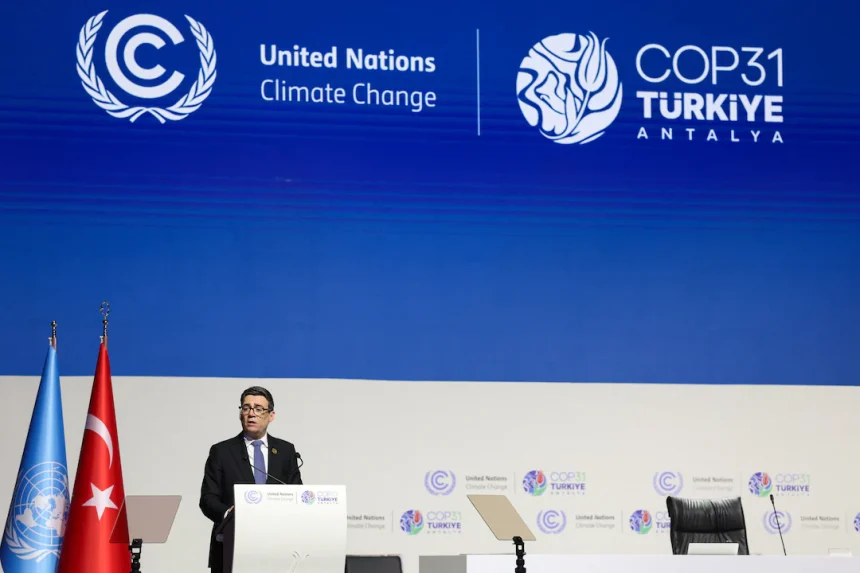

World leaders used two days of intense speeches at the COP31 climate talks in Turkey to set out competing positions and make conflicting demands, leaving negotiators with a difficult job to draft a meaningful deal everyone can accept.
Small island states, among the most vulnerable as global warming drives sea levels higher, appealed for urgent cuts to greenhouse gas emissions.
European leaders backed a proposal to expand global electrification, developing countries called for more finance from rich nations, and fossil fuel producers argued that oil, gas and coal should continue to be used.
“We reaffirm our sovereign right to strengthen our energy and oil industry as a driver of our national development,” Venezuela’s acting President Delcy Rodriguez told the conference, after UN leaders made the case for ending the age of fossil fuel.
Beyond trying to reconcile incompatible national positions aired on Wednesday and Thursday, conference host Turkey and negotiations lead Australia also face the challenge of making progress at a time when wars and inflation have pushed climate concerns down the political agenda.
“It’s my job to steer consensus, not to bang tables and demand any particular action, but to steer consensus to the strongest, most ambitious possible outcome within the constraints of that consensus-driven process,” Chris Bowen, Australia’s COP31 president of negotiations, told Reuters.
Asked what a good deal might look like, he said: “I have many more hours of consultations with partners to do.”