


Despite current socio-economic and political challenges confronting Nigeria, fresh projections from the Economic Community of West African States suggest the country could emerge as one of the world’s leading economic powers in the coming decades.
Nigeria currently remains Africa’s largest economy by Gross Domestic Product and contributes significantly to West Africa’s economic output, exports and banking activities. Nigerian financial institutions have also expanded their influence across the region in recent years, strengthening the country’s economic footprint.
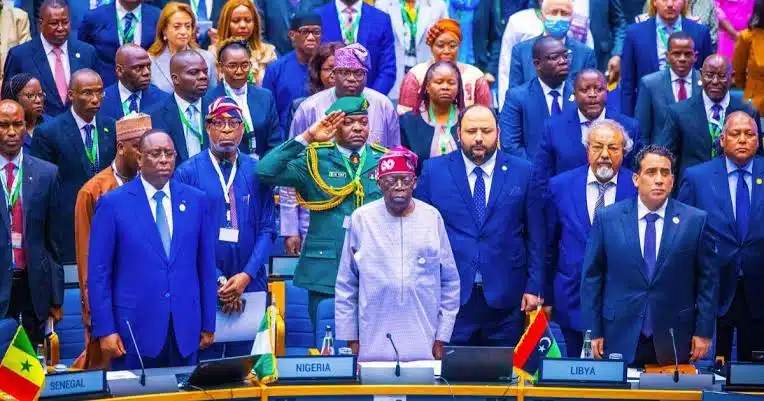
Speaking during the 2026 First Ordinary Session of the Economic Community of West African States Parliament in Abuja, Kalilou Sylla said projections from the United Nations and global academic institutions indicated a major economic transformation for West Africa in the future.
According to Sylla, Nigeria could become the world’s fifth most powerful economy within the next 50 years, while Ghana and Côte d’Ivoire may rank among the world’s 15 richest countries within 25 years.
He further projected that Côte d’Ivoire could eventually surpass France in wealth within 70 years, although such forecasts may attract scrutiny considering France’s current position among the world’s largest economies.
Sylla stressed that Nigeria’s long-term growth would depend less on markets in Europe and the United States and more on stronger economic cooperation within the West African sub-region.
“It is not the American or English markets that will let the Nigerian market grow, but the sub-regional markets,” he told lawmakers.
He also urged Nigerian authorities to formulate stronger regional economic policies, particularly around trade, market access and the movement of goods across West Africa.
The ECOWAS Parliament session, which held from May 4 to May 17 in Abuja, focused on economic cooperation, governance and regional trade at a time when several countries in West Africa are facing inflationary pressures, political uncertainty and challenges arising from slowing global economic growth.