
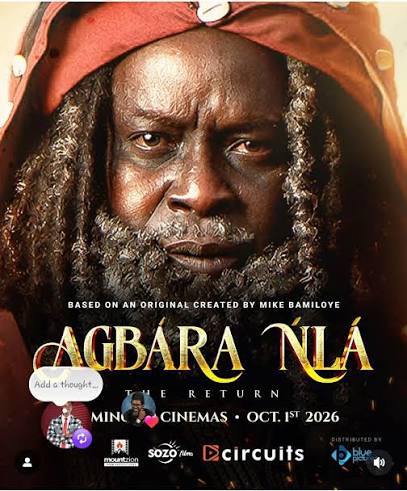

When Mike Bamiloye first played the menacing Isawuru in 1993, his four-year-old son, Damilola, watched from home and tried to copy him, grabbing a leaf, reciting incantations, and getting the words hopelessly wrong.
Thirty-three years later, that same son sat in the director’s chair, calling the shots as his father reprised the iconic role.
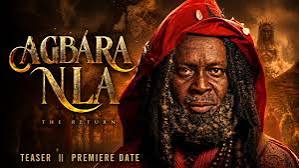
It is a remarkable full-circle moment at the heart of Agbara Nla: The Return, Mount Zion Films’ cinematic remake of the classic that defined a generation of Christian filmmaking in Nigeria.
The idea to revisit Agbara Nla was not new. Four years ago, Damilola and his brother, Joshua, approached their father with the proposal. He listened and said no.
“He told us it was not yet time. We respected that decision and left it at that,” Damilola recalled in an interview with The Punch.
The idea lay dormant until last year, when a conversation with a producer friend, Chris, reignited it. Convinced the timing had changed, the brothers returned to their father. This time, he gave his blessing.
“By the grace of God, the idea eventually became a film,” Damilola said. “Looking back, I believe that if we had made the film when we initially wanted to, it might not have had the same level of impact. The timing was part of God’s plan.”
For Damilola, directing his father was deeply personal. He remembers watching the elder Bamiloye apply his own makeup and dust powder on his hair to appear older for the role.
“Now, seeing him step into the same character without having to use powder or makeup to appear older, instead playing Isawuru at his actual age is remarkable,” he said. “Back then, he was trying to portray a man in his 50s or 60s. Now, he is 60.”
The result, he said, brought “a different depth” to the character. “It became even better.”
Damilola also stepped in front of the camera as Kola, with Joshua co-directing to cover his scenes. “When I’m on set, Joshua is directing, and when I’m not on set, I pick up the directing,” he explained.
While the original was consumed largely through television and home video, the remake was built deliberately for the big screen with multiple script revisions, high-end cameras, graphics, and special effects.
“We need to understand that Agbara Nla was written with the cinema in view,” Damilola said. “It’s a movie that was cooked with different lenses of different professionals.”
The new film expands the original’s universe, introducing a king character, the kingdom of Muwonleru, and a deeper backstory for Isawuru. But the core remains unchanged.
“Agbara Nla is not just a story; it is God’s word,” Damilola insisted. “Just like the Bible, which was relevant in the past and remains relevant today, God’s word does not fade away.”
For the Bamiloye family, the remake is about more than entertainment. It is about legacy and about the next generation taking up a vision that began as far back as 1987.
“I feel blessed, privileged and honoured,” Damilola said. “I thank God that my father is alive to be part of this experience.”
He credited Mount Zion’s endurance to one thing: unwavering focus on God’s voice. “There are many voices, but the only voice our father stuck to, and that has been passed down to us, is the voice of God.