

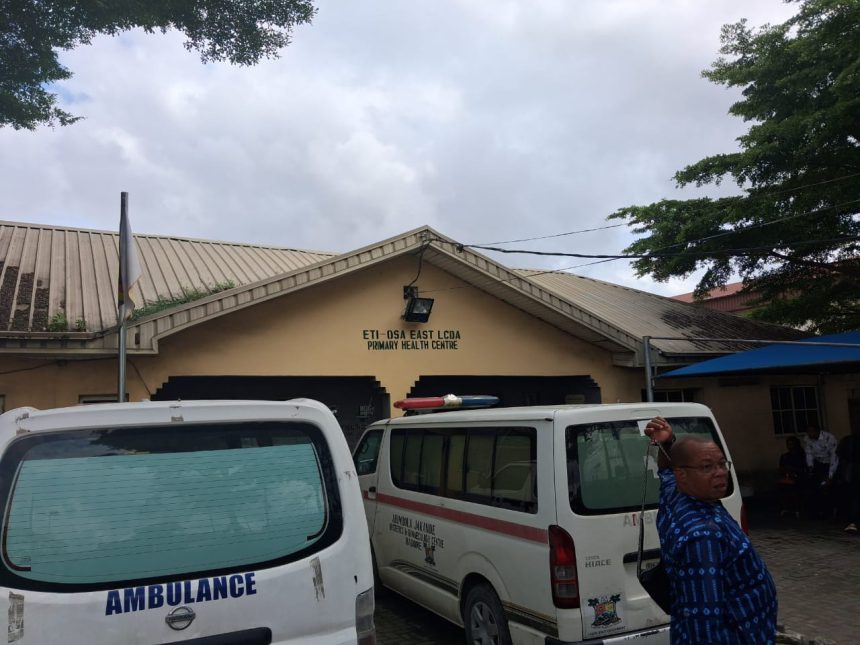

The National Population Commission (NPC) and the United Nations Children’s Fund (UNICEF) have stepped up efforts to improve birth registration in Nigeria, with a practical demonstration of the digital registration process conducted at the Eti-Osa East Local Council Development Area in Lagos.
The demonstration was organised as part of activities following a two-day media briefing by the NPC and UNICEF aimed at strengthening journalists’ understanding of birth registration and its importance to a child’s legal identity.
Health personnel at the LCDA, under the supervision of NPC officials, took journalists through the registration process for newborn children, highlighting the supporting documents required and how digital technology is helping to make the process faster and more accessible.
The exercise is part of broader efforts to ensure that more Nigerian children are registered at birth and have their legal identity formally recognised, in line with the provisions of the law.
The Registrar at the a health center at Eti-osa LCDA, Rosemary Imoh-Udoh, explained that parents could provide any of several supporting documents during registration, including an immunisation card, baptismal card or National Identification Number (NIN), depending on what is available.
She explained that some of the documents are optional and that parents are not necessarily required to provide all of them before a child’s registration can be completed.
According to her, the integration of NIN into the registration process has also made the procedure more efficient.
She explained that when a child’s NIN is entered into the system, the platform can automatically retrieve the child’s details and photograph, eliminating the need to capture the information again manually.

The process, she said, is designed to reduce delays and make birth registration less cumbersome for parents and health workers.
To back this claim up, a parent who was present to register his daughter, Chibundu Rafael, expressed satisfaction with the process, describing it as quick and functional.
Rafael, who said he had taken responsibility for registering his child at the health centre in order to ease the burden on his wife, said the entire process took only a few minutes.
“Two to three minutes. And it’s very easy. No problem about it. I love the process,” he said.
He urged other parents to take advantage of the opportunity to register their children early, warning that delaying registration could make the process more difficult as children grow older.
“I would advise them to come and do it. Because if they don’t take the chance now, it might be difficult for them tomorrow. They should not deprive that child of early registration,” he said.
The demonstration further explained the importance of collaboration between government institutions, health facilities, development partners and families in improving birth registration figures.
For the NPC and UNICEF, the objective is not only to increase the number of registered children but also to ensure that every child has a recognised legal identity from birth, providing a foundation for access to essential services and rights throughout life.
With stakeholders pushing for greater awareness and easier access to registration services, early registration remains central to efforts to ensure that no Nigerian child grows up without an officially recognised identity.