

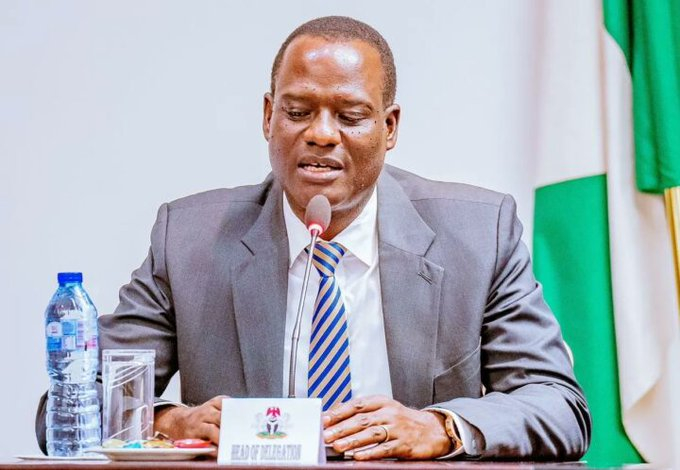

The Minister of Finance and Coordinating Minister of the Economy, Taiwo Oyedele, has defended government borrowing, saying many Nigerians, particularly analysts and commentators, criticize public debt without considering its purpose, cost, expected returns, and repayment terms.
Speaking on Tuesday in Abuja at the Fellowship Award Ceremony and 2nd Biennial Conference of the Capital Market Academics of Nigeria, Oyedele argued that the debate on government borrowing should focus on how borrowed funds are utilized rather than the size of the debt.
“When analysts go on TV and join the populist view to accuse the government of borrowing, you are doing a disservice.
The relevant question is never simply how much debt.
It is always debt for what and what cost, against what return, and repaid on what terms?” he said.
He added, “A nation, a state, or a business that borrows to finance a productive asset generating returns above the cost of that capital is not behaving recklessly; it is behaving rationally.”
Delivering a lecture titled, “Rethinking Capital Mobilisation for National Development: Why Should Capital Choose Nigeria,”
the minister said Nigeria’s widespread negative perception of debt has become a cultural obstacle to economic growth.
According to Oyedele, debt is frequently portrayed in public discourse as a moral failing instead of being understood as a financial instrument that can support development when properly managed.
His remarks come amid concerns over Nigeria’s rising debt profile. According to data released by the Debt Management Office (DMO), the country’s total public debt climbed to ₦159.28 trillion as of December 31, 2025.
The figure represents an increase of ₦5.98 trillion, or 3.9 percent, from the ₦153.29 trillion recorded at the end of September 2025.
On a year-on-year basis, public debt rose by ₦14.61 trillion, representing a 10.1 percent increase from the ₦144.67 trillion recorded as of December 31, 2024.
Oyedele maintained that borrowing should be assessed based on whether it finances productive investments capable of generating returns that exceed the cost of the debt, rather than being condemned solely because the government has taken on additional loans.
Nigeria Secures Fresh Financing as FEC Approves $2.96bn, €200m and ₦215bn Package
The Federal Executive Council (FEC) has approved financing arrangements worth about $2.96 billion, €200 million and ₦215 billion to support critical projects in transportation, agriculture,… https://t.co/o9udk5Um6R pic.twitter.com/H2M9A69TT0
— Prime Reporters News (@PrimeReportersn) June 30, 2026