


The U.S has announced that it will discontinue funding for HIV and Aids programmes in South Africa, bringing to an end a partnership that has been instrumental in tackling a disease that still affects more than eight million people in the country, the largest HIV-positive population anywhere in the world.
Until 2025, South Africa received about $400 million annually through the US President’s Emergency Plan for AIDS Relief (PEPFAR), the landmark initiative established in 2003. The programme accounted for nearly one-fifth of the country’s HIV spending and helped finance prevention campaigns, community health services and treatment programmes that reached millions of vulnerable citizens.
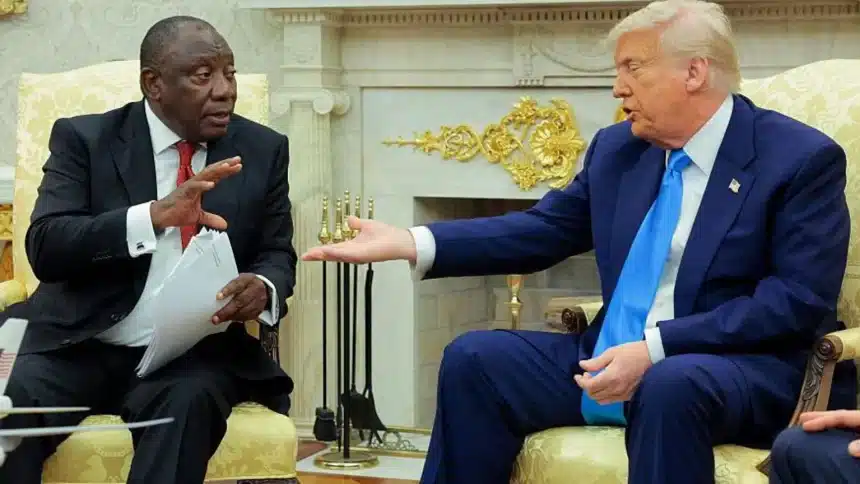
The decision comes amid worsening diplomatic tensions between Washington and Pretoria. The US State Department suggested that concerns over South Africa’s alleged treatment of the white Afrikaner minority influenced the move, accusations repeatedly rejected by the South African government.
The administration of US President Donald Trump has repeatedly alleged that a “white genocide” is taking place in South Africa, claims that have been dismissed by scholars, analysts and human rights groups. Nevertheless, the White House has cited what it described as “unjust and immoral practices” and has introduced a refugee programme for Afrikaners, descendants of European settlers who arrived in southern Africa centuries ago.
Health experts fear that the fallout from the political dispute could have profound consequences for public health. While South Africa’s Health Ministry said it had yet to receive formal notification of the withdrawal, officials maintained that preparations for reduced donor dependence had been underway for years.
Authorities noted that the procurement and distribution of antiretroviral drugs are largely funded by the South African government and pointed to an ongoing self-reliance strategy designed to safeguard treatment for millions of patients. The government expressed confidence that the country would be able to maintain access to life-saving medication despite the loss of foreign support.
PEPFAR had received a temporary reprieve in October 2025 under a transitional arrangement known as the “bridge plan,” but the latest announcement effectively closes the chapter on one of the most consequential international health partnerships in Africa’s modern history.