

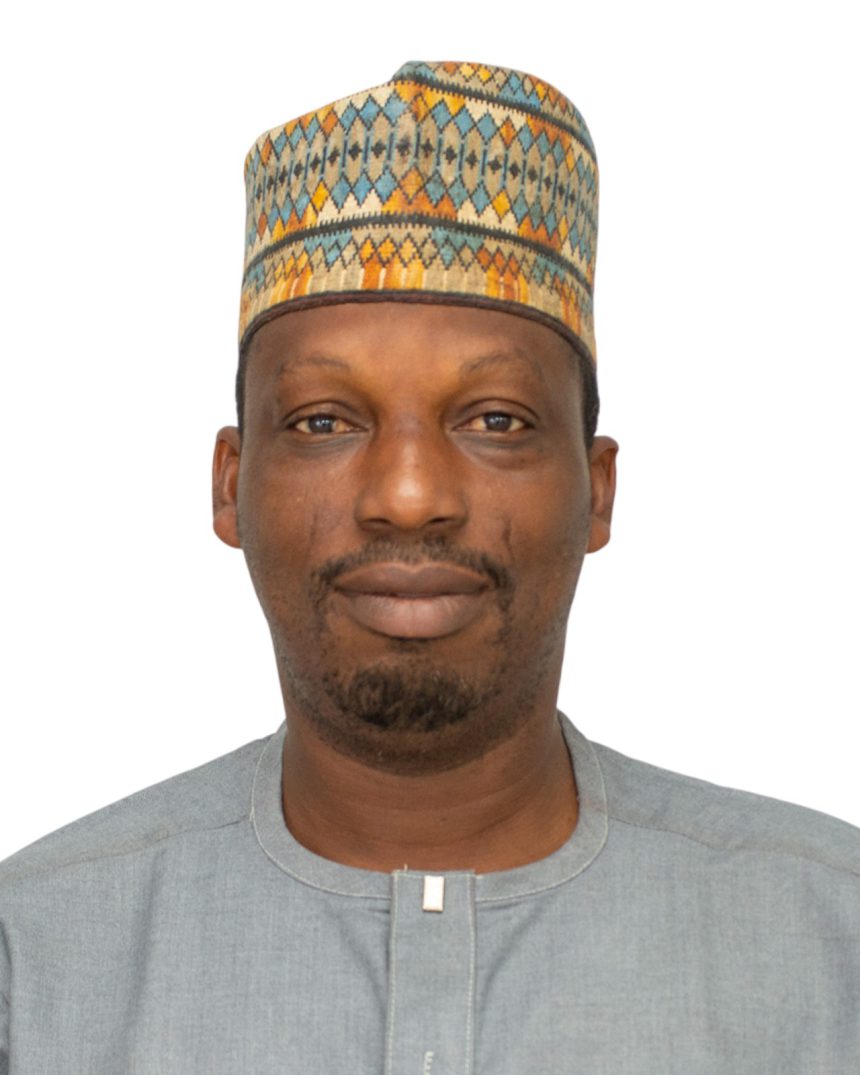

An Associate Professor of Political Science at the University of Ilorin, Dr Adebola Bakare, has warned that vote-buying is likely to persist during the 2027 general elections unless authorities strengthen prosecution of offenders and intensify public enlightenment.
Bakare, who is also the university’s Director of Legislative Studies, said Nigerian politicians were continually devising new ways to influence voters as the Independent National Electoral Commission (INEC) and other agencies moved to block electoral malpractice.
He spoke on Inside Scoop, a current affairs programme on Adamimogo 105.1FM Ibadan, where he examined vote-buying, enforcement challenges and the need to reform Nigeria’s electoral administration.
According to him, electoral malpractice has evolved over the years, moving from ballot stuffing to direct cash inducements and increasingly discreet arrangements designed to evade detection.
He recalled that ballot stuffing was a major concern in previous elections, with perpetrators allegedly thumbprinting ballot papers and inserting them into ballot boxes. Improved monitoring and reconciliation of ballot papers, he said, helped restrict the practice, paving the way for other forms of electoral manipulation.
Bakare explained that vote-buying has also become more difficult to detect because transactions are no longer necessarily conducted at polling units.
Recounting an incident he witnessed while serving as an ad hoc INEC staff member, he said some voters were allegedly required to provide evidence that they had voted for a particular party before receiving payment.
He described an arrangement in which voters raised their marked ballot papers for agents positioned at a distance to observe, or used their phones to photograph the ballot as evidence.
The payment, he said, would then be collected elsewhere, making it harder for election officials to catch those involved.
“Because Nigerian politicians are so desperate, in the 2027 elections, vote-buying will take place,” Bakare said.
The political scientist therefore urged Nigerians to resist financial inducements, arguing that politicians often treat election spending as an investment in securing political power, while voters risk sacrificing their long-term interests for immediate benefits.
He called for sustained voter education involving the National Orientation Agency, radio and television stations, civil society organisations and non-governmental organisations.
According to him, citizens must understand that their votes remain a critical instrument for determining whether elected officials retain power or are replaced.
“The power of vote is the only power we have every four years to change government or to retain a government that we feel has done what we wanted,” he said.
Bakare also called for the prosecution of people arrested for electoral offences, arguing that convictions and prison sentences, where warranted, would send a stronger warning to prospective offenders than arrests alone.
He said public confidence in enforcement agencies would improve if Nigerians could track cases from arrest through prosecution to conviction.
Bakare also advocated the unbundling of INEC, arguing that the commission carries too many responsibilities and should concentrate primarily on conducting elections.
He proposed that separate institutions should handle political party registration and monitoring, while another body could be established to deal specifically with electoral offences.
However, he acknowledged that such a restructuring would require legislative changes because INEC’s current responsibilities are defined by law.
He urged citizens and civil society groups to mount sustained pressure on lawmakers and political leaders to pursue reforms, noting that public demands could influence political decisions.
Bakare maintained that electoral reform should not depend solely on the willingness of politicians, as citizens also have a role in demanding accountability.
The university don cautioned against dismissing Nigeria’s democracy as inferior simply because of the prevalence of vote-buying.
He argued that attempts to influence voters also occur in established democracies, including the United States, and said electoral malpractice should be assessed through evidence rather than assumptions about the superiority of foreign political systems.
Bakare recounted an account from a relative living in Maryland, who allegedly received a package containing food items and money, alongside a letter soliciting support for a candidate on election day.
He used the anecdote to argue that voter inducement is not unique to Nigeria, although he did not provide independent evidence to establish whether the reported package constituted an electoral offence under US law.