

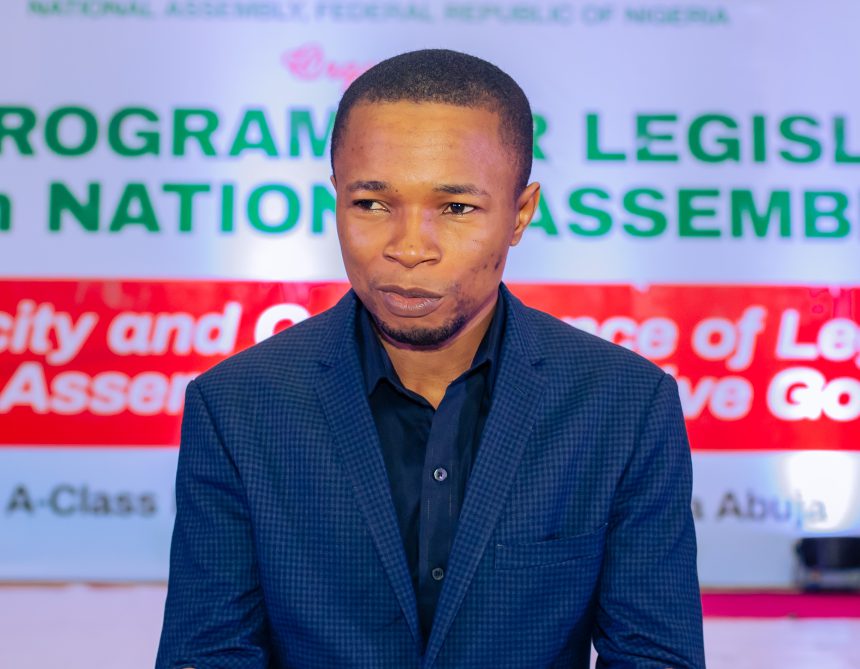

Michael Olaogun writes…
For decades, Africa has been described as the continent of the future. It is home to the world’s youngest population, vast natural resources, and immense entrepreneurial potential. Yet, despite these advantages, Africa remains largely dependent on external sources for the research and innovation needed to solve its most pressing challenges. This dependence is not merely a funding issue; it is a development challenge that threatens the continent’s ability to shape its own future. If Africa is serious about achieving sustainable development, economic transformation, and global competitiveness, it must prioritize indigenous research funding.
Today, a significant proportion of research conducted in African universities and research institutions is financed by foreign governments, international development agencies, and philanthropic organizations. While such support has undoubtedly contributed to knowledge generation across the continent, it often comes with predetermined priorities that may not fully align with Africa’s most urgent needs.
The consequence is that African researchers frequently find themselves pursuing projects designed to satisfy external interests rather than addressing local realities. Research agendas become donor-driven instead of community-driven. The result is a disconnect between knowledge production and the practical challenges confronting African societies. Africa cannot continue outsourcing its intellectual priorities.
The continent faces unique challenges requiring context-specific solutions. Whether it is food insecurity, climate change adaptation, infectious disease control, renewable energy deployment, urban planning, educational reform, or governance innovation, African problems often demand African perspectives. Solutions developed in Europe, North America, or Asia may offer useful insights, but they cannot always account for Africa’s diverse cultural, economic, and environmental realities.
Consider agriculture. Millions of African farmers operate under climatic and socioeconomic conditions vastly different from those in developed countries. Indigenous research can develop crop varieties, farming techniques, and technological innovations specifically tailored to local ecosystems. Similarly, healthcare research conducted within African contexts is more likely to identify effective responses to diseases and health conditions that disproportionately affect African populations. Without robust local funding, however, such research remains limited.
Indigenous research funding is also essential for economic growth. Around the world, countries that have transformed their economies have done so through sustained investment in research and development. From South Korea to China, from Singapore to Israel, innovation has been the engine driving industrialization and competitiveness.
Africa cannot industrialize on imported knowledge alone. The continent must invest in its universities, laboratories, innovation hubs, and research institutions to generate the discoveries that will power future industries. Every breakthrough in technology, healthcare, manufacturing, agriculture, and digital innovation begins with research. When governments underfund research, they inadvertently weaken the foundation of future economic prosperity.
Another reason for prioritizing indigenous research funding is the growing problem of brain drain. Many of Africa’s brightest scholars and scientists leave the continent in search of better opportunities abroad. They are not merely seeking higher salaries; they are seeking environments where research is valued, supported, and adequately funded.
The loss is enormous. Africa invests in educating talented individuals only to watch other countries benefit from their expertise. By creating sustainable funding mechanisms for research, African governments and private-sector actors can provide incentives for researchers to remain, innovate, and contribute to national development. Retaining talent is not a luxury; it is a strategic necessity.
Furthermore, indigenous funding strengthens intellectual sovereignty. Nations that depend excessively on external financing risk becoming consumers of knowledge rather than producers of it. Research is not simply about generating data; it shapes policies, influences public discourse, and determines development priorities.
When Africa finances its own research, it gains greater control over the questions being asked, the methodologies being employed, and the solutions being proposed. This autonomy is critical for ensuring that knowledge production reflects African aspirations rather than external assumptions.
The responsibility for funding research should not rest solely on governments. The private sector, philanthropic foundations, wealthy individuals, and development finance institutions all have important roles to play. African businesses, in particular, stand to benefit from research-driven innovation and should view investment in research as a long-term strategic asset rather than a charitable contribution. Universities and research institutions must also strengthen partnerships with industry to ensure that research outcomes translate into practical solutions and commercial opportunities.
The African Union’s vision for Agenda 2063 emphasizes innovation, science, and technology as pillars of the continent’s transformation. However, these aspirations cannot be achieved through rhetoric alone. They require substantial and sustained financial commitment.
The future of Africa will not be built solely through infrastructure projects, natural resource extraction, or foreign investment. It will be built through knowledge, innovation, and the capacity to solve problems from within. Indigenous research funding is therefore not an optional expenditure; it is a strategic investment in Africa’s future. The question is no longer whether Africa can afford to fund its own research. The real question is whether Africa can afford not to.
As the global economy becomes increasingly knowledge-driven, nations that invest in research will lead, while those that neglect it will follow. Africa must choose which side of history it wishes to occupy. The time has come for the continent to fund its ideas, trust its scholars, and invest boldly in its intellectual future.
Michael Olaogun, a policy and development researcher wrote from Abuja, Nigeria.