
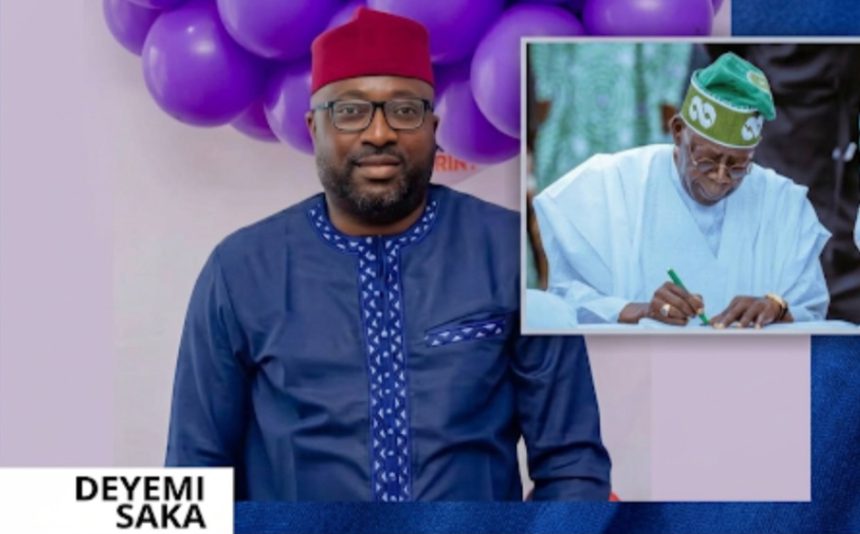

As Nigeria gradually enters another election cycle ahead of the 2027 presidential election, one familiar controversy has resurfaced: President Bola Ahmed Tinubu’s academic credentials.
The Independent National Electoral Commission (INEC), in compliance with Sections 29(3) and 33 of the Electoral Act, recently published the personal particulars of presidential candidates. Predictably, public attention shifted almost immediately to one issue, President Tinubu’s decision to submit only his Chicago State University degree certificate, without attaching records of his primary or secondary education.
For many, this has reopened old debates from the 2023 election. But perhaps it is time to ask a more important question: Are Nigerians focusing on the issues that truly matter?
The Nigerian Constitution provides a clear answer regarding qualification for the office of President. Section 131(d) states that a presidential candidate must be educated up to at least School Certificate level or its equivalent. The interpretation is broadened further under Section 318 of the Constitution, which recognises several forms of educational qualification and competence, extending even to circumstances where a person demonstrates literacy in English to the satisfaction of the electoral authorities.
In other words, the Constitution deliberately sets a minimum threshold. It does not prescribe a compulsory sequence of certificates that every candidate must present before qualifying for public office.
This distinction is important. Many critics argue that because Tinubu submitted only his university degree, questions naturally arise about the educational path that led to it. While such curiosity is understandable, curiosity should not be mistaken for constitutional disqualification.
I took time to examine the admission practices of American universities during the 1970s, particularly institutions operating under open-enrolment policies. Historical records show that not every student entered university through the traditional route of secondary school certificates or advanced-level qualifications. Some institutions admitted mature students, while others relied on qualifying examinations or alternative admission pathways.
Without definitive evidence showing that President Tinubu’s degree was fraudulently obtained, speculation about the route through which he entered university remains exactly that, speculation.
More importantly, the degree certificate itself has undergone extensive scrutiny over the years. Despite political controversies surrounding it, no competent authority has declared it to be fake.
That should matter. Our electoral process should certainly encourage transparency, and citizens have every right to scrutinise candidates’ credentials. That is precisely why the Electoral Act requires publication of candidates’ particulars. Public scrutiny strengthens democracy.
However, scrutiny should not become an endless exercise in recycling settled controversies while more pressing national issues compete for attention.
The 2027 election presents Nigerians with an opportunity to conduct a more meaningful assessment of leadership. Questions about economic reforms, inflation, unemployment, insecurity, education, healthcare, infrastructure, energy policy and governance deserve far greater prominence than debates over documents that have already been subjected to years of legal, political and public examination.
Democracy functions best when elections become contests of ideas rather than endless disputes over paperwork.
It is also worth remembering that the Constitution does not compel candidates to submit every academic certificate they have ever obtained. It requires them to demonstrate that they meet the constitutional qualification. There is a difference between public expectation and legal obligation.
I recall the experience of a former Speaker of a State House of Assembly who possessed qualifications beyond secondary school but deliberately chose not to submit his SSCE certificate to avoid unnecessary controversy. His decision remained within the bounds of the law because the Constitution leaves room for discretion regarding the documents submitted, provided they establish eligibility.
That example illustrates an important principle: constitutional compliance is not always identical to public preference.
As Nigerians prepare for another defining election, our collective energy should be invested in evaluating performance, policies and vision. Citizens should interrogate what the current administration has achieved, where it has fallen short, and how each candidate proposes to address the nation’s mounting challenges.
These are the conversations that shape democracies. Revisiting certificate controversies without fresh evidence risks distracting the electorate from substantive governance questions. Elections should ultimately be decided not by recycled suspicions but by informed judgments about leadership, competence and the future Nigerians want to build.
The Constitution has established the legal standard. The electorate must now apply the political standard.
That, more than any certificate, is what should determine the outcome of 2027.
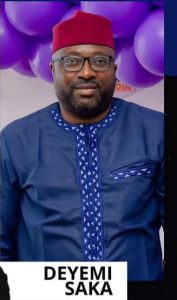
Deyemi Saka is a PR Consultant and Policy Analyst. Watch Recently analysis on AriseTV HERE