

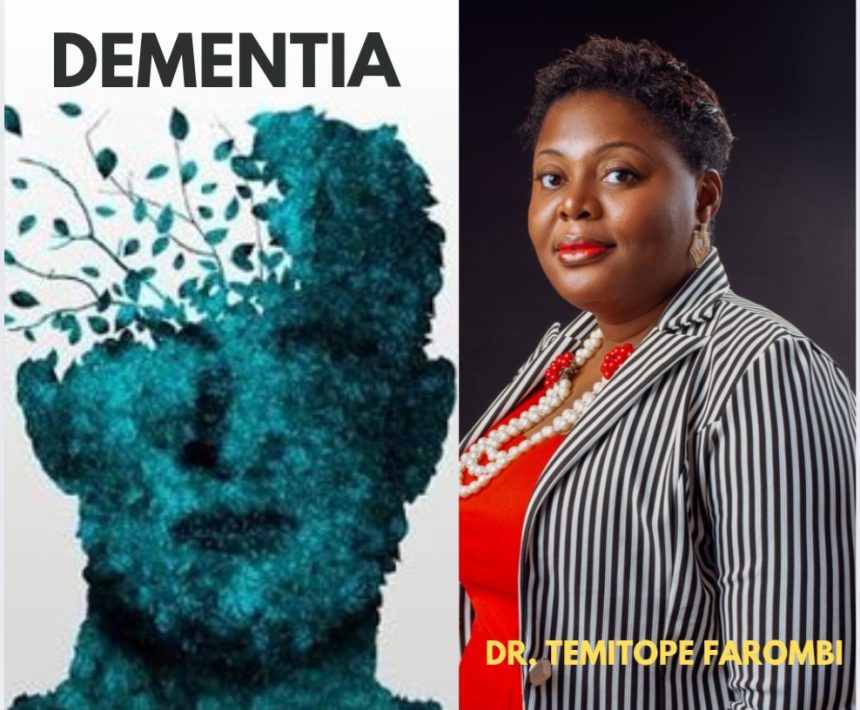

A neurologist and dementia specialist, Dr. Temitope Farombi, has raised fresh concerns over the rapid rise of cognitive decline among Nigerians, warning that lifestyle habits, stigma, and poor awareness are accelerating the spread of the condition across age groups.
Speaking on Inside Scoop, a health-focused programme on Adamimogo 105.1FM, Ibadan, Dr. Farombi disclosed that although dementia traditionally affects people aged 60 and above, new patterns show a worrisome rise among younger Nigerians due to preventable risk factors.
According to her, “Over 20 million Nigerians aged 60 and above are at risk of developing cognitive decline. What is more disturbing is that the condition is now being increasingly seen among people under 40.”
She noted that dementia, which impairs memory, thinking, behaviour, and the ability to perform daily tasks, was previously rare in Nigeria but is now becoming common because many families fail to recognise early symptoms. Instead, patients are frequently taken to religious centres or traditional healers, delaying proper diagnosis and worsening their condition.
Risk Factors: Hypertension, Noise Pollution, Lifestyle Choices
Dr. Farombi attributed the rising trend of cognitive disorders to a mix of medical, societal, and behavioural factors.
She identified the major risk factors as:
- Aging
- Untreated hypertension and diabetes
- Sedentary lifestyle and high cholesterol
- Excessive smoking and alcohol intake
- Social isolation and depression
- Chronic stress and sleep deprivation
One of the most surprising triggers, she revealed, is hearing loss, often caused by prolonged use of loud earphones, earpods, and headphones among young Nigerians.
“Hearing difficulty is a major and proven risk factor for dementia. Many young people are unknowingly damaging their hearing with constant earpiece use, and this increases their chances of dementia later in life,” she warned.
Recognising Early Signs
The neurologist urged families to look out for early symptoms, including:
- Trouble recalling recent events
- Repeating conversations unknowingly
- Misplacing items and forgetting where they were kept
- Difficulty using familiar names, objects, or places
- Withdrawal from social activities
- Confusion, irritability, and personality changes
She recounted cases where people forgot they drove their own vehicle to an event, only to return home using public transport.
“Any form of memory loss that disrupts daily life should not be taken lightly. Early diagnosis is critical,” she added.
Cultural Beliefs Delaying Treatment
Dr. Farombi lamented that cultural and religious misconceptions continue to hinder timely diagnosis. Many communities, she said, mistakenly label dementia patients as insane, possessed, or spiritually afflicted.
“Some families hide affected relatives out of shame. This does not just worsen the condition, it exposes the person to further psychological decline,” she explained.
She commended media platforms for breaking the silence around dementia, stressing that awareness remains the strongest tool in combating stigma.
Dementia Is Not Curable, but It Is Manageable and Largely Preventable
Contrary to widespread belief, dementia is not a spiritual problem, nor is it a normal part of aging. While the condition is not curable, Dr. Farombi emphasised that it is manageable through medications and lifestyle adjustments.
More importantly, she said up to 40–70% of cases are preventable through early control of blood pressure, blood sugar, hearing protection, stress reduction, and improved sleep.
“We cannot stop aging, but we can significantly reduce the risk,” she added.
The neurologist also expressed worry over the increasing stress levels among young adults, particularly from economic uncertainty, work pressures, and mental fatigue, describing it as a “slow-burning risk factor.”
“When the brain is constantly overworked without adequate rest, the neurons become weaker. Chronic stress, poor sleep, and burnout can increase the risk of dementia later in life,” she said.
Dr. Farombi therefore urged Nigerians to seek medical help once memory issues become noticeable and called on communities to support affected persons instead of hiding them.
“Early detection can improve quality of life significantly. Dementia is not a death sentence, and it should never be a source of shame,” she concluded.