



Nigeria’s former Statistician-General and Group Chief Economist, Afreximbank, Yemi Kale, has urged the Federal Government to move beyond collecting labour market statistics and begin using data as a strategic tool for workforce planning, job creation and economic productivity.
Speaking virtually at the second National Skills and Industry Alignment Roundtable in Abuja on Tuesday, Kale said Nigeria’s challenge was no longer the absence of data but the fragmentation of existing information across institutions, making it difficult for policymakers, employers and training providers to respond effectively to labour market needs.
He noted that while employers struggle to recruit workers with the right competencies, millions of Nigerians remain unemployed because the country’s labour market operates without a coordinated intelligence system.
“Across Nigeria today, we have employers that are searching for skills and, at precisely the same time, millions of Nigerians are searching for opportunities they can access. The problem, however, is that they are often searching independently rather than collectively,” Kale said.
He warned that unless existing administrative and labour market data are integrated into a functional Labour Market Intelligence System, Nigeria would continue to lose productivity and employment opportunities despite its youthful population, which he described as both an opportunity and a challenge requiring quality education, stronger institutions and closer collaboration between employers, policymakers and training institutions.

Also speaking, International Labour Organisation representative, Chinyere Anuna-Emelaa stressed that stronger coordination of labour market data would help governments and employers make better decisions, improve skills planning and create more employment opportunities.
Strategic Partnership Lead at the Office of the Vice President Delivery Unit, Afolabi Imoukhuede, said the initiative is aimed at connecting existing data systems rather than creating new ones.

According to him, administrative and labour market data already exist across government institutions but remain isolated, limiting their usefulness for policymaking and workforce planning. He said the priority is to transform existing data into actionable intelligence capable of forecasting labour demand, guiding skills development and improving outcomes for employers and job seekers.
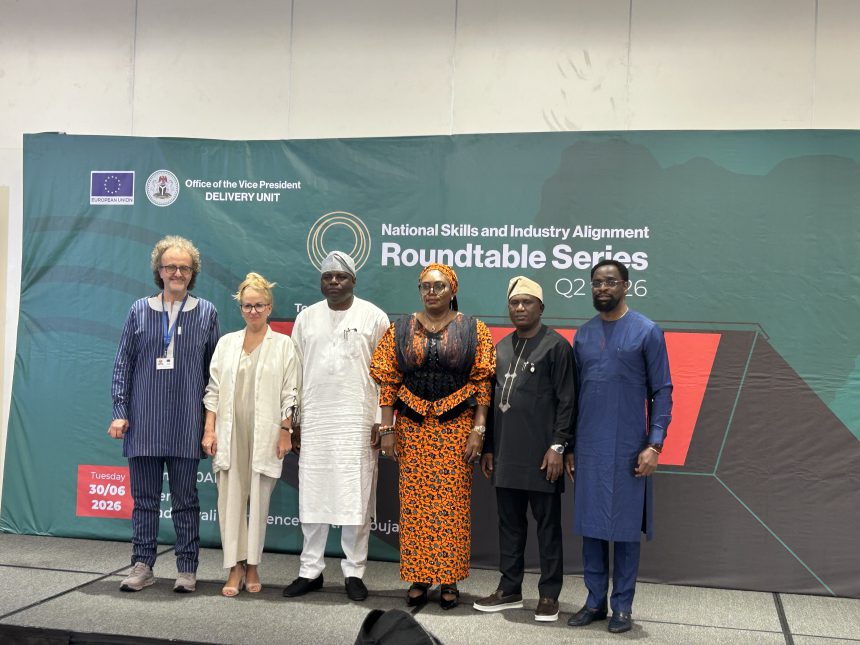
The roundtable, attended by representatives of the MTN Foundation, Dangote Foundation and other public and private sector organisations, also featured updates on the proposed Nigerian Skills Observatory, a platform expected to provide real-time labour market intelligence by integrating skills and employment data from multiple sources.
According to Senior Special Assistant to the President on Delivery and Coordination, Mr.Akubo Adegbe and Special Assistant on Workforce Development, Rimam Nuhu the observatory would give government the intelligence required to move beyond controversy over whether Nigeria faced a skills shortage or a skills mismatch and begin targeting both. He said the database would support better workforce planning and ultimately contribute to a more productive economy with more targeted skills policy.
The roundtable series will continue in the third quarter with discussions expected to focus on strengthening subnational job creation through Nigeria’s Regional Development Commissions.