

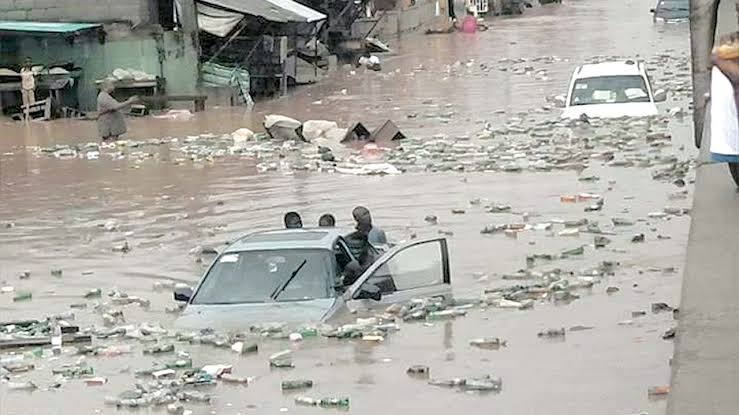

Hours of heavy rainfall on Tuesday left several communities across Lagos State submerged, disrupting transportation, damaging property and knocking out electricity in parts of the state, while health experts warned that the flooding could trigger outbreaks of cholera, malaria and typhoid.
Floodwaters swept through major areas including FESTAC, Gbagada, Evans, Olushi, Anikantamo and Adeniji Adele on Lagos Island, leaving roads impassable and forcing residents to wade through waterlogged streets. Motorists also struggled to navigate submerged roads as commercial activities slowed across affected communities.
In Ikeja, floodwaters invaded homes and shops, compelling some residents to temporarily relocate for fear that the situation could worsen. Several businesses were also affected as persistent rainfall overwhelmed drainage systems.
Residents attributed the flooding to blocked drainage channels, poor road construction and inadequate stormwater infrastructure. Many drainage canals were clogged with plastic waste, preventing the free flow of water and prolonging flooding even after the rain subsided.
A resident of Ikeja, Abidemi Raji, blamed the recurring floods on poor urban planning and obstructed drainage systems. According to him, although the area has drainage channels, floodwaters often remain for between 30 minutes and one hour after rainfall because of the large volume of water.
Raji also alleged that a drainage route connecting his neighbourhood to another street had been blocked following the construction of a hotel, further worsening the flooding whenever heavy rains occur.
The latest flooding comes as the Nigerian Meteorological Agency (NiMet) continues to forecast sustained rainfall across Lagos and several other parts of the country during the peak of the rainy season.
Public health experts have expressed concern that stagnant floodwaters could create conditions for the spread of waterborne and mosquito-borne diseases. They warned that contaminated water supplies and poor sanitation could significantly increase the risk of cholera, typhoid fever and malaria.
A public health specialist, Dr. Godswill Iboma, urged residents to take preventive measures by drinking only safe water, maintaining proper hygiene, disposing of waste appropriately and avoiding contact with contaminated floodwaters wherever possible.
Beyond the health risks, the flooding has once again exposed the vulnerability of Lagos’ drainage infrastructure, with residents and environmental experts calling for improved urban planning, regular desilting of drainage channels and stricter enforcement against indiscriminate waste disposal to reduce the impact of future floods.
As heavy rainfall is expected to continue in the coming days, authorities have advised residents in flood-prone areas to remain vigilant, heed weather advisories and take necessary precautions to safeguard lives and property.