

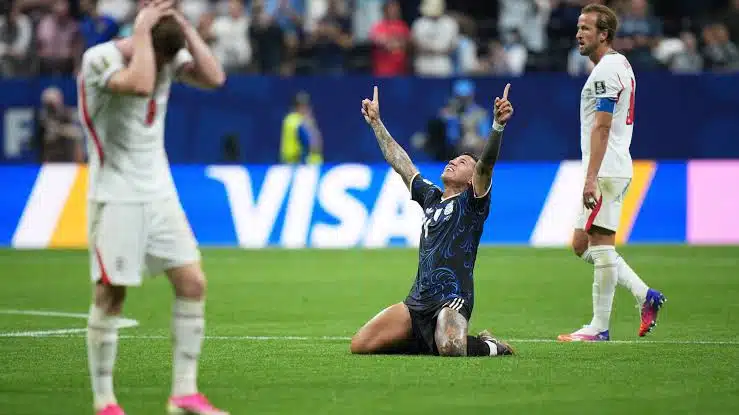

For nearly an hour, England looked destined to rewrite history. One disciplined performance separated Thomas Tuchel’s side from a first FIFA World Cup final since 1966. Instead, what unfolded in Atlanta became another painful chapter in England’s catalogue of footballing heartbreaks, a story they appeared to author themselves.
Leading 1-0 with just over half an hour remaining against Argentina, England had one foot in the final. Then came the retreat. The pressing stopped. The ambition faded. The substitutions invited pressure rather than relieving it. As Lionel Messi found space and Argentina seized control, England gradually surrendered both possession and belief before eventually falling 2-1.
It was an ending that felt hauntingly familiar. Ironically, many of the criticisms levelled at Gareth Southgate during his tenure resurfaced almost instantly under the man hired to replace him. England became increasingly pragmatic, sat too deep, struggled to respond tactically and, when finally confronted by an elite opponent, fell short.
Thomas Tuchel was appointed precisely to avoid such outcomes.

The German arrived with a reputation as one of Europe’s finest tacticians. After taking Chelsea to Champions League glory and managing some of the continent’s biggest clubs, he was expected to provide the tactical edge that would transform England from perennial contenders into champions.
Instead, the semi-final defeat reopened old wounds rather than closing them.
Perhaps the most revealing aspect of England’s collapse came after the final whistle. Reports suggested several senior players questioned the team’s increasingly defensive approach during the closing stages of the match, believing the tactical shift handed momentum directly to Argentina.
Tuchel has since insisted that retreating was never part of the plan.
According to the England manager, his instructions were to remain proactive, but he admitted that perhaps controlling matches through sustained possession “is not in our DNA.”
That explanation raises uncomfortable questions.
If retreating was not the tactical instruction, why did England collectively abandon the aggressive football that had earned them the lead? Was it fear? Fatigue? Or does this England team still lack the psychological confidence to dominate the biggest occasions?
Against Lionel Messi, hesitation is often fatal.
As England dropped deeper, Argentina monopolised possession, with Messi orchestrating attacks from the right flank. Every minute spent defending invited more pressure until the inevitable breakthrough arrived.
The defeat has also intensified scrutiny of Tuchel’s squad management.
One of the tournament’s biggest talking points was his complete lack of trust in Kobbie Mainoo. Despite travelling as part of the 26-man squad, the Manchester United midfielder failed to play a single minute throughout England’s World Cup campaign.
Even when midfield changes became necessary, Tuchel preferred to deploy Reece James or Nico O’Reilly in unfamiliar central roles rather than turn to one of England’s brightest young midfielders.
It inevitably raises an uncomfortable question.
If Tuchel never intended to use Mainoo, why include him in the squad at all?
Fortunately for England, the long-term outlook remains encouraging. Mainoo is only 21, while Jude Bellingham, Cole Palmer and several other emerging talents suggest England’s midfield remains one of Europe’s strongest for years to come.
The challenge now lies elsewhere.
Tuchel was not hired simply to maintain England’s consistency. Southgate had already delivered a World Cup semi-final and two European Championship finals. The Football Association believed Tuchel possessed the tactical sophistication needed to convert near-misses into trophies.
Instead, his first major tournament has ended with accusations that his own tactical decisions contributed to England’s downfall.
That creates an intriguing dynamic heading into the next international cycle.
The Nations League begins with a glamour fixture against Spain at Wembley in September, a match that could easily have been a World Cup final had England managed the closing stages against Argentina more effectively.
Beyond that lie Euro 2028 qualifiers and renewed expectations from supporters who have grown weary of moral victories.
For now, Tuchel retains the full confidence of Football Association chief executive Mark Bullingham, and one tournament alone is unlikely to define his tenure.
But football rarely remembers what might have been.
England’s greatest obstacle was never simply Argentina, nor Lionel Messi’s enduring brilliance. It was the familiar instinct to protect rather than pursue, to preserve rather than impose.
For one glorious hour, England looked ready to become heroes of their own story. Then, just when the fairytale demanded courage, they cast themselves as the villains.