

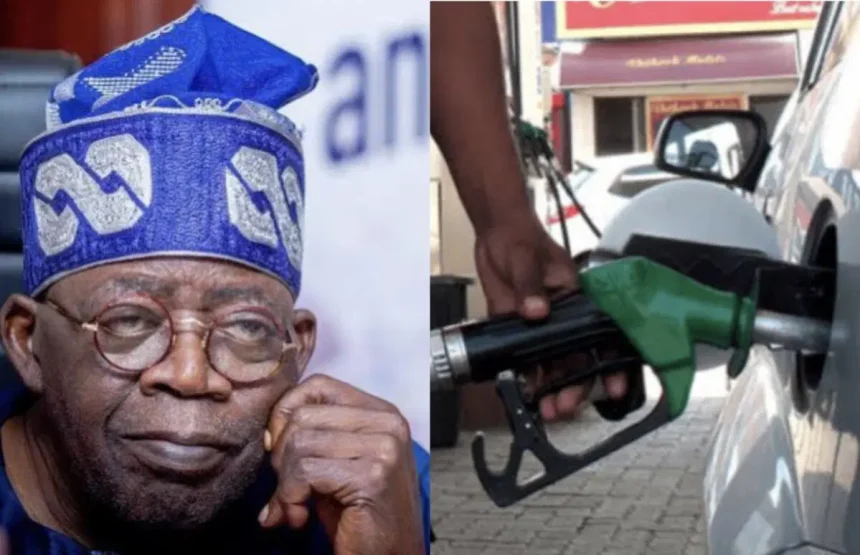

The Federal Government and organised labour have disagreed over the use of savings from the removal of fuel subsidy, with the government insisting the funds were deployed to stabilise the economy and finance key national priorities, while labour accused officials of failing to provide transparent and verifiable evidence of how the money was spent.
Speaking at the 7th Africa Emerging Markets Forum in Abuja, the Minister of Finance and Coordinating Minister of the Economy, Mr. Taiwo Oyedele, said Nigerians would soon receive a detailed breakdown of how the subsidy savings had been utilised. He explained that while eliminating fuel and foreign exchange subsidies generated significant fiscal savings, the primary objective of the reforms was to eliminate distortions and corruption in the economy rather than simply save money.
Oyedele stated that before the reforms, the government relied heavily on Ways and Means financing from the Central Bank of Nigeria, maintained lower interest rates and operated under a ₦30,000 minimum wage. According to him, ending the subsidy regime increased government spending obligations, including servicing public debt at significantly higher interest rates and implementing the new ₦70,000 national minimum wage, which substantially increased the federal wage bill.
The minister also said part of the savings had been channelled into funding the Nigerian Education Loan Fund (NELFUND), noting that more than 1.5 million students now benefit from tuition payments and monthly stipends. He argued that the programme had eased financial pressure on households by reducing the need for parents to borrow or exhaust their savings to fund tertiary education.
Addressing concerns over continued government borrowing despite improved revenue generation, Oyedele explained that exceeding revenue targets does not eliminate the need for borrowing where expenditure exceeds income. He illustrated that if government expenditure is budgeted at ₦10 while expected revenue is ₦6, collecting ₦7 still leaves a ₦3 financing gap that must be covered through borrowing. He maintained that borrowing is acceptable if the funds are invested productively and generate value greater than their cost.
However, organised labour rejected the minister’s explanation, accusing the government of being “economical with the truth.” The General Secretary of the Nigeria Civil Service Union (NCSU) and National Secretary of the Joint National Public Service Negotiating Council (Trade Union Side), Mr. Olowoyo Gbenga, questioned the government’s claim that subsidy savings were used to improve workers’ welfare and service debts.
Gbenga argued that poor budget implementation had undermined the government’s credibility, alleging that the Federal Government was simultaneously implementing the 2024, 2025 and 2026 budgets, creating confusion over public spending. He questioned why subsidy savings would be used to finance personnel costs that had already been provided for in approved budgets and demanded empirical evidence to support the minister’s claims.
He further challenged the government to disclose the total amount realised from fuel subsidy removal since its implementation and provide a comprehensive account of how the funds had been spent. Gbenga also disputed claims of improved workers’ welfare, stating that the Federal Government had yet to implement the 40 per cent peculiar allowance linked to the new minimum wage, despite a directive that it should take effect from May 1, 2026. He added that the two-month wage award promised to workers also remains unpaid.
A senior official of the Nigeria Labour Congress (NLC), who spoke anonymously, echoed the criticism, describing the minister’s explanation as a public relations exercise rather than a factual account. The labour official insisted that the government should present verifiable figures to justify its claims and account for the revenues generated from fuel subsidy removal between 2023 and July 2026.
The NLC official alleged that the government generated more than ₦3 trillion in the first month following subsidy removal but questioned where the money had gone, arguing that there had been no corresponding improvement in workers’ salaries or welfare. He further accused the government of spending public funds on luxury items, including presidential aircraft, yachts and other non-essential expenditures, while Nigerians continued to grapple with economic hardship.
The exchange underscores growing public scrutiny over the management of fuel subsidy savings and highlights continuing tensions between the Federal Government and organised labour over transparency, public finance and the implementation of workers’ welfare commitments.