

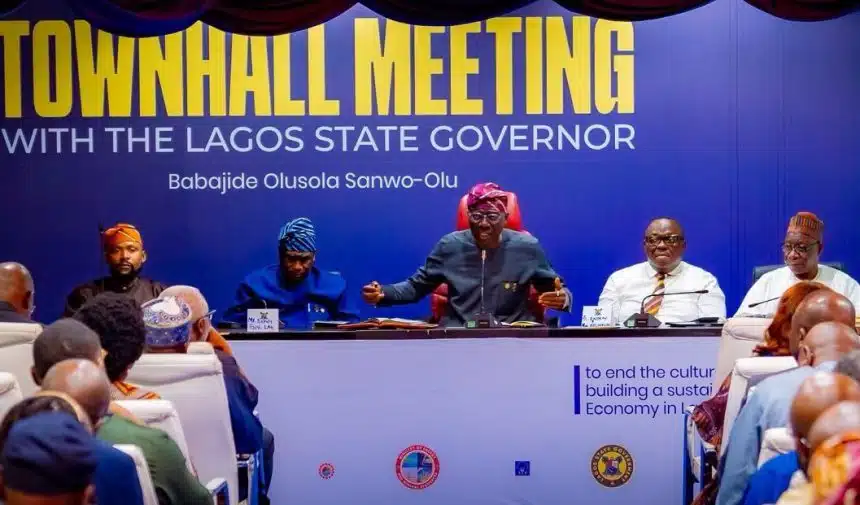

Lagos State Governor, Babajide Sanwo-Olu, has challenged stakeholders in the power sector to end the persistent culture of blackouts in the state, stressing that reliable electricity supply is essential to building a resilient and productive economy.
Sanwo-Olu made the call at a high-level strategic town hall meeting on ending blackouts and building a sustainable 24-hour power economy in Lagos, held at the State House, Marina.
The meeting brought together key stakeholders from the public and private sectors to develop concrete strategies for achieving reliable electricity supply across the state. The Deputy Governor, Kadri Hamzat, and members of the State Executive Council also attended the forum.
Other participants included representatives of the Nigerian National Petroleum Company Limited (NNPC), Nigerian Upstream Petroleum Regulatory Commission (NUPRC), International Finance Corporation (IFC), Africa Finance Corporation (AFC), Lagos State Electricity Regulatory Commission (LASERC) and the Independent System Operator.
Sanwo-Olu said resolving Lagos’ persistent power deficit was critical to unlocking sustained economic growth, supporting businesses and creating a more resilient electricity market.
The governor urged stakeholders to abandon corporate rivalries and longstanding excuses, calling for an honest assessment of the challenges preventing improvements in the sector.
He acknowledged growing frustration among public and private sector players over repeated meetings and discussions that have produced limited practical results, stressing that the time had come to move from conversations to measurable action.
Sanwo-Olu noted that the decentralisation and regulatory unbundling of Nigeria’s electricity sector had given states greater responsibility to develop and manage independent power systems. He questioned why significant improvements had not been achieved despite the establishment of state-level institutions such as LASERC.
The governor said Lagos could no longer rely on the previous excuse of excessive federal control, urging stakeholders to examine what had been achieved since the reforms and identify the factors responsible for continued power shortages.
He consequently called for a closed-door dialogue to examine systemic weaknesses, shortcomings on the part of government and performance gaps within the private sector.
According to Sanwo-Olu, the objective is to develop a practical and actionable roadmap capable of delivering dependable electricity to residents and businesses while supporting Lagos’ ambition of building a sustainable 24/7 power economy.