

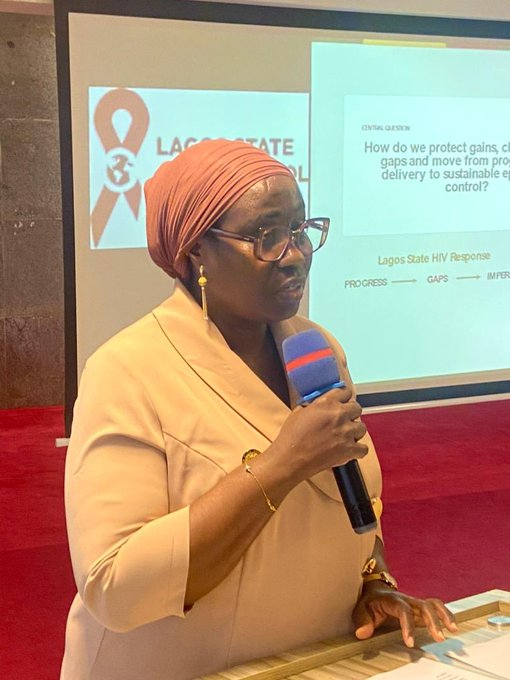

The Lagos State AIDS Control Agency (LSACA) has called for stronger stakeholder collaboration, strategic resource mobilisation and evidence-based implementation to accelerate progress towards achieving the state’s HIV targets by 2027.
The Chief Executive Officer of LSACA, Dr. Folakemi Animashaun, made the call during the dissemination of the Lagos State Strategic Plan on HIV 2025–2027 held at BWC Hotel, Victoria Island, Lagos.
Animashaun said the Strategic Plan provides a common framework for aligning HIV programmes, resources and partnerships towards agreed targets and measurable results across Lagos State.
She noted that the state had recorded significant progress in its HIV response through the expansion of prevention programmes, HIV testing, treatment services and community-based interventions.
However, she identified several critical gaps requiring sustained attention, particularly in reaching underserved populations, strengthening HIV prevention and testing, ensuring timely linkage to treatment, improving retention in care and achieving viral suppression.
According to her, although the Strategic Plan covers the period from 2025 to 2027, implementation is already well underway across the state.
She described the dissemination of the plan as an opportunity for stakeholders to assess progress, identify implementation gaps, strengthen coordination and focus collective efforts on achieving outstanding targets before the end of the plan period.
Animashaun urged stakeholders to use the engagement to develop a shared understanding of the state’s current progress and identify areas where available resources could deliver greater impact.
She reaffirmed LSACA’s commitment to providing the coordination needed to strengthen stakeholder alignment, support resource mobilisation, monitor implementation and promote evidence-based decision-making in Lagos State’s HIV response.
The LSACA chief executive also acknowledged the strategic leadership of the National Agency for the Control of AIDS (NACA), while commending ministries, departments and agencies, development and implementing partners, civil society organisations, networks, communities, healthcare workers and other stakeholders for their contributions to the state’s HIV response.
Animashaun stressed that the successful implementation of the Strategic Plan would depend on sustained collaboration, effective coordination, adequate resource mobilisation and a shared commitment to improving HIV prevention, treatment and care outcomes across Lagos State.
She urged stakeholders to translate the commitments outlined in the plan into coordinated action that will help close existing gaps and accelerate progress towards the state’s 2027 HIV targets.