

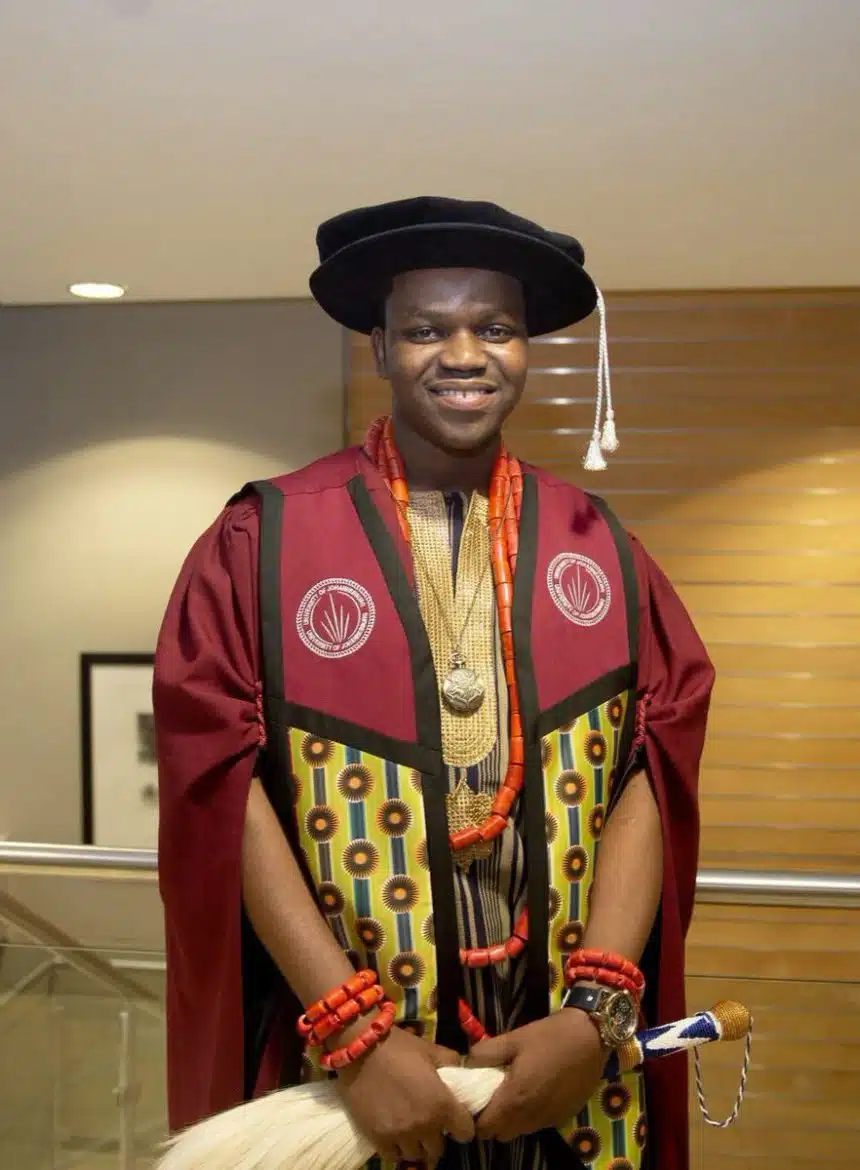

Artificial intelligence (AI) could become a powerful driver of economic growth across Africa, but without deliberate investments in infrastructure, affordability and inclusive policies, it risks widening the gap between rich and poor communities, according to Nigerian artificial intelligence expert Professor Abejide Ade-Ibijola.
The Professor of Artificial Intelligence and Applications at the Johannesburg Business School, University of Johannesburg, South Africa, made the warning in an interview with TechCabal, where he argued that Africa’s AI future must be built on accessibility, ethical governance and technologies designed around the continent’s realities.
Although Africa currently accounts for only about 2.5 per cent of the global AI market, projections indicate the technology could contribute nearly $2.9 trillion to the continent’s economy by 2030. Countries such as Nigeria, Kenya and South Africa are already deploying AI to improve agriculture, healthcare, education and indigenous language processing.
However, Ade-Ibijola warned that the benefits could be unevenly distributed if governments fail to bridge the digital divide.
“Without deliberate intervention, people in cities will enjoy AI-powered innovations while rural communities without reliable electricity, internet access and digital infrastructure will be left behind,” he said.
The professor described AI as a transformative tool for healthcare, capable of supporting faster diagnoses, precision surgeries and intelligent medical assistance. Yet he cautioned that expensive AI-powered healthcare could deepen inequality if only affluent citizens can afford access.
He also highlighted AI’s growing role in agriculture, where drones, robotics and automated irrigation systems can boost productivity, improve crop management and reduce dependence on manual labour.
In education, Ade-Ibijola said AI-powered learning platforms can personalise instruction, translate lessons into indigenous languages and support self-paced learning, while intelligent teaching assistants could become increasingly common in classrooms.
Despite these opportunities, he expressed concern over automation’s impact on employment, warning that AI could replace workers in sectors such as retail, hospitality, banking and fuel stations unless governments prepare citizens with new digital skills.
On cultural representation, Ade-Ibijola urged African countries to develop AI systems trained on datasets that reflect the continent’s languages, traditions, history and indigenous knowledge rather than relying solely on foreign-built models.
“We must intentionally bring technology to underserved communities. AI should improve the lives of everyone, not only those living in cities,” he said.
He proposed the development of AI-powered healthcare applications capable of providing preliminary medical advice in local languages, supported by investments in affordable smartphones, solar power and rural internet connectivity.
The AI scholar also stressed that ethical AI begins with quality data, noting that biased or incomplete datasets inevitably produce biased outcomes. He called for responsible data collection and safeguards to ensure AI systems do not reinforce discrimination or exclude African perspectives.
On regulation, Ade-Ibijola advocated balanced policies developed through collaboration between governments, researchers, technology companies and industry experts. According to him, regulators must protect citizens from abuse without stifling innovation.
He further argued that Africa’s immediate priority should not be competing with global AI powers but strengthening its technological foundations through investments in digital infrastructure, computing resources, research funding and technology education beginning at the primary school level.
Ade-Ibijola also recommended introducing coding and digital skills programmes in correctional facilities to improve rehabilitation and prepare inmates for future employment in the digital economy.
An Ekiti State-born academic, Ade-Ibijola became a full professor at the University of Johannesburg at just 36, making him one of Nigeria’s youngest professors. He remains a leading advocate for developing artificial intelligence systems that reflect Africa’s unique needs, values and aspirations while ensuring no community is left behind in the continent’s digital transformation.