

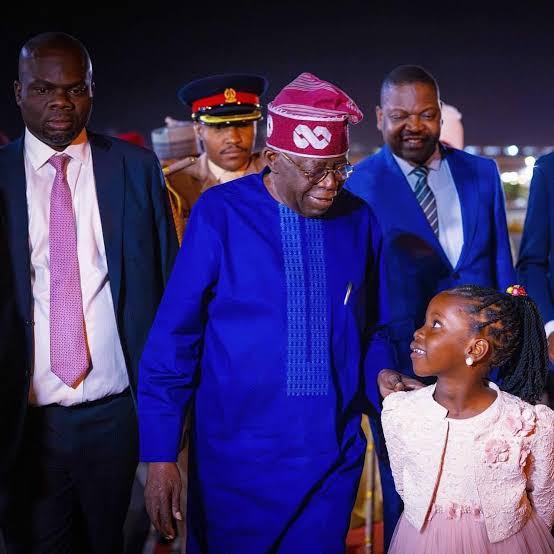

The Federal Government has reaffirmed its commitment to building a nation where every child can dream freely, grow in safety and enjoy equal opportunities, as Nigeria marked the 2026 National Children’s Day celebration with a renewed focus on inclusion and child development.
The event, held at Eagle Square in Abuja, carried the theme, “Future Now: Promoting Inclusion for Every Nigerian Child,” highlighting the need to ensure that no child is left behind regardless of background or circumstance.
President Bola Ahmed Tinubu, represented at the ceremony by Imaan Sulaiman-Ibrahim, described Nigerian children as the country’s most valuable asset and a reflection of its future aspirations.
In his address, the President said children remain the pride of the nation and stressed that the future of Nigeria already exists in classrooms, communities and among millions of young people across the country.
“There is a timeless beauty in the laughter of children. In the eyes of every Nigerian child lives the story of our collective tomorrow,” he stated.
He maintained that inclusion must remain central to national development, noting that every Nigerian child deserves equal opportunities irrespective of geographical location, social background or physical ability.
According to him, children should never feel unheard, excluded or forgotten, adding that their ideas and wellbeing are important to the nation’s progress.
The President also stressed that several government initiatives were afoot to improve child welfare and create opportunities for young Nigerians. These include the Renewed Hope Social Impact Intervention–774, the Nutrition 774 Initiative, the Accelerating Nutrition Results in Nigeria programme (ANRiN 2.0), investments in science and technology education, the Nigerian Education Loan Fund and the Nigeria Youth Investment Fund.
Meanwhile, National Orientation Agency urged children across the country to embrace patriotism, discipline and strong moral values.
In a statement signed by its Deputy Director of Communications and Media, Paul Odenyi, the agency described children as the nation’s hope and future leaders, encouraging them to remain dedicated to learning and responsible conduct.
Similarly, UNICEF Acting Chief of Child Protection in Nigeria, Mona Aika, called on the government to view Children’s Day beyond ceremonial activities and treat it as a moment for accountability and stronger action on child protection.
She also stressed the need to amplify the voices of adolescent girls, insisting that young people should be allowed to influence policies, programmes, budgets and community decisions that directly affect their lives.
Nigeria first observed Children’s Day on May 27, 1964, and the annual event has continued to serve as a platform for drawing attention to issues affecting children, including the protection of their rights and welfare.
This year’s celebration also aligns with President Tinubu’s declaration of 2026 as the “Year of Families and Social Development,” reinforcing efforts to strengthen family structures and promote inclusive national development.