



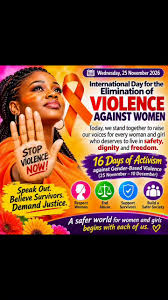
The International Day for the Elimination of Violence Against Women, marked annually on November 25, has renewed calls for justice for survivors of gender-based violence, stronger protection measures and accountability for perpetrators.
The day also signals the beginning of the 16 Days of Activism Against Gender-Based Violence, running until December 10, International Human Rights Day.
The United Nations estimates that one in three women worldwide experiences physical or sexual violence during her lifetime, underscoring the scale of the problem and the urgent need for collective action.
In Nigeria, gender advocates say harmful cultural practices, discrimination and victim-blaming continue to undermine efforts to protect women and girls, while discouraging survivors from speaking out or seeking justice.
Speaking on the issue, gender advocate Rhoda Robinson identified societal beliefs that promote male dominance and restrict women’s rights as major factors contributing to violence against women.
She called for an end to harmful traditional practices, including child marriage and discriminatory widowhood rites, while emphasising the need to protect women’s access to education, healthcare, economic opportunities and participation in decision-making.
Also speaking, the Founding Director of Naija Feminist Media, Simbiat Bakare, identified the perception of male superiority as a major contributor to gender-based violence.
Bakare called for a change in societal attitudes, stronger enforcement of existing laws and an end to the protection or celebration of perpetrators of violence against women.
She also stressed the importance of increasing women’s representation in leadership and decision-making positions, noting that greater inclusion would help challenge discriminatory practices and advance gender equality.
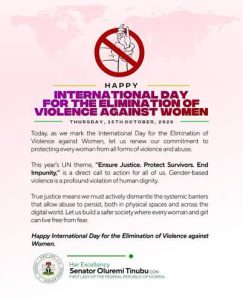
This year’s United Nations UNiTE campaign is themed, “Ensure Justice, Protect Survivors, End Impunity,” with the hashtag #NoExcuse.
As the 16 Days of Activism gets underway, advocates insist that ending violence against women requires more than awareness campaigns, stressing the need for accessible justice, adequate support for survivors and accountability for perpetrators.