

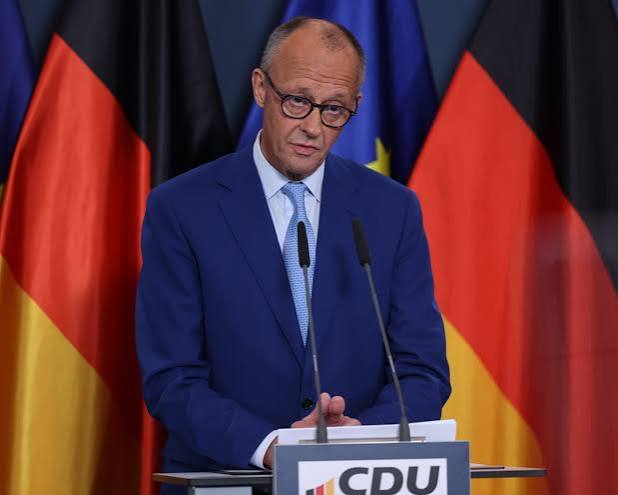

Merz, speaking on Monday, said his coalition with the Social Democratic Party (SPD) would remain focused on addressing what he described as the historic challenges facing Germany and protecting the country’s “democratic future.”
His comments followed Sunday’s elections in Mecklenburg-Vorpommern and Berlin, where the CDU suffered significant losses.
In Mecklenburg-Vorpommern, the far-right Alternative for Germany (AfD) won the largest share of the vote, while the CDU failed to cross the five-percent threshold required to secure seats in the state parliament.
In Berlin, the CDU finished second behind the left-wing Die Linke, while the AfD also made significant gains.

Merz described the Mecklenburg-Vorpommern result as “a heavy blow” and acknowledged the scale of the setback for his party.
“This election is a profound turning point. It is a dramatic, unprecedented result for the CDU in Germany,” Merz said.
However, Merz rejected suggestions that his personal popularity was solely responsible for the CDU’s poor performance.
“I know that I as an individual played a role in these state elections,” he said, adding that “the reasons for the results go far beyond just me.”
The results have renewed speculation over Merz’s political future, with reports suggesting he could face pressure to leave office before the end of his term.
Asked how long Merz had left in office, AfD co-leader Alice Weidel said earlier on Monday that he would leave “pretty soon.”
Merz said there had been no discussion about his position since the election results were announced.
READ ALSO:Germany working to fast-track student visa for Nigerians — Envoy
The latest setbacks came just two weeks after the CDU suffered another major defeat in Saxony-Anhalt, where the AfD recorded a strong victory.
Merz said the results reflected a wider transformation of Germany’s political landscape, arguing that the country’s traditional party system was undergoing significant change.
“We are witnessing a profound transformation of Germany’s political party system, as is happening in many other countries around the world,” he said.
Although the AfD won the most votes in Mecklenburg-Vorpommern, it is unlikely to form the state government because other parties have generally ruled out working with it.
In Berlin, Die Linke’s victory could pave the way for a coalition government led by the left-wing party.